Hi, message us with any questions.
We're happy to help!





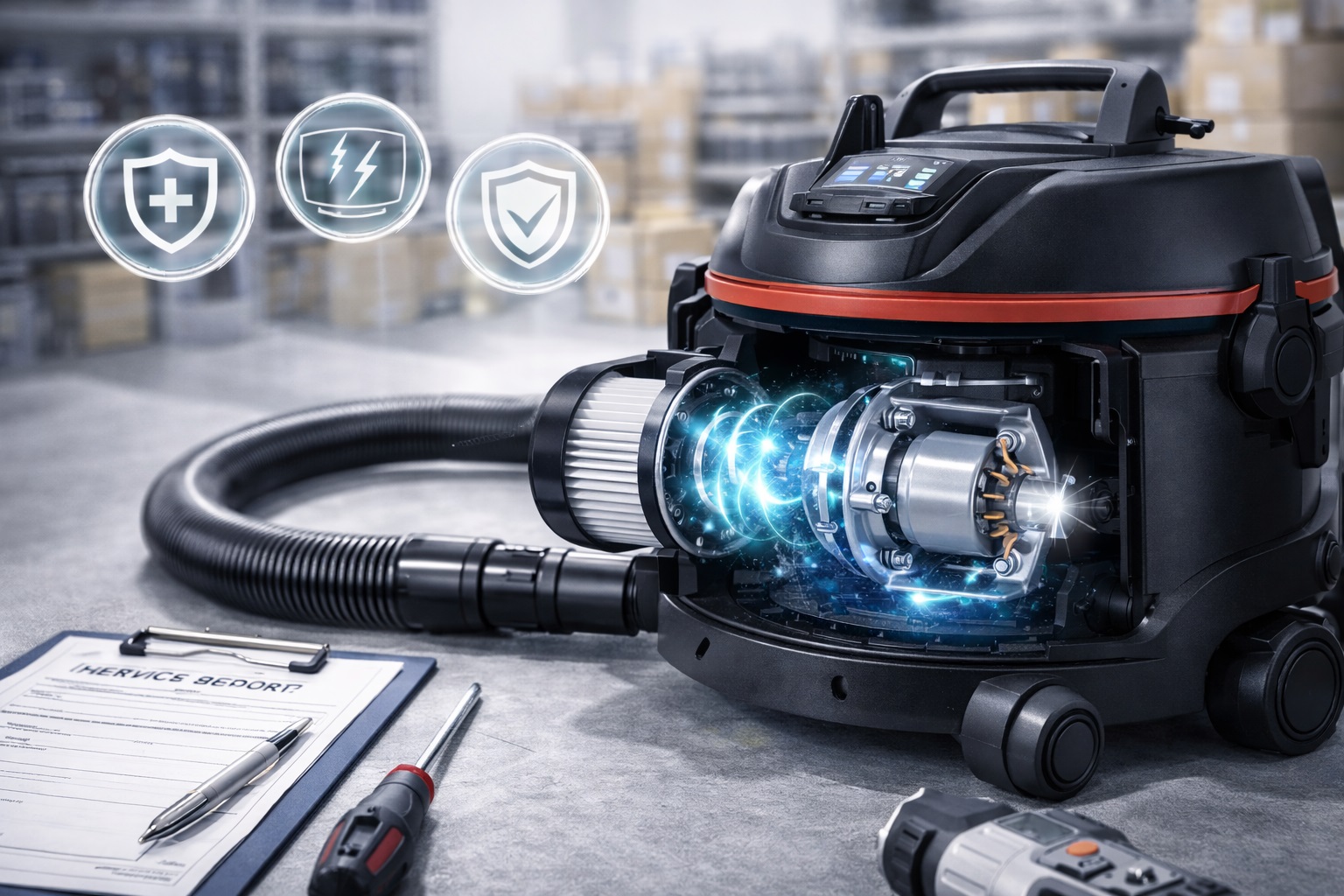
A vacuum's motor is its heart, and motor failures are a primary reason for downtime and expensive repairs. In commercial environments, where vacuums are used daily, reducing motor failures and extending the lifespan of equipment is crucial for maintaining operational efficiency and controlling maintenance costs.
This article outlines practical strategies for reducing motor failures in commercial vacuums and increasing their lifespan, with a focus on wet and dry vacuums, multi-functional durable models, cordless vacuums, and HEPA filter vacuums.
🔧 1. Regular Maintenance: The Key to Preventing Motor Failures
Routine maintenance is essential to keeping a vacuum's motor running smoothly. Regular upkeep helps prevent dust, debris, and dirt from clogging up the motor, which can cause overheating or damage.
Key Maintenance Practices:
Clean or replace filters regularly to prevent debris buildup.
Check and clean air vents to prevent overheating.
Inspect and replace belts or hoses that may become worn or clogged.
Pro Tip:
Set up scheduled maintenance plans for commercial properties to ensure regular servicing and early detection of potential issues.
🧼 2. Use High-Quality Filters to Prevent Motor Clogging
A key factor in prolonging a vacuum's motor lifespan is preventing clogging.
HEPA Filter Vacuum Cleaners are an excellent choice, as they:
Capture fine dust particles before they reach the motor.
Help maintain suction power while protecting the motor from excessive strain.
For wet and dry vacuum cleaners, using high-quality filters and ensuring proper maintenance helps prevent liquids and debris from coming into direct contact with the motor.
Efficiency Insight:
Using HEPA filters also improves air quality, making them a dual-benefit solution for both motor longevity and indoor air health.
⚡ 3. Avoid Overheating: Proper Ventilation Is Crucial
Motor overheating is a leading cause of vacuum failures. Overheating occurs when vacuums work too hard without proper airflow or rest.
To prevent overheating:
Ensure air vents and filter compartments are clean and unobstructed.
Choose vacuums with thermal protection features that automatically shut off when they overheat.
Allow vacuums to cool down between heavy-duty cleaning tasks.
Pro Tip:
For multi-functional durable vacuums, ensure they are designed for consistent airflow and feature overheat protection systems that maintain motor longevity.
🛠 4. Choose Durable Materials for Longer Motor Life
Durability is critical when selecting vacuums for high-use environments. Multi-functional durable vacuum cleaners are built to withstand more rigorous conditions, which reduces motor strain and improves long-term performance.
Key Durability Features to Look For:
High-strength, corrosion-resistant components (e.g., metal housing).
Motor protection technologies to prevent dust and debris from reaching sensitive parts.
Heavy-duty construction that can handle high-intensity cleaning cycles.
Investing in durable, heavy-duty vacuums reduces the likelihood of premature motor wear, increasing their overall lifespan.
🔋 5. Optimize Battery and Power Management in Cordless Models
Cordless handheld vacuum cleaners are often subject to battery degradation, which can cause motor strain and reduce lifespan.
To extend motor life in cordless vacuums:
Choose models with high-quality, long-lasting batteries (e.g., lithium-ion).
Ensure optimal charging practices (avoid overcharging or completely draining the battery).
Replace batteries periodically to prevent motor strain from aging power sources.
Key Tip:
Some 4 in 1 Cordless Smart Wet & Dry Vacuum Cleaners come with battery management systems that automatically optimize charging cycles to prolong motor health.
🧳 6. Prevent Motor Strain with Smart Features
Modern vacuums often come with smart features that reduce motor strain and improve longevity. For example:
Automatic suction adjustment based on the type of debris (e.g., more suction for larger particles).
Pressure relief valves to adjust motor speed according to usage.
Intelligent sensors that monitor motor performance and alert users to maintenance needs.
These smart features prevent motors from running at maximum capacity unnecessarily, thereby reducing wear and tear.
Pro Tip:
Look for intelligent vacuum models with adaptive suction control, particularly for wet and dry vacuum cleaners, to maintain motor efficiency.
🧹 7. Proper Storage: Preventing Damage from Inactivity
How vacuums are stored when not in use plays a crucial role in preserving motor health.
Best Storage Practices:
Store vacuums upright to prevent unnecessary pressure on the motor.
Keep vacuums in a cool, dry place to avoid moisture buildup.
Store cordless vacuums with fully charged batteries to prevent battery degradation.
Storage Insight:
Proper storage ensures that motors are not exposed to conditions that could cause them to deteriorate over time, helping to extend vacuum life.
🧼 8. Design Considerations: Easy Access for Repairs and Maintenance
Vacuum designs that are easy to maintain are key to extending motor lifespan. Modular designs with easy-to-remove filters, replaceable parts, and accessibility for service checks ensure that routine maintenance is easy and quick.
For example, portable self-cleaning vacuum cleaners may come with easy access to the motor, filters, and components, allowing users to maintain the machine themselves or quickly detect early signs of motor failure.
Maintenance Insight:
Designs that prioritize easy upkeep prevent neglect and ensure that minor issues don't lead to major motor damage.
🏆 9. Regular Usage and Load Management
Using vacuums within their designed workload is essential to preserving motor life. Overuse or operating a vacuum for too long without breaks can result in motor burnout.
Best Practices for Managing Load:
Avoid prolonged use in high-suction settings unless necessary.
Alternate between vacuums when working in large spaces to give motors a break.
Monitor motor temperatures and shut off the vacuum for cool-down periods during heavy use.
Pro Tip:
For high-traffic commercial areas, having a fleet of durable vacuums that can be rotated for use prevents any single machine from overworking.
✅ Conclusion: Reduce Motor Failures and Extend Vacuum Lifespan Through Smart Maintenance and Design
The longevity of a vacuum’s motor depends on a combination of good design, regular maintenance, and proper usage. By following these strategies:
Regular cleaning and filter maintenance
Preventing motor overheating
Using durable, high-quality components
Opting for intelligent vacuums with adaptive features
Storing vacuums properly
Dealers and end users can significantly reduce motor failures and ensure that vacuum cleaners last longer, providing better value for money and reduced operational costs.
Focusing on long-term durability not only saves money but also enhances the customer experience, increasing loyalty and repeat business.
📌 Suitable Reading Audience
B2B Vacuum Dealers & Distributors
Commercial & Facility Maintenance Teams
Vacuum Manufacturers
Product Design and Maintenance Managers
📌 Hashtags
wet and dry vacuum cleaner, Multi-Functional Durable Vacuum Cleaner, Cordless Handheld Vacuum Cleaner, 4 in 1 Cordless Smart Wet & Dry Vacuum Cleaner, HEPA Filter Vacuum Cleaner, Portable Vacuum for Travel, Vacuum Motor Longevity, Vacuum Maintenance Tips, Prevent Motor Failures, Vacuum Cleaner Durability, Commercial Vacuum Maintenance, Vacuum Lifespan Extension, Vacuum Cleaner Overheating Prevention, Energy Efficient Vacuums, Vacuum Cleaner Design, Battery Management for Cordless Vacuums, Vacuum Cleaner Smart Features, Motor Protection Systems, Preventing Vacuum Clogging, Vacuum Motor Performance, High-Quality Vacuum Parts, Durable Cleaning Equipment, Commercial Cleaning Solutions, Vacuum Filter Maintenance, Modular Vacuum Designs, Prolonging Vacuum Life, Eco-Friendly Vacuum Design, Smart Vacuum Cleaner Technology, High-Performance Vacuums, Proper Storage of Vacuum Cleaners, Vacuum Cleaner Temperature Control, Quiet Vacuum Motor Solutions, Customer Satisfaction in Vacuum Equipment, Sustainable Vacuum Solutions, Vacuum Equipment Repairs, Indoor Air Quality Vacuum Solutions, Professional Vacuum Equipment, Commercial Cleaning Best Practices, Facility Management Tools, Vacuum Cleaner Safety Features, Proactive Vacuum Maintenance, Vacuum Cleaner Troubleshooting, Lanxstar