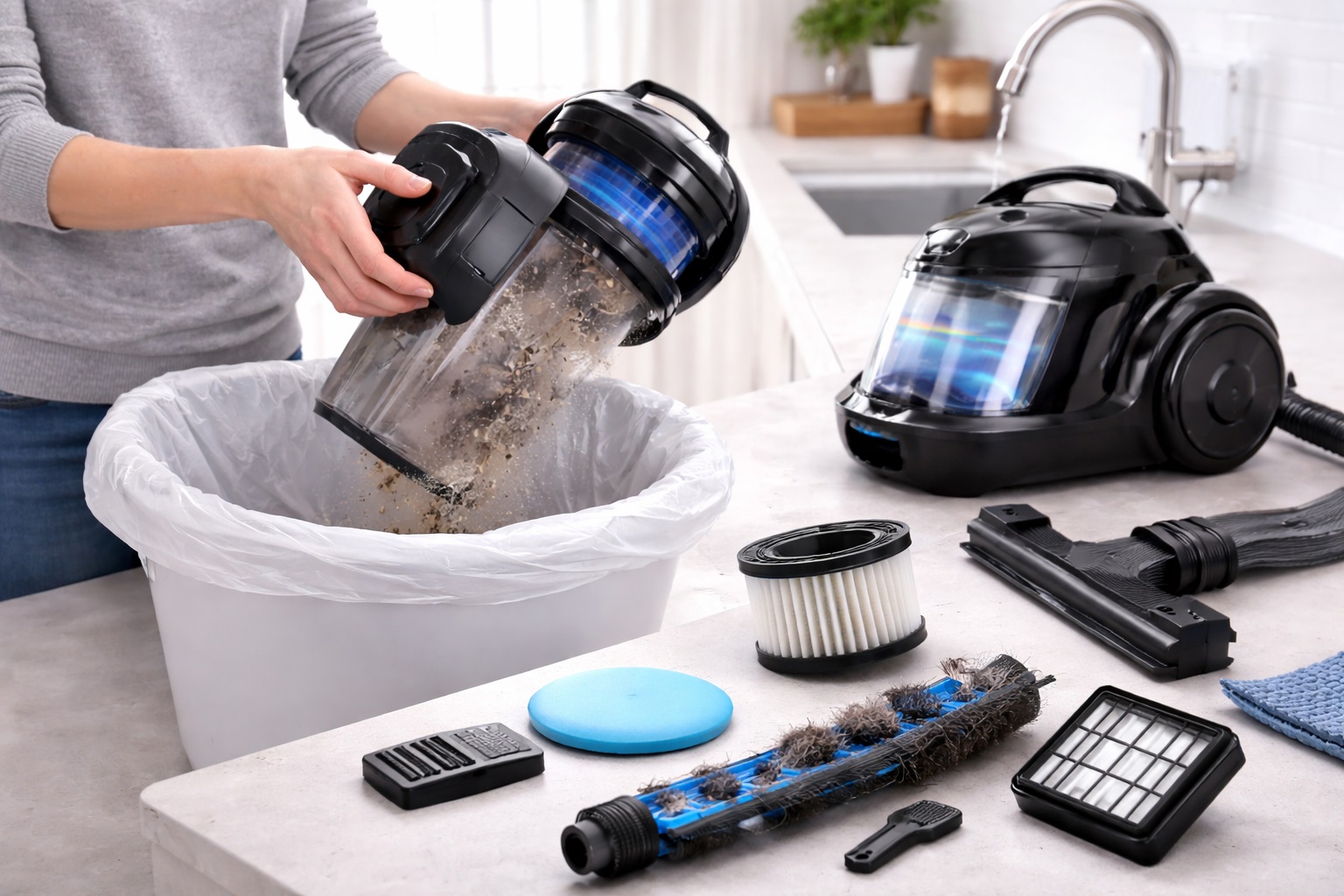
A Practical Maintenance Guide for Long-Lasting Performance
🎯 Target Reader
Homeowners and families in Europe & the Middle East who want their vacuum cleaner to stay powerful, quiet, and efficient for years
🔍 Introduction: Loss of Suction Is Not “Normal Wear”
Many users believe that declining suction is inevitable.
In reality, most suction loss is preventable.
Across Upright Vacuum Cleaners and Household Vacuum Cleaners, reduced performance is usually caused by:
Blocked airflow
Poor maintenance habits
Overloaded filters
Hair and debris buildup
This guide explains how to maintain your vacuum cleaner properly—so it cleans as well in year three as it did on day one.
🌀 ① Understand What Really Causes Suction Loss
Suction loss is rarely caused by motor failure.
The most common causes include:
Clogged filters
Blocked hoses or air channels
Overfilled dust containers
Hair wrapped around brush rolls
An Energy-Saving Efficient Powerful Vacuum Cleaner relies on smooth airflow. Even small obstructions dramatically reduce performance.
Key insight:
Airflow restriction—not weak motors—is the real enemy of suction.
🧼 ② Filters: Clean Them Before They Choke Performance
Filters are designed to trap fine dust, but they need attention.
Best practices:
Rinse washable filters regularly (as recommended)
Let filters dry completely before reinstalling
Replace non-washable filters on schedule
Dirty filters cause:
Immediate suction loss
Increased motor strain
Higher noise levels
Regular filter care keeps both suction and energy efficiency stable.
🐾 ③ Pet Hair Requires Extra Maintenance Attention
A Vacuum Cleaner for Pet Hair works harder than standard models.
Pet hair tends to:
Maintenance tips for pet owners:
Remove hair from brush rolls weekly
Check hoses for hidden clogs
Empty dust containers more frequently
Ignoring pet hair buildup is one of the fastest ways to lose suction.
🔄 ④ Self-Cleaning Doesn’t Mean Maintenance-Free
A Portable Self-Cleaning Vacuum Cleaner reduces manual work—but it doesn’t eliminate maintenance.
Self-cleaning systems:
Help prevent filter overload
Maintain airflow consistency
Reduce performance drop over time
However, users should still:
Smart habit:
Self-cleaning supports performance—it doesn’t replace basic care.
🔇 ⑤ Quiet Vacuums Depend on Clean Airflow
A Quiet Vacuum for Night Use stays quiet only when airflow is smooth.
Blocked airflow causes:
Whistling noises
Increased vibration
Harsh motor sounds
If your vacuum becomes louder over time, it’s often a maintenance issue—not a design flaw.
Clean airflow equals:
🧹 ⑥ Upright Vacuums Need Brush Roll Care
For Upright Vacuum Cleaners, brush roll maintenance is critical.
Common problems:
Hair and string wrapping
Reduced brush rotation
Uneven carpet cleaning
Maintenance checklist:
A clean brush roll restores both suction efficiency and cleaning effectiveness.
⚡ ⑦ Energy Efficiency Depends on Maintenance
Even an Energy-Saving Efficient Powerful Vacuum Cleaner wastes energy when poorly maintained.
Blocked airflow forces the motor to:
Work harder
Consume more electricity
Generate excess heat
Proper maintenance keeps:
Power consumption stable
Performance consistent
Component wear minimal
Efficiency is preserved through care—not just design.
📌 Simple Maintenance Schedule (Realistic & Effective)
After every use → Empty dust container
Weekly → Check brush roll and hose
Monthly → Clean or inspect filters
Every 6–12 months → Replace worn filters or belts
Small, regular actions prevent major performance loss.
🧠 Final Advice: Maintenance Is Cheaper Than Replacement
Most vacuums don’t fail—they’re neglected.
With proper care:
Whether you use Household Vacuum Cleaners, Upright Vacuum Cleaners, or portable self-cleaning models, maintenance is the real performance upgrade.
👥 Suitable Readers
📌 Hashtags
UprightVacuumCleaners, HouseholdVacuumCleaners, PortableSelfCleaningVacuumCleaner, EnergySavingEfficientPowerfulVacuumCleaner, VacuumCleanerForPetHair, QuietVacuumForNightUse, VacuumMaintenance, SuctionPowerCare, HomeCleaningSolutions, VacuumPerformance, AirflowManagement, VacuumFilterCare, PetHairCleaning, HomeApplianceMaintenance, EfficientCleaning, QuietHomeAppliances, VacuumDurability, HouseholdCleaningTips, DailyHomeCare, VacuumTechnology, HomeMaintenanceGuide, ApplianceCareTips, LongTermCleaningValue, VacuumUserExperience, HomeCleaningEfficiency, SmartCleaningHabits, ApplianceDurability, VacuumInnovation, HomeCareProducts, ResidentialVacuum, EnergyEfficientAppliances, VacuumDesignInsights, PracticalCleaningTools, HomeHygieneSolutions, FilterMaintenance, BrushRollCare, ModernHomeLiving, HomeCleaningTrends, ApplianceEngineering, QuietCleaningSolutions, EfficientVacuumDesign, HouseholdApplianceGuide, SustainableHomeCare, VacuumCareChecklist, Lanxstar











