Hi, message us with any questions.
We're happy to help!





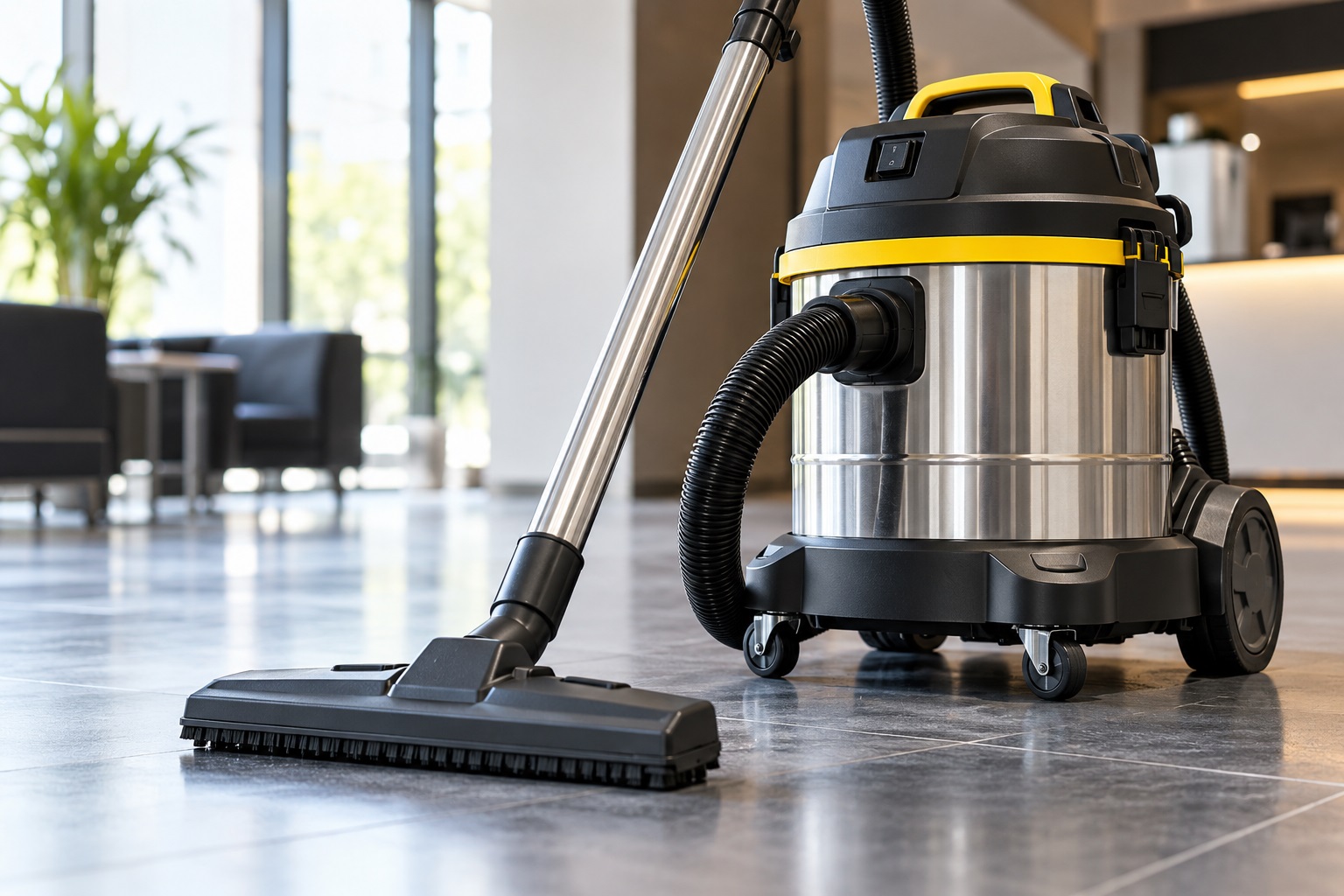
How Often Should Commercial Vacuum Cleaner Filters Be Replaced?
A commercial vacuum cleaner may operate for several hours every day in hotels, warehouses, workshops, offices, hospitals, retail stores, and professional cleaning environments. Under these conditions, the filter is much more than a simple accessory—it is a critical component affecting airflow, suction performance, dust control, motor load, and overall cleaning efficiency.
So, how often should commercial vacuum cleaner filters be replaced?
There is no single replacement interval suitable for every machine. As a practical guideline, frequently used commercial vacuum filters should be inspected weekly or monthly, depending on operating conditions, while replacement may be required anywhere from every few months to approximately one year or longer. Some washable filters can remain usable much longer when properly maintained, whereas filters exposed to fine construction dust may require substantially more frequent replacement.
The correct decision should therefore be based on filter condition and operating environment rather than the calendar alone.
For buyers evaluating a commercial vacuum cleaner, understanding filter maintenance can also help estimate the true long-term cost of the equipment. 🧹
1. Why Vacuum Cleaner Filter Condition Matters
A vacuum cleaner depends on airflow. Air carrying dust and debris enters the machine, contaminants are separated or captured, and filtered air exits the system.
As particles accumulate inside a filter, resistance to airflow increases.
A partially clogged filter may cause:
Reduced suction performance
Longer cleaning time
Increased motor workload
Higher operating temperatures
Reduced dust collection efficiency
More frequent maintenance
Increased energy consumption
This becomes especially important for a high suction power vacuum cleaner or heavy duty vacuum cleaner designed for demanding commercial environments.
Simply choosing a powerful motor is not enough. A properly designed filtration and airflow system must allow that power to remain useful throughout the cleaning cycle.
For procurement teams comparing industrial cleaning equipment, filter accessibility and replacement cost should therefore be evaluated alongside motor power, tank capacity, noise level, accessories, and purchase price.
2. A Practical Commercial Vacuum Filter Replacement Schedule
Different filters perform different jobs, so replacement intervals vary considerably.
Standard Dust Filters
For normal commercial environments such as offices, retail stores, schools, and hotels, inspect the filter regularly and replace it when cleaning no longer restores normal airflow.
For heavily used equipment, a monthly inspection is a sensible maintenance practice.
HEPA Filters
A HEPA filter vacuum cleaner is often selected where fine-particle control is important.
HEPA filters should not automatically be replaced simply because a certain number of months have passed. Instead, users should consider operating hours, contamination level, airflow, manufacturer instructions, and the physical condition of the filter.
🚨 A damaged HEPA filter should be replaced promptly because cracks, damaged seals, or deteriorated filter media can compromise filtration performance.
Washable Filters
Washable filters can reduce consumable costs, but only when they are cleaned correctly.
After washing, the filter must generally be completely dry before reinstalling it. Operating a vacuum with a damp filter can restrict airflow and may create additional maintenance problems.
Always follow the machine manufacturer's instructions because not every filter is washable.
Foam and Pre-Filters
Foam filters or pre-filters often protect the primary filtration system from larger particles.
They can usually be inspected and cleaned more frequently, helping extend the service life of the main filter.
3. Operating Environment Changes Filter Life
Two identical commercial vacuum cleaners can have dramatically different filter replacement requirements.
Consider the following environments.
Hotels 🏨
A commercial vacuum cleaner for hotel use primarily collects hair, carpet fibers, dust, food particles, and general debris.
Although machines may operate for many hours, the dust is often less aggressive than construction dust. Regular filter inspection and cleaning can therefore provide relatively predictable maintenance cycles.
Low noise may also be particularly important in guest areas, making a low noise vacuum cleaner or Portable Quiet Vacuum Cleaner attractive for hotel applications.
Warehouses 📦
A warehouse may contain packaging fragments, dust, pallet debris, dirt brought in by forklifts, and fine particles generated by daily operations.
An industrial wet and dry vacuum cleaner for warehouse cleaning supplier may therefore need to provide a combination of strong airflow, durable filtration, large tank capacity, and easy filter access.
Large facilities may also prefer a Large-Capacity Wet Dry Vacuum Cleaner to reduce interruptions caused by frequent tank emptying.
Construction Sites 🏗️
Construction dust can be extremely demanding on filtration systems.
Fine particles can quickly load a filter and reduce airflow. A wet dry vacuum cleaner for construction site applications should therefore be inspected much more frequently than a machine cleaning ordinary office floors.
For these applications, buyers may also evaluate an industrial dust extractor or specialized construction site cleaning equipment depending on the dust involved and applicable safety requirements.
Factories
Factory floor cleaning can involve dust, production debris, metal fragments, packaging materials, and occasionally liquids.
A wet and dry vacuum cleaner provides additional flexibility where both dry debris and compatible liquid spills need to be collected.
The exact filter configuration should always match the material being collected.
4. Seven Signs That a Filter May Need Attention
Replacement decisions become easier when operators know what to look for.
1. Noticeably Reduced Suction
If suction has decreased despite an empty tank or dust container and clear hoses, inspect the filter.
A clogged filter can significantly restrict airflow.
2. Filter Cleaning No Longer Restores Performance
Cleaning can extend filter life, but filters do not last forever.
If suction remains poor after correct cleaning, replacement may be appropriate.
3. Visible Filter Damage
Look for:
Tears
Holes
Cracks
Deformed filter media
Damaged seals
Loose components
Physical damage is a stronger replacement signal than age alone.
4. Unusual Motor Temperature
Restricted airflow can increase thermal stress.
If the machine operates unusually hot, stop operation and inspect the airflow path, tank, hoses, and filtration system according to the manufacturer's maintenance procedures.
5. Dust Appearing in Exhaust Air
Visible dust from the exhaust can indicate incorrect filter installation, damaged filter media, seal problems, or an unsuitable filtration configuration.
6. Persistent Odor
Cleaning the tank and filter may solve some odor problems. Persistent contamination or odor in filter material, however, can indicate that replacement is appropriate.
7. Increased Cleaning Time
A vacuum does not have to stop working completely to become inefficient.
If employees need additional passes to collect the same debris, airflow restriction may already be increasing labor costs.
5. Filter Maintenance Can Affect Total Cost of Ownership
Professional buyers should look beyond the initial industrial vacuum cleaner cost.
Imagine two machines:
Vacuum A has a lower purchase price but requires expensive filters that are difficult to access.
Vacuum B costs slightly more initially but provides easy filter access, washable pre-filtration, readily available replacement filters, and stable airflow.
Over several years of commercial operation, Vacuum B could potentially produce lower maintenance and labor costs.
This is why wholesalers and procurement teams comparing a vacuum cleaner price wholesale should investigate:
Replacement filter pricing
Filter availability
Cleaning requirements
Installation time
Expected operating conditions
Spare parts availability
Maintenance accessibility
Recommended inspection procedures
💡 For distributors, these questions are particularly important because customers may need replacement filters years after the original equipment purchase.
6. Wet and Dry Vacuum Cleaners Require Special Attention
A wet dry vacuum cleaner is designed to handle both dry debris and liquids when operated according to its specifications.
However, wet and dry operation may require different filtration arrangements.
For example, the filter used for collecting dry dust may not necessarily be appropriate for every liquid collection task. Some machines require the removal, replacement, or protection of specific filters before wet operation.
Never assume that every wet and dry suction system operates identically.
Operators should follow the manufacturer's instructions regarding:
Wet pickup configuration
Dry pickup configuration
Filter installation
Float shutoff systems
Tank cleaning
Filter drying
Compatible materials
A stainless steel vacuum tank can provide durability and convenient cleaning for many commercial applications, but the filtration system remains equally important.
7. Case Study: Warehouse Cleaning Operation
Consider a distribution warehouse using commercial vacuums across receiving areas, storage aisles, packing stations, and loading zones.
The maintenance team originally replaced filters according to a fixed calendar.
However, machines operating around loading areas collected significantly more dust than units used around packing stations. Some filters became heavily loaded before their scheduled replacement date, while others were being replaced despite remaining in usable condition.
The facility introduced a simple inspection-based program:
Weekly: Check tank, hose, accessories, and visible filter condition.
Monthly: Perform a more detailed airflow and filter inspection.
As required: Clean approved reusable filters according to instructions.
Replacement: Replace filters showing damage, persistent restriction, poor performance after cleaning, or other manufacturer-defined replacement conditions.
The result was a maintenance strategy better aligned with actual machine usage rather than an arbitrary date.
For large-scale logistics warehouse cleaning, this approach can also help procurement teams forecast replacement-filter inventory more accurately.
8. What Buyers Should Ask a Vacuum Cleaner Manufacturer
For importers, wholesalers, and distributors, filtration should be discussed before placing a bulk order.
When communicating with a vacuum cleaner manufacturer in China or other manufacturing partner, useful questions include:
What filter type is supplied as standard?
Is an optional HEPA filtration configuration available?
Which filters are washable?
What are the recommended inspection procedures?
How are replacement filters packaged?
Can spare filters be included with bulk orders?
Are filter specifications consistent across production batches?
What filtration options are available for OEM projects?
Can filter packaging support private-label requirements?
What operating environments are recommended for each model?
These questions are particularly relevant for companies sourcing an OEM vacuum cleaner, ODM vacuum cleaner, or private label vacuum cleaner.
A professional industrial vacuum cleaner supplier should be able to explain the filtration configuration instead of discussing motor wattage alone.
9. Choosing Commercial Vacuum Equipment for Different Applications
Filter requirements should be considered together with the overall cleaning application.
A hotel may prioritize quiet operation and portability.
A warehouse may prioritize tank capacity and durability.
A construction contractor may require stronger fine-dust management.
A car detailing company may need compact accessories and powerful suction around seats and narrow spaces.
A hospital or healthcare facility may place greater emphasis on filtration, cleaning protocols, and equipment compatibility with facility requirements.
For these reasons, there is no universal best industrial vacuum cleaner for every environment.
Buyers should evaluate the combination of:
Suction performance
Filtration
Tank capacity
Noise
Mobility
Motor configuration
Accessories
Maintenance
Energy consumption
Spare parts
Application suitability
An Energy-Saving Efficient Powerful Vacuum Cleaner should deliver useful cleaning performance without relying solely on a high power-consumption figure.
Likewise, a Multi-Functional Durable Vacuum Cleaner should provide functions that are genuinely useful for its intended commercial environment rather than unnecessary complexity.
10. Filter Maintenance Tips for Longer Service Life
Good maintenance can help preserve filtration performance and reduce unnecessary replacement.
🧹 Empty the tank regularly. Do not allow excessive debris accumulation to interfere with airflow.
🔍 Inspect filters frequently. High-use machines deserve more frequent inspections.
🌬️ Check airflow pathways. A blocked hose can create symptoms similar to a clogged filter.
💧 Keep appropriate filters dry. Never reinstall a washable filter until it is fully dry if the manufacturer's instructions require drying.
🛠️ Use compatible replacement parts. Incorrect filter dimensions or sealing can compromise performance.
📋 Create maintenance records. For fleets of commercial machines, record inspections, cleaning, filter replacement, and repairs.
📦 Keep spare filters available. Distributors, cleaning contractors, and large facilities can reduce downtime by maintaining appropriate replacement stock.
11. Filter Strategy for Wholesale and OEM Buyers
Companies planning a bulk vacuum cleaner purchase should treat replacement filters as part of the product ecosystem.
This is particularly important for a vacuum cleaner distributor Europe, regional wholesaler, retailer, or professional cleaning equipment supplier that needs to provide long-term after-sales support.
When sourcing a factory direct vacuum cleaner, consider ordering replacement filters with the initial shipment. This can simplify inventory planning and ensure customers have access to compatible consumables.
For OEM projects, buyers may also discuss:
Custom branding
Filter packaging
Instruction manuals
Accessory combinations
Tank capacity
Motor configurations
Cable length
Plug specifications
Noise requirements
Carton design
Lanxstar can be considered by buyers exploring commercial and industrial vacuum cleaner manufacturing and customization options for different markets.
12. So, When Should You Actually Replace the Filter?
The simplest answer is:
Inspect according to usage and replace according to condition.
Do not rely on a universal calendar interval.
A lightly used commercial vacuum may keep a serviceable filter considerably longer than a machine collecting fine dust every day. Conversely, an industrial vacuum operating in demanding conditions may require filter attention far more frequently.
The most reliable approach combines:
manufacturer recommendations + regular inspection + cleaning where permitted + performance monitoring.
If airflow falls, suction deteriorates, the filter becomes damaged, seals fail, or proper cleaning no longer restores performance, replacement should be considered.
For commercial fleets, a documented inspection schedule can make maintenance more predictable and help prevent avoidable downtime.
Ultimately, good filtration management supports more than cleanliness. It contributes to stable suction, efficient operation, equipment reliability, and a better total cost of ownership—important considerations whether you operate one machine or purchase hundreds from a vacuum cleaner supplier.
For more information about commercial and industrial vacuum cleaner solutions, visit www.lxvacuum.com.
If you are interested, please feel free to contact us.
50 Related SEO Keywords
High Suction Vacuum Cleaner, Portable Quiet Vacuum Cleaner, Multi-Functional Durable Vacuum Cleaner, Fast Lightweight Vacuum Cleaner, Energy-Saving Efficient Powerful Vacuum Cleaner, Large-Capacity Wet Dry Vacuum Cleaner, wet and dry vacuum cleaner, wet dry vacuum cleaner, industrial vacuum cleaner, commercial vacuum cleaner, industrial vacuum cleaner supplier, vacuum cleaner manufacturer, industrial cleaning equipment, commercial cleaning equipment, vacuum cleaner supplier, vacuum cleaner manufacturer in China, industrial vacuum cleaner factory, wholesale vacuum cleaner, bulk vacuum cleaner purchase, OEM vacuum cleaner, ODM vacuum cleaner, private label vacuum cleaner, cleaning equipment supplier, industrial equipment supplier, construction site cleaning equipment, warehouse cleaning solution, hotel cleaning equipment, hospital cleaning equipment, factory floor cleaning, logistics warehouse cleaning, car detailing vacuum cleaner, commercial cleaning service equipment, facility management cleaning equipment, retail cleaning equipment, HEPA filter vacuum cleaner, high suction power vacuum cleaner, heavy duty vacuum cleaner, dual motor vacuum cleaner, stainless steel vacuum tank, low noise vacuum cleaner, energy efficient vacuum cleaner, wet and dry suction system, industrial dust extractor, commercial grade vacuum cleaner, buy industrial vacuum cleaner, vacuum cleaner price wholesale, factory direct vacuum cleaner, Lanxstar, vacuum manufacturer, vacuum cleaner maker