Hi, message us with any questions.
We're happy to help!





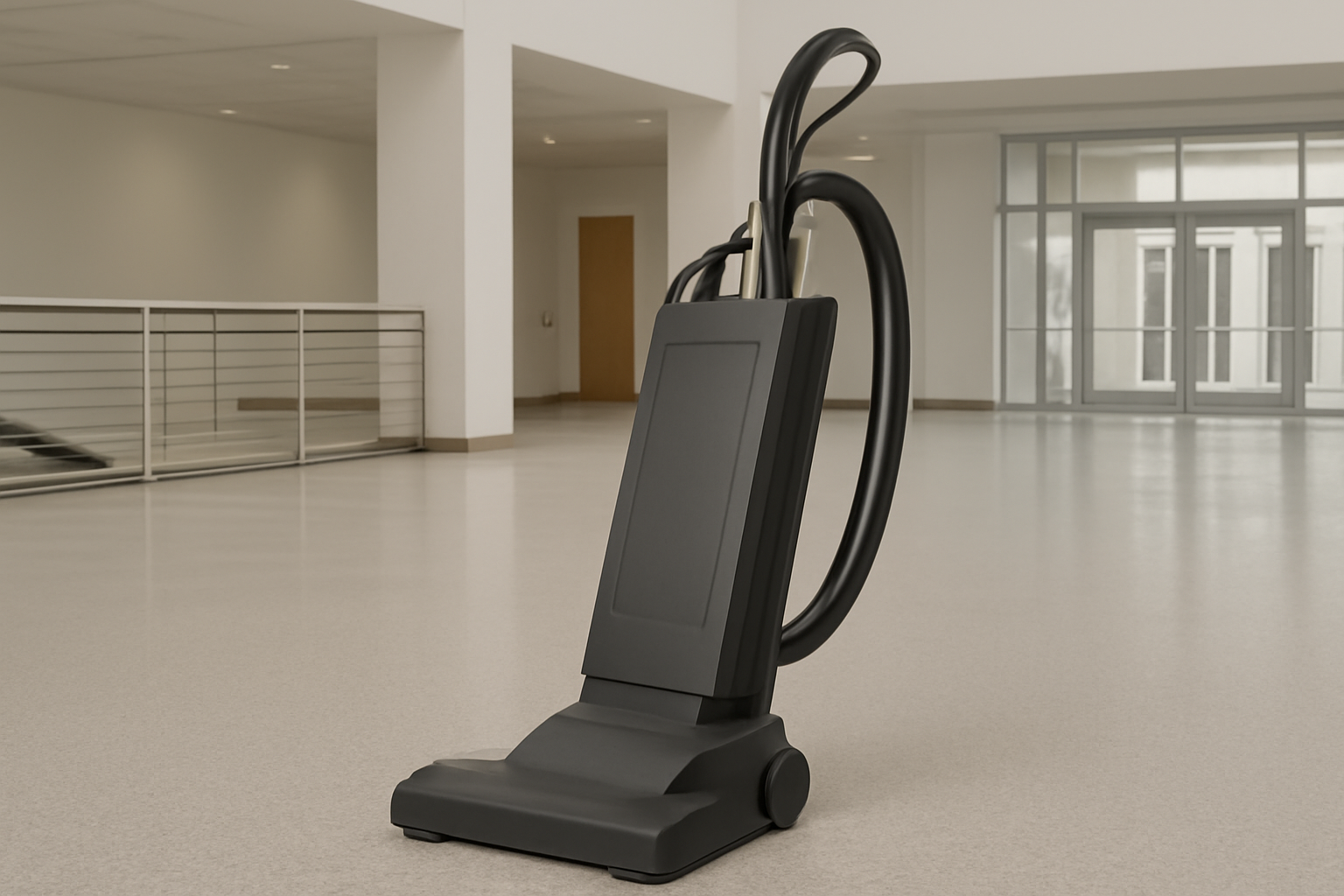
🌍 Cleaning Beyond the Surface: A New Scale of Hygiene
In large commercial environments — airports, shopping centers, logistics facilities — cleanliness has evolved from an operational need to a strategic value driver.
After the pandemic, facility managers face two persistent challenges:
Maintaining consistent disinfection across massive floor areas, and
Reducing labor and energy costs without compromising hygiene.
The solution lies in High-Sanitation Commercial Vacuums — machines built for power, precision, and persistence.
Equipped with HEPA filtration, wet & dry capabilities, and smart automation, they define the new benchmark for professional large-scale cleaning in 2025.
1️⃣ The Scale Problem: Cleaning Thousands of Square Meters Efficiently
Large spaces present unique cleaning challenges:
High daily footfall (up to 200,000 people/day in major malls)
Continuous dust and debris accumulation
Tight operational schedules with no downtime
Traditional equipment simply can’t sustain such workloads.
That’s why facility managers are switching to Upright Vacuum Cleaners and Large-Capacity Wet Dry Vacuum Cleaners designed specifically for heavy-duty, 24-hour performance.
“For large facilities, cleaning isn’t about doing more — it’s about doing smarter, faster, and cleaner.”
2️⃣ Industrial Power Meets Precision Engineering ⚙️
Modern Commercial HEPA Vacuums combine industrial suction motors with multi-stage air purification systems.
The latest models deliver:
Suction pressure exceeding 22 kPa
HEPA H14 filtration (99.995% efficiency)
Built-in dust compaction modules
Automatic filter cleaning (vibration or pulse jet systems)
This combination ensures continuous performance while minimizing filter maintenance — critical for warehouses, airports, and hospitals operating 24/7.
3️⃣ Wet & Dry Flexibility for Multi-Surface Environments 🌊
Commercial facilities often mix flooring materials — tiles, vinyl, concrete, carpets.
Wet Dry Vacuum Cleaners are indispensable for managing this diversity.
They can remove:
Fine industrial dust
Spilled liquids or oil
Organic waste from food courts
Models such as the Multi-Functional Durable Vacuum Cleaner are now equipped with dual-tank separation systems, preventing cross-contamination between dry and wet waste.
In 2025, high-end versions also include UV-C sterilization and auto-drainage features.
4️⃣ HEPA Filtration: Air Purity as an Added Value 🌫
In confined industrial spaces, air quality often suffers due to suspended fine particles.
Commercial vacuums with HEPA H13+ filtration double as air purification devices, capturing PM2.5, pollen, and microbial spores.
Paired with Vacuum Cleaner for Allergies and Vacuum for Multi-Surface configurations, they help companies comply with ISO 14644 and EN 1822 standards.
This feature has made HEPA-equipped vacuums increasingly popular in airports, pharmaceutical plants, and logistics centers.
5️⃣ Smart Technology: From Manual Labor to Automated Hygiene 🤖
Today’s cleaning equipment is more intelligent than ever.
Smart Vacuum Technology integrates sensors and connectivity modules that enable:
Real-time suction monitoring
Predictive maintenance alerts
Cleaning path optimization
Usage analytics for cost tracking
IoT dashboards allow facility managers to remotely monitor hundreds of units across multiple locations — ensuring consistent hygiene performance.
Some advanced systems even sync with Building Management Systems (BMS), forming part of a centralized Smart Cleaning Management ecosystem.
6️⃣ Quiet Operation for 24-Hour Facilities 🔇
In large venues like airports or hotels, cleaning must continue while people move around.
Quiet Vacuum for Night Use models — operating under 60 dB — allow round-the-clock sanitation without disrupting workers or visitors.
These vacuums often use brushless digital motors, delivering both silence and durability — a crucial combination for facilities running continuous shifts.
7️⃣ Energy Efficiency and Sustainability 🌱
Large-scale cleaning is energy-intensive, but 2025 technologies are closing that gap.
Energy-Saving Efficient Powerful Vacuum Cleaner systems cut electricity consumption by 25–35% using:
High-efficiency motors
Recyclable filter materials
Smart standby and eco-modes
Optimized air flow dynamics
Sustainability certifications like LEED and BREEAM now consider cleaning equipment efficiency in their scoring.
For multinational facilities, this translates directly into carbon reduction credits and operational savings.
8️⃣ Case Study: Smart Cleaning at an International Airport ✈️
A Middle Eastern airport — managing over 60 million passengers annually — implemented Large-Capacity Wet Dry Vacuum Cleaners integrated with smart monitoring software.
Within 9 months, results included:
Cleaning time reduced by 28%
Energy use lowered by 22%
Filter replacement costs dropped by 35%
Airborne particle counts decreased by 45%
This initiative not only improved passenger satisfaction scores but also helped the airport secure GBAC STAR™ Accreditation, a global hygiene excellence certification.
9️⃣ The Procurement Perspective: What to Look for 🧾
When sourcing commercial vacuums for large facilities, prioritize:
HEPA H14 filtration with certification
Wet & dry dual operation
Smart connectivity (IoT dashboards)
Noise <60 dB
Energy-saving brushless motor
Warranty + service network support
A long-term ROI approach — focusing on durability and efficiency — typically saves 20–30% over a 3-year lifecycle compared to generic industrial vacuums.
🔟 The Future: Connected Cleaning Ecosystems
By 2030, large-scale hygiene operations will shift toward fully autonomous cleaning fleets.
AI algorithms will assign tasks based on foot traffic, dust accumulation, and air quality data — automatically dispatching robots or vacuums to high-priority zones.
Partnerships with the European Cleaning & Hygiene Technology Alliance (ECHTA) are already developing frameworks for such Smart Sanitation Networks, integrating vacuum systems with other robotic and air filtration technologies.
Cleanliness in large spaces will no longer depend on manpower — it will rely on machine intelligence.
Conclusion: Power Meets Precision in Every Square Meter
In 2025, large-space hygiene is being redefined by smart, efficient, and sustainable vacuum systems.
For facility managers, this shift means moving from reactive cleaning to predictive, measurable hygiene.
The right commercial vacuum doesn’t just clean floors — it protects health, ensures compliance, and supports ESG objectives.
And in the vast spaces of tomorrow, technology is the new standard of cleanliness.
🧩 Hashtags
Upright Vacuum Cleaners, Household Vacuum Cleaners, Large-Capacity Wet Dry Vacuum Cleaner, Multi-Functional Durable Vacuum Cleaner, Vacuum Cleaner for Allergies, Quiet Vacuum for Night Use, High Suction Vacuum Cleaner, Energy-Saving Efficient Powerful Vacuum Cleaner, Smart Vacuum Technology, HEPA Filtration System, Smart Cleaning Devices, Commercial HEPA Vacuum, Industrial Cleaning Equipment, Smart Sanitation Solutions, B2B Cleaning Distributor, Smart Cleaning Management, Facility Hygiene Solutions, Clean Air Technology, Air Filtration Systems, Smart Air Purification, Energy Efficient Vacuums, Quiet Industrial Vacuum, Sustainable Cleaning Equipment, GCC Cleaning Industry, Middle East Cleaning Market, Smart Cleaning Automation, AI Cleaning Systems, Smart Building Hygiene, Industrial Facility Cleaning, Large Space Sanitation, Warehouse Cleaning Equipment, Airport Hygiene Technology, Smart Facility Management, Professional Cleaning Solutions, Smart Cleaning Innovation, Post-Pandemic Cleaning Strategy, Energy Saving Cleaning Equipment, Infection Control Equipment, Building Hygiene Systems, Industrial Smart Vacuums, Smart Cleaning Workflow, Smart Facility Operations, Lanxstar