Hi, message us with any questions.
We're happy to help!





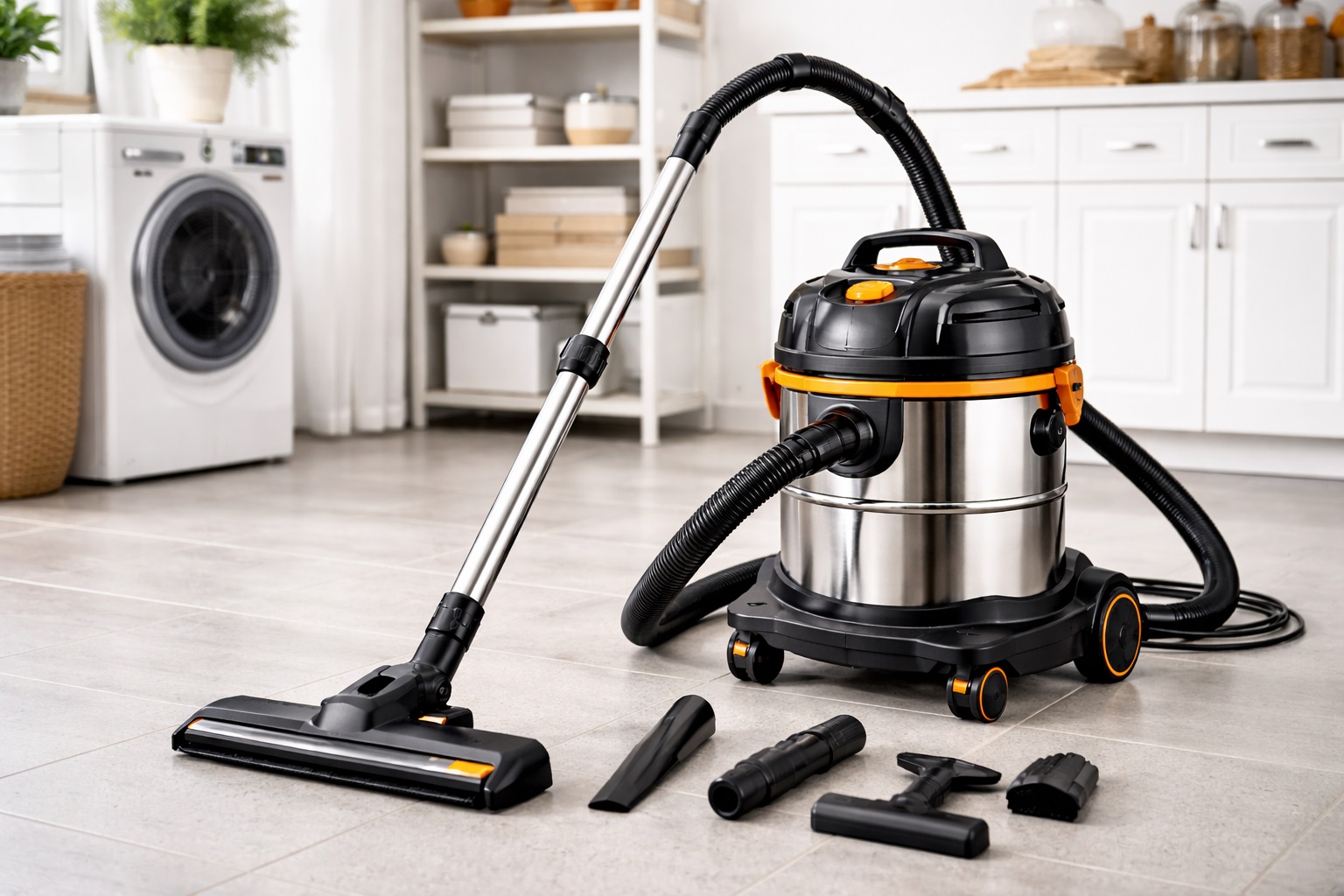
Most buyers think the barrel (canister) format wins for obvious reasons: reach, flexibility, and “feels premium.” But if you’re building or sourcing Household Vacuum Cleaners for Europe and the Middle East, the hidden advantages are more valuable than the obvious ones—because they influence returns, warranty rate, accessory revenue, and platform scalability.
This article is written for EU & Middle East vacuum cleaner product R&D engineers (and the technical buyers who support them). We’ll focus on the less-discussed mechanical and commercial benefits you can actually use when designing, auditing, or selecting a lineup—especially if you also carry Upright Vacuum Cleaners and want clearer segmentation.
🕵️ I. The “Distance Advantage”: Why Barrel Designs Can Feel Quieter Without Changing the Motor
A Quiet Vacuum for Night Use isn’t just about decibels—it’s about where the noise is relative to the user and how vibration travels through the structure.
What many teams miss
In many upright designs, the motor is physically closer to the user’s hands and ears. With barrel units, the motor sits in the canister behind the operator, which can reduce perceived loudness even when measured dB isn’t dramatically different.
Engineering lever you can use
Isolation space: canister shells often have more room for damping materials and air chambers.
Vibration path control: fewer rigid “upright spine” structures can reduce vibration transfer into the handle.
User-perceived quietness: distance + insulation can make “quiet” feel real, which matters for night-time messaging.
Hidden win: you can credibly position a barrel model as a Quiet Vacuum for Night Use with smarter acoustic packaging—not necessarily a more expensive motor.
🔩 II. Airflow Stability Under Real Dust Loading (Where “High Performance” Usually Dies)
Many vacuums perform well for the first 3 minutes. Then real life happens: dust loads filters, airflow becomes turbulent, and suction drops. Consumers don’t say “airflow collapsed”—they say “this vacuum is weak” and return it.
Why barrel architecture helps
Barrel designs often allow:
wider, smoother air paths
more forgiving bend geometry
larger filter surface options
better thermal management space
That creates a less fragile system: performance stays more consistent under partial loading, which is exactly how households use Household Vacuum Cleaners.
Hidden win: fewer “sudden weak suction” complaints—one of the most common drivers of negative reviews and returns.
🧬 III. The Modular Platform Effect: One Core, Multiple Identities (Without Re-Engineering Everything)
This is the advantage that changes your business model: barrel vacuums are naturally “platform products.”
What that means in product-line design
You can keep the canister core stable (motor housing, filtration layout, power electronics, hose interface), and create multiple market-ready SKUs by swapping:
floor heads (parquet, combo, turbo)
wands (length, material)
filtration tiers
accessory kits
cable length & plug standards
Why it matters against Upright Vacuum Cleaners
Many upright designs are more integrated. Differentiating SKUs often forces bigger tooling or structural changes. Barrel designs let you segment price bands with less risk.
Hidden win: faster iteration cycles and fewer supply-chain surprises when you scale production.
🧯 IV. Better “Floor Safety Control” Without Sacrificing Pickup
Hard floors are a reputation minefield. One scratch-related complaint can create a cascade of low-star reviews. That’s why the hidden advantage is not just that barrel vacuums can be good on floors—it’s that they give you more control over floor interaction.
Why this matters for a Vacuum Cleaner for Hardwood Floors
A great Vacuum Cleaner for Hardwood Floors needs:
gentle contact edges
smooth wheels
suction control (to prevent sticking)
debris intake that doesn’t “snowplow” grit
Barrel designs often place less weight on the head and make head-swapping easy, so you can create a hardwood-focused variant with minimal rework.
Hidden win: lower scratch/drag complaint risk while maintaining strong fine-dust pickup.
🧼 V. “Self-Cleaning” Is Easier to Make Real in a Canister Ecosystem
The market is full of vague claims like “self-cleaning.” For a Portable Self-Cleaning Vacuum Cleaner, what’s credible is not a slogan—it’s a user-proof mechanism that reduces maintenance effort.
How barrel systems help “self-cleaning” become believable
Because barrel vacuums are accessory-driven, you can build self-cleaning experiences through:
easy-access pre-filters
dust container geometry that sheds debris
hair-release features in heads
washable filter workflows that are hard to misuse
You can also design packaging and storage that encourages correct maintenance behavior—something often neglected in upright formats.
Hidden win: fewer customer mistakes → fewer “it stopped working” claims that are really maintenance failures.
🚗 VI. The “Car Cleaning Upgrade Path” Buyers Underuse
Here’s the commercial blind spot: a barrel vacuum can become a credible Car Vacuum Cleaner solution without becoming a dedicated car product.
Why this matters
Many households want one product that cleans:
floors
sofas
stairs
vehicles
Barrel format already has the physical fundamentals: hose reach + crevice access. With the right accessory kit (long crevice tool, brush set, flexible hose), your “home vacuum” becomes a car-cleaning solution that buyers actually use.
Hidden win for distributors
Car cleaning is a strong emotional trigger and a high-conversion demo:
“Look how it gets between seats.”
“Look how it reaches the trunk corners.”
That increases basket size with low-risk accessories.
🧲 VII. The Cordless Handheld Bundle Strategy That Increases Conversion
Instead of forcing one vacuum to do everything, the best modern assortment strategy is pairing:
a barrel vacuum as the “deep clean + whole-home” platform
a Cordless Handheld Vacuum Cleaner for daily crumbs and fast touch-ups
Why this is a hidden advantage for barrel models
Barrel vacuums don’t compete with handhelds—they complement them. You can package bundles or cross-sell without cannibalizing the main product.
How to message it (B2B-ready)
Barrel = weekly deep clean, mixed-floor, low fatigue
Cordless handheld = daily speed, kitchen spills, quick car touch-ups
Hidden win: higher AOV, clearer customer expectation, fewer returns due to “wrong product for daily behavior.”
🧵 VIII. Hair and Fiber Management: It’s Not Just “Pet Hair”—It’s Clog Economics
Even in non-pet households, hair and fibers cause:
brush roll wrap
head friction noise
airflow restriction
“it smells hot” complaints
Barrel format supports multiple head options, so you can tune for:
rugs + fibers
hard floors + fine dust
upholstery + hair
Compared with some Upright Vacuum Cleaners, where one head must satisfy all jobs, barrel systems let you solve the “hair problem” through targeted tools.
Hidden win: fewer clogs and less head drag—two issues that drive poor reviews quickly.
📦 IX. Serviceability and Warranty Control: The Advantage Nobody Puts on the Box
In B2B reality, the best product is often the one that’s easiest to service.
Barrel vacuums frequently allow:
simpler internal layouts
easier access to filters and seals
faster replacement of hoses and cuffs
clearer part modularity (head/wand/hose)
Why this matters for your channel
Faster repairs reduce replacement losses
Standardized interfaces reduce spare parts complexity
A robust accessory ecosystem extends product life
Hidden win: lower warranty friction and better long-term reputation—especially important for distributors building repeat buyers.
🧾 X. A Practical “Hidden Advantage” Checklist for Auditing a Barrel Vacuum Sample
Use this before you commit to a lineup:
Quiet perception test: does it feel night-friendly after 10 minutes, not just at startup?
Dust-load stability: does performance collapse with partial filter loading?
Hard floor glide: does the head drag or stick on hardwood?
Tool swap speed: can users switch modes quickly without frustration?
Car usability: does the crevice tool actually reach seat rails and tight gaps?
Handheld pairing: can you bundle a Cordless Handheld Vacuum Cleaner logically without confusing buyers?
Service access: can common failure parts be replaced fast?
This checklist turns “hidden advantages” into measurable buying and design decisions.
✅ Conclusion
Barrel vacuums aren’t just flexible—they’re quietly superior in ways that directly improve B2B outcomes. Beyond the obvious reach and versatility, the hidden advantages include better perceived quietness for a Quiet Vacuum for Night Use, stronger real-world performance stability under dust loading, safer control for a Vacuum Cleaner for Hardwood Floors, and a platform structure that supports credible add-ons like a Portable Self-Cleaning Vacuum Cleaner workflow, a compelling Car Vacuum Cleaner kit, and a complementary Cordless Handheld Vacuum Cleaner bundle strategy.
You can still position Upright Vacuum Cleaners for carpet-first convenience. But if your goal is to build a scalable, modular product family that reduces complaint risk and increases accessory revenue, barrel vacuums offer hidden leverage that most assortments underuse.
📌 Hashtags
householdvacuumcleaners, barrelvacuum, canistervacuum, uprightvacuumcleaners, cordlesshandheldvacuumcleaner, portableSelfCleaningVacuumCleaner, carvacuumcleaner, quietvacuumfornightuse, lowNoiseVacuumDesign, acousticDamping, vibrationIsolation, airflowStability, filterLoadPerformance, sealedAirPath, thermalManagement, hardwoodFloorSafety, vacuumcleanerforhardwoodfloors, parquetBrush, softRollerHead, suctionControl, antiScratchWheels, edgeCleaningPerformance, modularAccessorySystem, accessoryKits, multiSurfaceCleaning, upholsteryTool, stairCleaning, creviceToolLong, carDetailingAttachment, flexibleHose, hairManagement, antiTangleHead, brushrollGeometry, maintenanceFriendlyDesign, washableFilterWorkflow, dustContainerShedding, serviceability, sparePartsPlanning, warrantyCostControl, platformProductStrategy, SKUArchitecture, privateLabelVacuum, OEMvacuumcleaner, ODMvacuumcleaner, distributorMargin, B2BvacuumProcurement, EUapplianceMarket, MiddleEastGCCChannel, nightCleaningSolution, compactStorageDesign, premiumHomeCare, Lanxstar