Hi, message us with any questions.
We're happy to help!





 🌍 Introduction
In the evolution of modern vacuum cleaner technology, one of the most critical choices lies in its filtration system — specifically, whether to use HEPA filters or washable filters. Both types have their loyal users and unique engineering advantages. For distributors and manufacturers across the Middle East, the decision is more than technical; it’s economic and environmental.
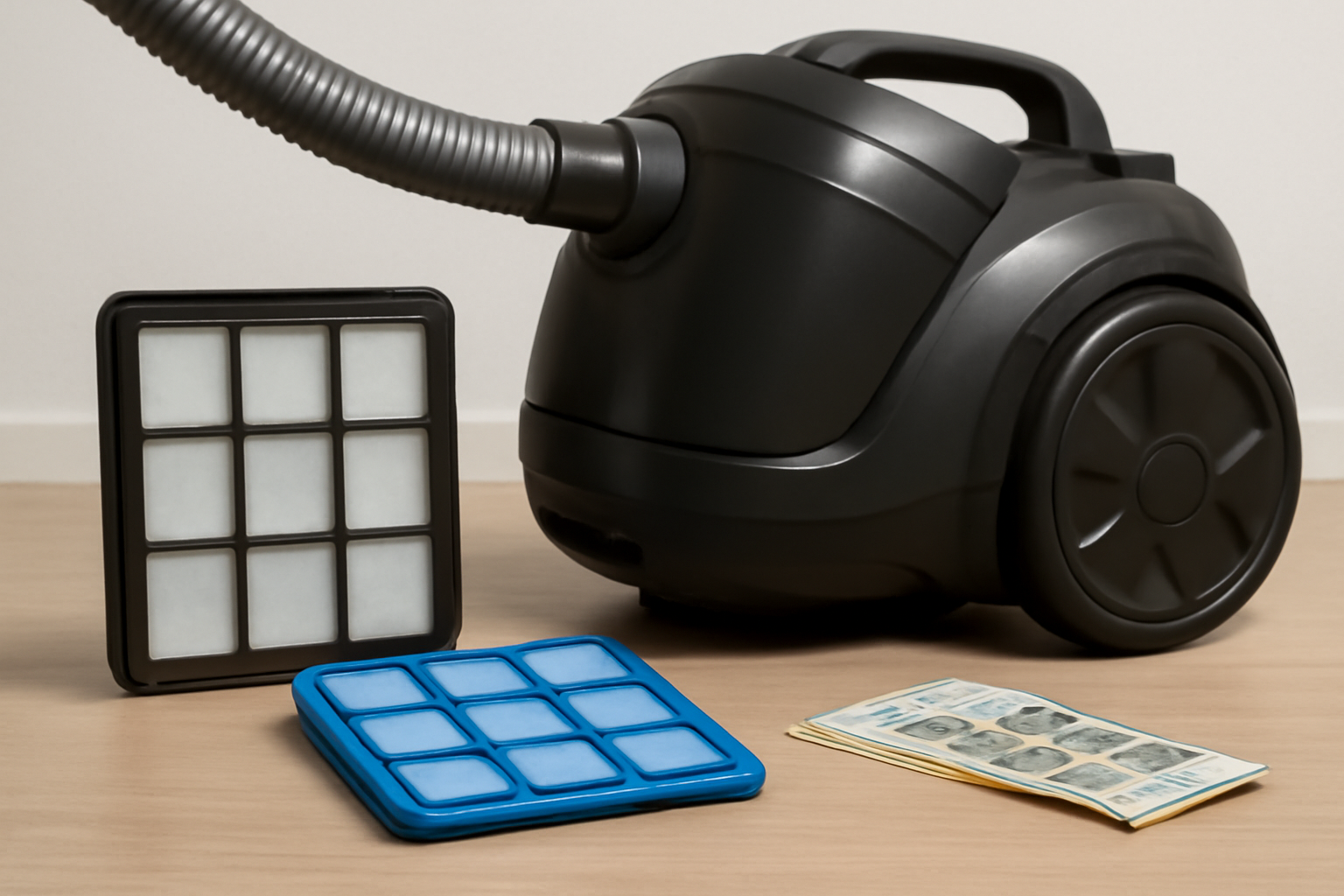
HEPA (High Efficiency Particulate Air) filters remain the gold standard for High Suction Vacuum Cleaners, known for their superior air purification and allergen control. Yet, washable filters, often featured in Energy-Saving Efficient Powerful Vacuum Cleaners, promise lower maintenance costs and greater sustainability.
This article explores the true cost differences between HEPA and washable filters — not just in price, but in performance longevity, cleaning frequency, and total ownership value. 🌿⚙️
⚙️ Part 1: Understanding HEPA and Washable Filters
🔹 HEPA Filters: Precision Filtration
HEPA filters are designed to capture up to 99.97% of airborne particles as small as 0.3 microns — including pollen, dust mites, bacteria, and smoke. In HEPA Filter Vacuum Cleaners, multiple densely packed fibers create a labyrinth that traps even microscopic contaminants.
These filters are ideal for households with pets 🐾, allergy sufferers, and cleanroom applications. However, they are typically non-washable, meaning once saturated, they must be replaced.
Pros:
✅ Highest filtration efficiency
✅ Excellent for allergy and asthma control
✅ Reliable air purification
Cons:
❌ Higher replacement cost
❌ Shorter lifespan (6–12 months depending on usage)
❌ Sensitive to moisture and damage
🔹 Washable Filters: Reusable and Sustainable
Washable filters use synthetic or mesh materials that can be rinsed and reused multiple times without degrading their structure. Commonly found in Self-Cleaning Vacuum Cleaners and Cordless Smart Wet & Dry Vacuum Cleaners, these filters provide long-term cost benefits and environmental advantages.
Pros:
✅ Reusable up to 50+ cycles
✅ Eco-friendly, less waste
✅ Lower annual maintenance costs
Cons:
❌ Slightly lower filtration precision
❌ Requires proper drying to avoid mold
❌ Periodic cleaning effort
🧾 Part 2: Cost Comparison — Short-Term vs Long-Term
When evaluating the true cost of ownership, initial purchase price is only part of the equation. What matters most is the lifecycle cost, which includes replacement frequency, maintenance labor, and energy efficiency.
| Filter Type | Average Cost per Unit | Lifespan | Annual Replacement (avg) | Estimated 3-Year Cost |
|---|---|---|---|---|
| HEPA Filter | $20–$35 | 6–12 months | 3–5 | $90–$150 |
| Washable Filter | $25–$40 | 24–36 months | 1 | $25–$40 |
💡 Insight:
A washable filter may cost slightly more upfront but saves up to 70% in long-term maintenance costs. For commercial buyers, this difference scales dramatically — especially in Large-Capacity Wet Dry Vacuum Cleaners used daily in industrial cleaning.
However, cost isn’t just monetary. The downtime required to replace HEPA filters or clean washable ones also affects overall productivity and operational efficiency.
⚙️ Part 3: Performance and Efficiency in Real Use
💨 Airflow and Suction Stability
HEPA filters provide high resistance due to dense fiber construction. Over time, as dust accumulates, airflow decreases — reducing suction power and forcing motors to draw more energy.
Washable filters, particularly in Energy-Saving Efficient Powerful Vacuum Cleaners, maintain more stable airflow. When cleaned properly, they restore suction efficiency to 95–100% of the original capacity, reducing strain on the motor.
🔋 Energy Consumption
In extended use tests, HEPA filters increased energy consumption by 12–15% once partially clogged, while washable filters maintained optimal energy efficiency across multiple cleaning cycles. This explains why Cordless Vacuum Cleaners increasingly adopt washable multi-layer systems to extend battery life.
🌿 Sustainability Advantage
Washable filters align with the eco-conscious goals of modern consumers. Reducing disposable waste and extending component life significantly lower the carbon footprint of each vacuum cleaner sold.
For manufacturers, promoting washable filtration supports sustainability branding — a growing demand across Middle Eastern and European markets.
🧠 Part 4: Engineering Perspective — Design and Durability
🔹 Material Technology
Modern washable filters use hydrophobic synthetic fibers, stainless mesh, or nano-fiber membranes resistant to moisture and corrosion. These materials balance durability with high permeability, ensuring air passes freely without particle leakage.
HEPA filters, meanwhile, rely on micro-glass or PTFE fiber layers. While highly effective, they are sensitive to water and cleaning stress, making replacement the only safe option once clogged.
🔹 Maintenance Complexity
HEPA Filter Maintenance: Requires careful handling. Replacement involves manual disassembly and disposal. Improper installation can cause air leaks.
Washable Filter Maintenance: Requires periodic rinsing under running water, gentle drying, and reinsertion. Some Self-Cleaning Vacuum Cleaners automate this process entirely, reducing user effort.
🔹 Lifespan Analysis
Average HEPA lifespan: 200–300 operational hours
Average washable filter lifespan: 800–1000 operational hours
This translates to up to 4x longer service life for washable designs — a major advantage for professional users and OEM buyers seeking low-maintenance solutions.
🏠 Part 5: Market Application & User Insights
🏡 Residential Users
For families with pets or allergy concerns, HEPA Filter Vacuum Cleaners remain unmatched in precision filtration. Their ability to remove microscopic allergens makes them indispensable in health-focused households.
However, for apartments or general-purpose cleaning, washable filters in Portable Quiet Vacuum Cleaners offer sufficient air purification with minimal running costs.
🏢 Commercial and Industrial Buyers
Distributors supplying hotels, malls, or factories prioritize Large-Capacity Wet Dry Vacuum Cleaners with washable filters. These machines often operate continuously, making filter longevity a key cost factor. Washable systems significantly reduce inventory and replacement logistics.
🐾 Pet and Vehicle Applications
For Vacuum Cleaners for Pet Hair and Car Vacuum Cleaners, washable filters are ideal — they can be cleaned frequently without losing structure. Pet hair tends to clog HEPA filters faster, demanding costly replacements.
🔮 Part 6: The Future of Filtration Cost Optimization
As vacuum technology advances, hybrid solutions are emerging — combining the filtration precision of HEPA with the longevity of washable materials.
🤖 Smart Filter Monitoring
New models integrate AI sensors that monitor airflow resistance and automatically trigger cleaning cycles or replacement alerts. These “smart filters” minimize user intervention while optimizing energy efficiency.
🔋 Self-Cleaning Multi-Layer Filters
High-end 4 in 1 Cordless Smart Wet & Dry Vacuum Cleaners now feature self-cleaning HEPA hybrids. Through reverse airflow and vibration, they dislodge dust automatically — extending both filter and motor life.
🌿 Eco-Driven Innovation
Brands are developing recyclable HEPA cartridges and bio-based washable materials, ensuring long-term sustainability. For distributors and OEMs, this innovation represents a key selling point in global markets increasingly governed by environmental regulations.
👉 Explore advanced cost-efficient filtration solutions at www.lxvacuum.com
🧾 Conclusion
The comparison between HEPA filters and washable filters is not a matter of superiority, but of suitability.
Choose HEPA filters for maximum air purity and allergen protection.
Choose washable filters for long-term savings, durability, and eco-sustainability.
In modern Energy-Saving Efficient Powerful Vacuum Cleaners, washable technology continues to evolve — blending high filtration accuracy with minimal maintenance. For both consumers and distributors, understanding these trade-offs is key to balancing performance, cost, and environmental responsibility. ✨
📌 Suitable for
Middle East vacuum cleaner distributors, OEM buyers, R&D engineers, household appliance designers, and sustainability-focused cleaning solution providers.
🧠 SEO TAGS
High Suction Vacuum Cleaner, Portable Quiet Vacuum Cleaner, Self-Cleaning Vacuum Cleaner, Multi-Functional Durable Vacuum Cleaner, Fast Lightweight Vacuum Cleaner, Energy-Saving Efficient Powerful Vacuum Cleaner, Large-Capacity Wet Dry Vacuum Cleaner, Li-ion Cordless Handheld Vacuum Cleaner, Wet Dry Vacuum Cleaners, 4 in 1 Cordless Smart Wet & Dry Vacuum Cleaner, cordless handheld vacuums, Cordless Vacuum Cleaner, Car Vacuum Cleaner, quiet vacuum cleaner, wet dry vacuum, Vacuum Cleaner for Pet Hair, HEPA Filter Vacuum Cleaner, Wet and Dry Vacuum Cleaner, Apartment Vacuum Cleaner, washable filter vacuum, filter maintenance cost, HEPA filter replacement, energy-efficient design, eco-friendly vacuum cleaner, multi-layer filtration, smart vacuum system, AI cleaning sensor, long-life washable filter, high-performance suction, sustainable cleaning technology, anti-allergy filtration, cordless smart vacuum, filter cost comparison, low-maintenance vacuum, self-cleaning system, home vacuum innovation, powerful suction control, industrial-grade cleaner, efficient wet dry vacuum, reusable filter design, low noise operation, HEPA upgrade system, washable HEPA hybrid, filter durability test, compact apartment cleaner, high-efficiency motor system, sustainable household cleaning, energy-saving filter design, vacuum filter innovation.



