Hi, message us with any questions.
We're happy to help!





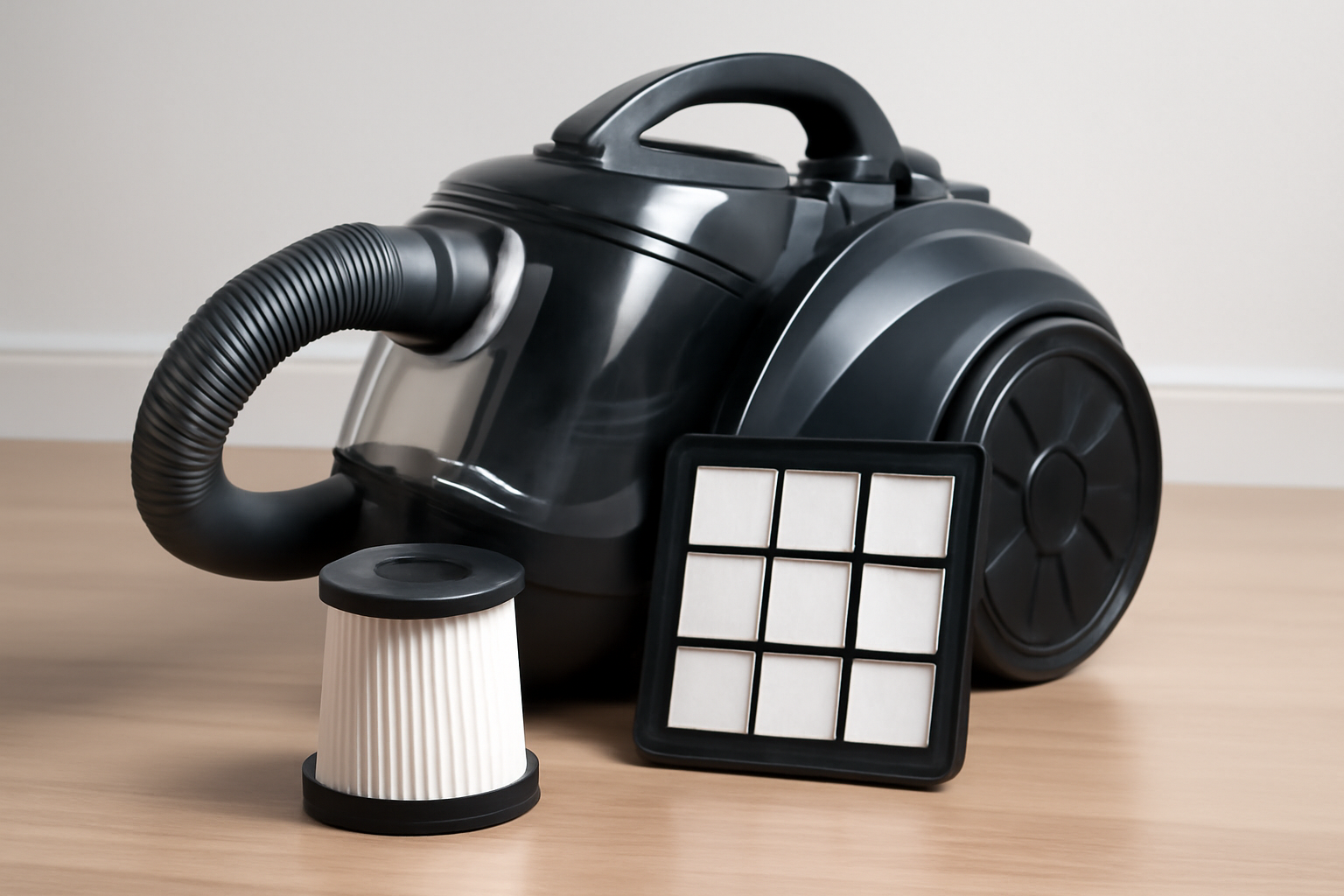
In the modern vacuum cleaner industry, performance is not only about suction power — it’s about how smartly that power is achieved. Every watt of energy and every particle of dust flow through a single gateway: the filter. From compact cordless designs to Energy-Saving Efficient Powerful Vacuum Cleaners, filter engineering determines whether a vacuum performs at its best or struggles with airflow inefficiency.
Poorly designed filters create resistance, waste motor power, and shorten product lifespan. On the other hand, well-engineered filters enhance airflow, extend battery life, and maintain high suction over time — essential features for both home users and industrial buyers.
This article explores the science behind how filter design impacts suction power and energy consumption, showcasing how innovative materials, airflow dynamics, and smart technologies are redefining the performance of today’s High Suction Vacuum Cleaners and Cordless Smart Vacuums.
⚙️ Part 1: The Science Behind Suction Power and Airflow Design
Suction power in a vacuum cleaner is the result of pressure difference created by the motor. When air moves through the vacuum’s chamber, any resistance — such as a clogged or restrictive filter — reduces suction efficiency. The motor must then work harder, consuming more power to maintain the same suction level. 🔋
Modern engineering focuses on achieving maximum airflow with minimal resistance. This is where filter architecture becomes critical. The number of pleats, pore size, material density, and surface area all affect how air moves through the system.
For instance, a High Suction Vacuum Cleaner with a conical multi-layer filter experiences smoother airflow distribution than a flat single-layer one. This design minimizes turbulence, ensuring dust is captured effectively without creating bottlenecks.
Advanced computational fluid dynamics (CFD) tools are now used by vacuum R&D teams to model airflow patterns. The goal: reduce pressure loss by optimizing both filter geometry and housing placement. The result is a quieter, cooler, and more energy-efficient cleaner. 🌿
🧬 Part 2: Comparing Filter Types and Their Performance
Different filter structures create different balances between suction performance and energy consumption. Let’s explore the three dominant types used in today’s Cordless Vacuum Cleaners and Wet and Dry Vacuum Cleaners.
| Filter Type | Filtration Efficiency | Airflow Resistance | Energy Use | Maintenance |
|---|---|---|---|---|
| Single-Layer Filter | Moderate | Low | High | Frequent Cleaning |
| Multi-Layer HEPA Filter | High | Medium | Low | Less Frequent |
| Washable Filter | High | Low | Low | Easy Maintenance |
🔹 Single-Layer Filters
Basic and cost-effective, these filters are typically found in entry-level vacuums. While airflow is initially strong, fine dust quickly clogs the mesh, leading to suction drop and higher energy draw.
🔹 Multi-Layer HEPA Filters
HEPA (High Efficiency Particulate Air) technology revolutionized vacuum cleaning by trapping 99.97% of particles as small as 0.3 microns. In HEPA Filter Vacuum Cleaners, multiple layers of fine fibers are strategically arranged to capture various particle sizes — from coarse debris to allergens — while maintaining optimal airflow.
🔹 Washable and Reusable Filters
Washable filters, commonly seen in Self-Cleaning Vacuum Cleaners, combine efficiency with sustainability. These filters use hydrophobic coatings and durable synthetic fibers that maintain filtration capacity even after multiple wash cycles. They also reduce waste and long-term maintenance costs — perfect for Eco-Friendly Vacuum Solutions.
By combining these filter technologies, modern Multi-Functional Durable Vacuum Cleaners achieve steady suction and extended motor life with reduced power consumption.
🧠 Part 3: Engineering Optimization — Balancing Power and Efficiency
Behind every efficient vacuum cleaner lies precise engineering. Manufacturers are now investing in advanced materials and smart systems to strike the perfect balance between suction and energy use.
💡 1. Nano-Fiber and Electrostatic Filter Materials
Traditional paper filters are being replaced by nano-fiber composite materials with high porosity and low drag coefficients. Electrostatic coatings attract fine dust particles without restricting airflow. This ensures continuous suction performance — a key benefit for Energy-Saving Efficient Powerful Vacuum Cleaners.
💡 2. Smart Airflow Channels and Dynamic Suction
Engineers redesign internal ducts and seals to create laminar airflow — reducing turbulence that causes energy loss. In Cordless Handheld Vacuums, this optimization extends runtime by up to 25% while keeping suction power stable.
💡 3. AI and Sensor Integration 🤖
Next-generation Smart Vacuum Systems now include sensors that monitor filter clog levels. When blockage is detected, the vacuum automatically adjusts suction or activates a Self-Cleaning Mechanism to clear debris. These intelligent features ensure consistent airflow, protect the motor, and lower energy consumption over time.
💡 4. Compact Yet Powerful Battery Systems
Modern Li-ion Cordless Handheld Vacuum Cleaners combine efficient filtration with optimized power draw. With lightweight architecture and energy-aware motor control, they maintain high suction for longer durations — ideal for apartments, vehicles, and small offices.
🏠 Part 4: User Benefits and Market Insights
Filter design doesn’t just impact internal performance — it shapes the entire user experience.
🔹 Continuous Suction and Longer Battery Life
A vacuum with optimized filter flow maintains consistent suction, even during extended cleaning sessions. This stability saves battery energy and reduces noise. Consumers can clean more efficiently with less effort — especially when using a Portable Quiet Vacuum Cleaner.
🔹 Reduced Maintenance and Operational Costs
Buyers and distributors in the Middle East market value products with low-maintenance washable filters. These filters can be reused for years, saving on consumables and improving ROI for bulk procurement.
🔹 Healthier Air Quality for Homes with Pets 🐾
For pet owners, Vacuum Cleaners for Pet Hair with HEPA-grade filtration trap fur, dander, and allergens effectively. Clean exhaust air improves indoor air quality — essential for households in regions prone to dust and allergies.
🔹 Compact, Apartment-Friendly Designs 🏢
In urban living spaces, the Apartment Vacuum Cleaner provides lightweight convenience without compromising filtration. Its combination of smart motor control and efficient airflow ensures powerful suction while consuming less electricity.
🔹 Eco-Friendly and Sustainable 🌿
Washable and reusable filters eliminate disposable waste. Energy-efficient operation aligns with global sustainability goals, making these vacuums not only smarter but greener.
🔮 Part 5: The Future of Filter Design in Vacuum Innovation
As technology evolves, filter design is entering a new era of intelligence and sustainability.
AI-Powered Predictive Maintenance — Filters will monitor their own lifespan and send maintenance alerts to mobile apps.
Self-Healing Membranes — Future materials will automatically repair micro-damage, extending operational life.
IoT Integration — Connected vacuums will share performance data across networks for predictive optimization.
Hybrid HEPA + Carbon Filters — Combining particulate and odor filtration for cleaner, fresher environments.
These trends will dominate the next generation of 4 in 1 Cordless Smart Wet & Dry Vacuum Cleaners, ensuring powerful, energy-efficient, and intelligent cleaning systems designed for both homes and industries.
👉 Learn more about advanced vacuum innovations at www.lxvacuum.com
🧾 Conclusion
Filter design is the true heart of vacuum performance. By optimizing airflow, material selection, and filtration architecture, manufacturers can achieve powerful suction with minimal energy loss. From HEPA Filter Vacuum Cleaners to Cordless Smart Wet & Dry Vacuums, innovation in filter technology ensures cleaner homes, lower operational costs, and greener living.
In short — better filters mean better efficiency. As the industry moves toward smarter, eco-conscious solutions, filter engineering will continue to define the future of vacuum cleaning. ✨
📌 Suitable for
Middle East vacuum cleaner distributors, OEM buyers, R&D engineers, home appliance professionals, and smart cleaning solution providers.
🧠 SEO TAGS
High Suction Vacuum Cleaner, Portable Quiet Vacuum Cleaner, Self-Cleaning Vacuum Cleaner, Multi-Functional Durable Vacuum Cleaner, Fast Lightweight Vacuum Cleaner, Energy-Saving Efficient Powerful Vacuum Cleaner, Large-Capacity Wet Dry Vacuum Cleaner, Li-ion Cordless Handheld Vacuum Cleaner, Wet Dry Vacuum Cleaners, 4 in 1 Cordless Smart Wet & Dry Vacuum Cleaner, cordless handheld vacuums, Cordless Vacuum Cleaner, Car Vacuum Cleaner, quiet vacuum cleaner, wet dry vacuum, Vacuum Cleaner for Pet Hair, HEPA Filter Vacuum Cleaner, Wet and Dry Vacuum Cleaner, Apartment Vacuum Cleaner, washable filter vacuum, energy-efficient motor, suction optimization, smart airflow design, low resistance filter, HEPA upgrade, multi-layer filtration, eco cleaning system, AI smart vacuum, cordless efficiency, filter maintenance cost, long-life vacuum filter, sustainable filter material, anti-allergy vacuum cleaner, quiet suction power, dust separation technology, self-cleaning system, intelligent airflow sensor, compact apartment vacuum, rechargeable cordless vacuum, efficient wet dry cleaner, deep cleaning suction, eco vacuum solution, filter innovation, low energy consumption, HEPA air purifier vacuum, industrial-grade suction, powerful motor vacuum, next-gen smart cleaner, energy-optimized airflow, home cleaning innovation.



