Hi, message us with any questions.
We're happy to help!





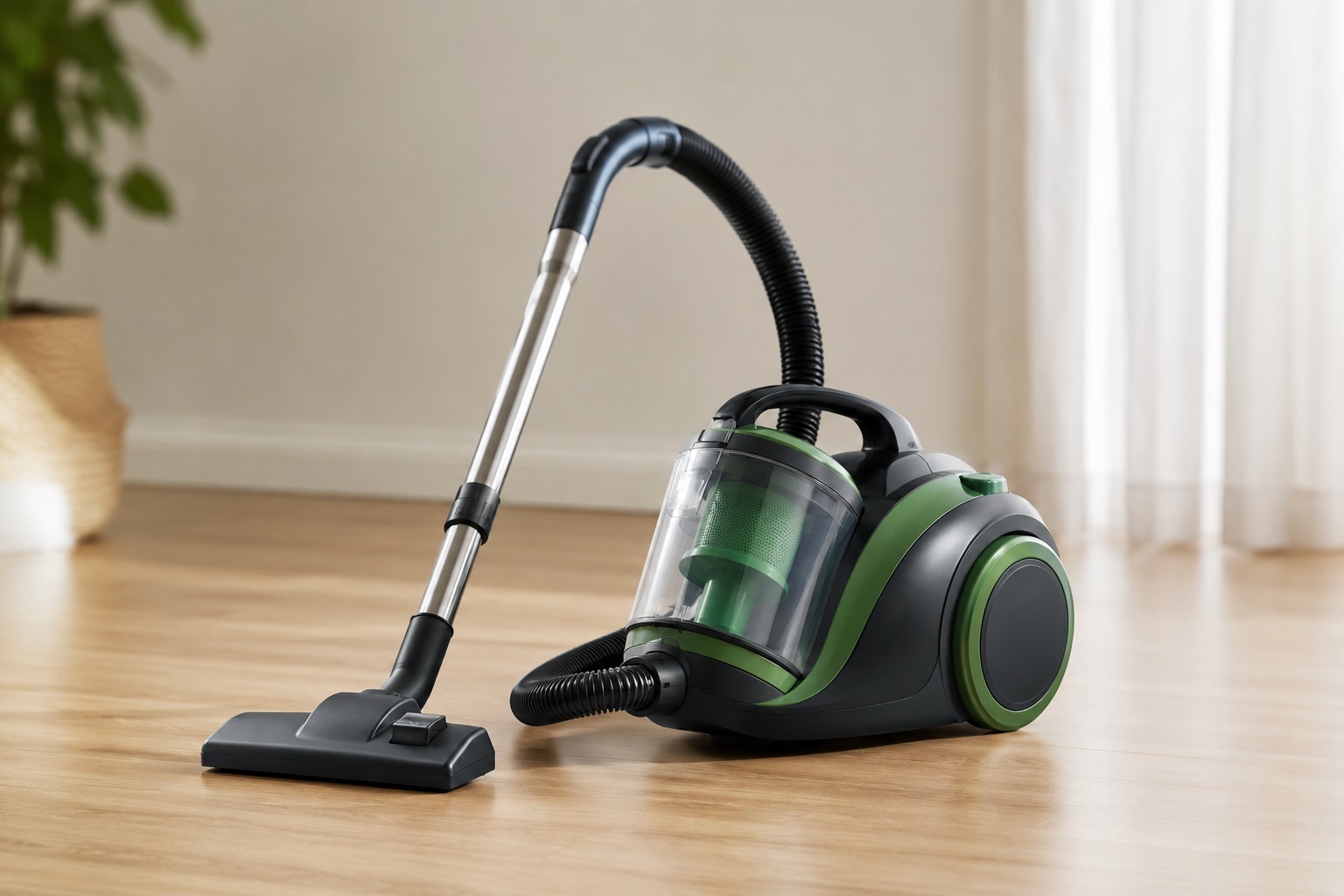
The Hidden Eco Vacuum Cleaner Trend Most Suppliers Still Ignore
For years, vacuum cleaner manufacturers competed using one core metric:
More suction power.
But across Europe, that logic is rapidly disappearing.
Today, distributors, commercial cleaning contractors, and facility management companies are asking entirely different questions:
How much electricity does this machine consume annually?
Can the battery be replaced after 3 years?
Does the product comply with upcoming EU sustainability regulations?
Is the vacuum cleaner repairable?
Are spare parts guaranteed?
Can the packaging meet eco procurement requirements?
This shift is transforming the European cleaning equipment industry faster than many suppliers realize.
And according to several European appliance market reports, sustainable home and commercial appliances are expected to maintain strong growth momentum through the next decade, driven by rising energy prices, ESG procurement policies, and stricter environmental regulations.
For every vacuum cleaner manufacturer and vacuum supplier Europe, the market is no longer rewarding suppliers that only compete on price.
Europe is now rewarding suppliers that can deliver:
sustainability,
repairability,
energy efficiency,
and long-term operational value.
📊 Europe’s Eco Appliance Boom Is Reshaping Buyer Behavior
The European Green Deal, Ecodesign regulations, and Right-to-Repair policies are fundamentally changing how buyers evaluate appliances.
In the past:
suction power sold products.
Today:
lifecycle cost sells products.
According to European Commission energy initiatives, household appliances remain a major contributor to residential electricity consumption, accelerating demand for energy saving vacuum systems.
This is especially visible in:
Germany
France
Netherlands
Sweden
Denmark
where commercial buyers increasingly prioritize ESG-compliant cleaning equipment during procurement evaluation.
For many distributors, carrying sustainable products is no longer optional.
It is becoming necessary for market survival.
♻️ What Buyers REALLY Mean by “Eco Vacuum Cleaner”
One major mistake many OEM factories still make is assuming:
“Low wattage means eco-friendly.”
That definition is now outdated.
Modern European buyers evaluate an eco vacuum cleaner using a much broader sustainability framework.
🔋 The New Procurement Checklist in Europe
| Buyer Evaluation Area | Why It Matters |
|---|---|
| Energy efficiency | Lower operational costs |
| Battery cycle lifespan | Reduced maintenance expense |
| Spare parts availability | Long-term servicing capability |
| Recyclable materials | ESG compliance |
| Noise reduction | EU workplace standards |
| HEPA filtration | Indoor air quality requirements |
| Repairability | Reduced electronic waste |
| Factory sustainability | Brand procurement reputation |
This is why some cheaper vacuum cleaners lose contracts despite lower pricing.
Because experienced European buyers increasingly ask:
“What is the total ownership cost over 5 years?”
instead of:
“What is today’s factory price?”
🚀 Trend 1: Energy Saving Vacuum Systems Are Becoming Mandatory
Electricity prices across Europe continue rising.
This has pushed commercial cleaning companies to aggressively search for energy saving vacuum solutions capable of reducing long-term operating expenses.
One Northern European cleaning contractor reportedly reduced annual electricity costs after switching to newer brushless motor vacuum systems with intelligent power adjustment technology.
This explains why European buyers increasingly request:
brushless motors,
smart airflow systems,
AI suction adjustment,
and intelligent power-saving modes.
Five years ago:
wattage reduction was marketing.
Today:
energy efficiency is a procurement requirement.
This is one of the biggest drivers behind the current eco vacuum cleaner trend.
🔧 Trend 2: Europe’s “Repairability Culture” Is Becoming a Market Weapon
This may become the most important vacuum cleaner trend of the next decade.
Across Europe, governments and consumer organizations are promoting:
“Repair Instead of Replace”
The reason is simple:
electronic waste has become a serious environmental and political issue.
As a result, buyers increasingly avoid vacuum cleaners that:
use sealed battery systems,
lack replaceable motors,
have no spare parts supply,
or become disposable after warranty expiration.
French and German distributors especially pay close attention to:
spare part continuity,
filter replacement simplicity,
and modular design structures.
Some distributors now reject suppliers immediately if replacement parts cannot be guaranteed.
This creates a major opportunity for innovative OEM factories.
Manufacturers that design:
modular vacuum systems,
replaceable battery structures,
tool-free maintenance,
and easy filter replacement
are gaining stronger long-term partnerships across Europe.
Ironically, some low-cost products now fail not because of suction weakness —
but because buyers fear future servicing problems.
🏭 Real OEM Problem: Many Factories Still Focus on the Wrong Selling Points
Many suppliers continue marketing:
maximum suction power,
lower factory pricing,
aggressive discount strategies.
But experienced European buyers increasingly care more about:
maintenance simplicity,
battery stability,
operating cost,
and compliance reliability.
One OEM sourcing manager from Western Europe reportedly noted that:
unstable battery quality generated more distributor complaints than suction performance itself.
This is especially true in cordless vacuum categories.
Some low-cost cordless systems initially perform well during demonstrations, but after 6–8 months:
battery degradation increases,
suction consistency declines,
warranty claims rise sharply.
As a result, European importers increasingly request:
battery cycle testing,
endurance testing reports,
motor lifespan simulations,
and real commercial-use performance validation.
This is fundamentally changing the supplier qualification process.
🧠 Trend 3: Smart Vacuum Technology Is Merging with Sustainability
The future of green cleaning equipment is not just eco-friendly.
It is intelligent.
Commercial cleaning operators increasingly prefer:
IoT-enabled vacuum systems,
predictive maintenance alerts,
app-controlled energy analytics,
AI-powered suction optimization,
and smart usage tracking.
Why?
Because intelligent systems help reduce:
energy waste,
maintenance downtime,
unnecessary servicing,
and labor inefficiency.
For large-scale facility management companies, operational efficiency matters just as much as environmental sustainability.
This is especially important in:
airports,
shopping malls,
hospitals,
hotels,
and commercial office buildings.
The next generation of vacuum cleaner competition will no longer focus only on hardware performance.
It will focus on:
operational intelligence + sustainability.
📦 Why OEM Flexibility Is Becoming a Competitive Advantage
European distributors increasingly reject generic “one-size-fits-all” vacuum cleaner solutions.
Instead, they want:
eco-friendly packaging,
multilingual manuals,
retail-ready carton design,
localized branding,
and low MOQ private label flexibility.
One growing trend among European importers is “sustainable branding alignment.”
This means distributors increasingly prefer manufacturers whose:
packaging,
factory operations,
and product materials
support their own ESG marketing positioning.
In other words:
A supplier’s sustainability story is now part of the product itself.
⚠️ The 5 Biggest Mistakes Vacuum Suppliers Still Make in Europe
❌ Mistake 1: Fake Eco Positioning
Some factories market products as “green” without real certification support.
European buyers increasingly verify:
CE,
RoHS,
REACH,
ERP compliance,
and material traceability reports.
❌ Mistake 2: Ignoring Spare Parts Supply
This is becoming one of the fastest ways to lose distributor trust.
Long-term servicing capability is now part of procurement evaluation.
❌ Mistake 3: Competing Only on Price
Cheap pricing may generate initial inquiries.
But premium European buyers increasingly prioritize:
reliability,
lifecycle value,
and warranty stability.
❌ Mistake 4: Overlooking Noise Reduction
Low-noise operation is becoming critical in:
hospitality,
healthcare,
office cleaning,
and residential environments.
❌ Mistake 5: Weak OEM Engineering Capability
Many buyers now expect factories to provide:
custom motor optimization,
sustainable material integration,
packaging engineering,
and energy efficiency consulting.
Factories without strong R&D capability may struggle over the next 5 years.
📈 Hidden Opportunity: Commercial Green Cleaning Equipment
One overlooked growth area is commercial sustainability procurement.
Many European cleaning contractors now compete for ESG-driven service contracts.
This is rapidly increasing demand for:
eco commercial vacuum systems,
low-noise cleaning equipment,
energy-efficient janitorial machines,
and sustainable facility cleaning solutions.
Commercial buyers increasingly evaluate:
annual operating cost,
maintenance simplicity,
servicing continuity,
and long-term machine durability.
This market may grow even faster than residential vacuum categories in the coming years.
🔮 The Future of Eco Vacuum Cleaner Trends in Europe
Over the next decade, Europe’s cleaning equipment market will likely move toward:
ultra-low energy motors,
fully recyclable vacuum structures,
carbon-neutral manufacturing,
modular repair systems,
AI-powered cleaning analytics,
and circular economy appliance models.
The future winners will not simply manufacture vacuum cleaners.
They will manufacture:
sustainability,
operational efficiency,
long-term reliability,
and intelligent cleaning ecosystems.
And suppliers still competing only through low pricing may gradually disappear from premium European procurement channels.
✅ Final Thoughts
The European cleaning equipment market is entering a completely new era.
The rise of the eco vacuum cleaner trend reflects far more than environmental awareness.
It reflects a deeper transformation in:
procurement logic,
operational cost management,
ESG responsibility,
and long-term product value.
For every vacuum cleaner manufacturer, OEM exporter, and vacuum supplier Europe, the biggest challenge is no longer:
“How cheaply can we manufacture?”
The real challenge is:
“How intelligently can we design sustainable cleaning solutions for the next decade?”
Because in Europe’s future cleaning market:
sustainability builds trust,
repairability reduces risk,
and operational efficiency wins long-term customers.
👥 Suitable Readers
European vacuum cleaner distributors
Commercial cleaning equipment importers
OEM procurement managers
Vacuum cleaner R&D engineers
Facility management companies
Sustainable appliance sourcing teams
Commercial cleaning contractors
Vacuum cleaner industry entrepreneurs
Hashtags
ecovacuumcleaner, ecovacuumcleanertrend, vacuumcleanermanufacturer, vacuumsupplierEurope, greencleaningequipment, energysavingvacuum, commercialvacuumcleaner, cordlessvacuumsystem, industrialvacuumcleaner, HEPAvacuumcleaner, sustainablecleaningproducts, smartvacuumtechnology, OEMvacuumcleaner, privatelabelvacuumcleaner, greenhomeappliances, energyefficientvacuum, Europeanvacuummarket, cleaningequipmentindustry, brushlessmotorvacuum, lownoisevacuumcleaner, recyclablevacuumcleaner, ESGcleaningsolutions, commercialcleaningsystems, vacuumcleanerexporter, EUenergystandards, ecoapplianceinnovation, cleaningtechnologyEurope, smartcleaningequipment, sustainablemanufacturing, greenindustrialequipment, vacuumcleanerfactory, cleaningmachinerysupplier, batteryvacuumcleaner, hotelcleaningequipment, facilitymanagementsolutions, cleaningindustrytrends, Europeanimporters, ecoOEMmanufacturer, greencommercialcleaning, sustainablevacuumdesign, airqualitycleaningsystems, HEPAfiltrationtechnology, ecoindustrialvacuum, energysavingappliances, recyclablematerials, vacuumcleanerinnovation, cleaningequipmentOEM, smartfacilitycleaning, Lanxstar, futureofcleaning



