Hi, message us with any questions.
We're happy to help!





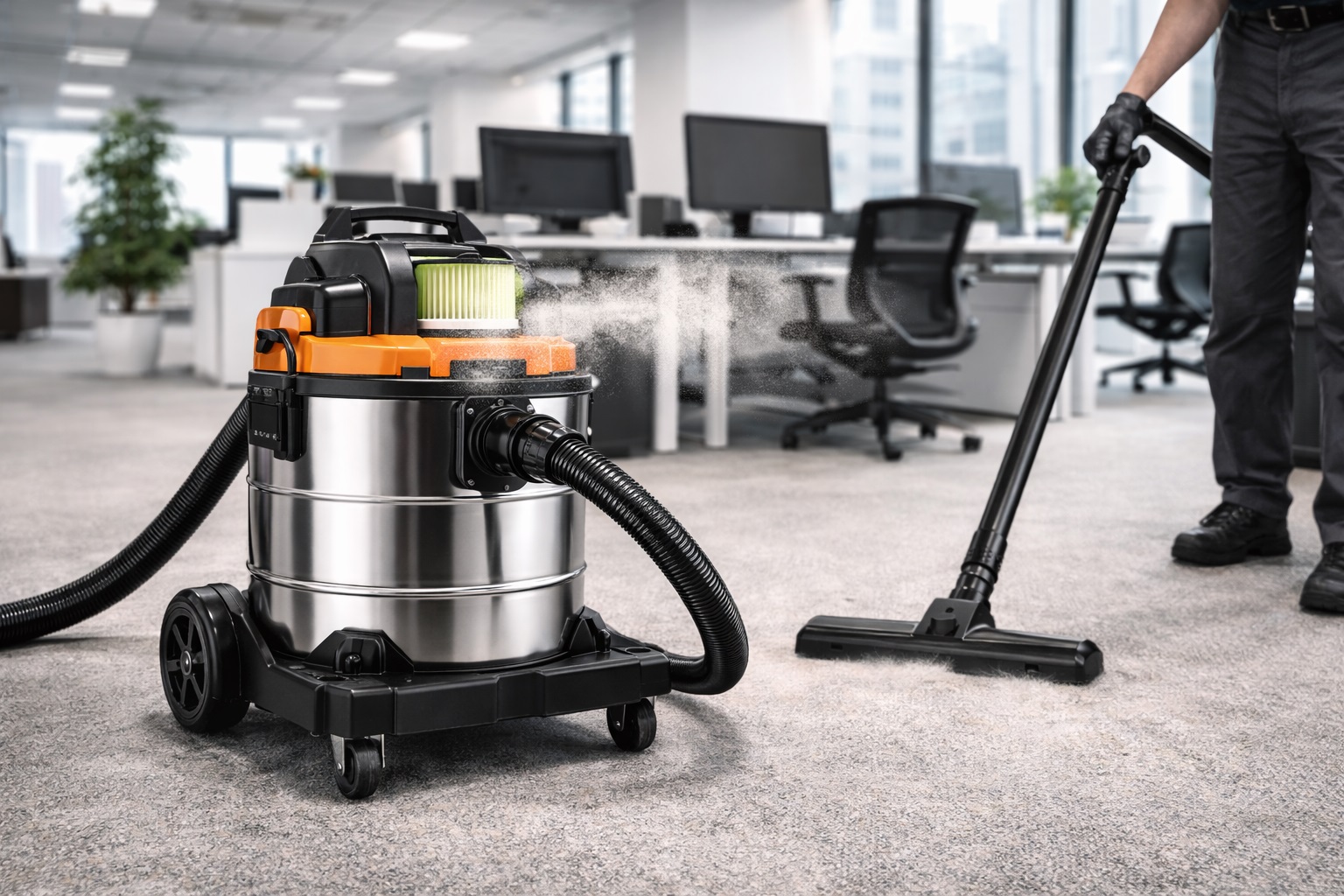
Improving Workplace Health and Productivity Through Smart Cleaning
Indoor air quality (IAQ) has become a key factor in employee health, comfort, and productivity—especially in large office buildings where a high volume of people and activities can lead to dust accumulation, allergens, and pollutants in the air.
For facility managers, office building owners, and cleaning contractors in Europe, the US, and the Middle East, the right vacuum cleaners are essential tools in maintaining a clean, healthy indoor environment. Using vacuums equipped with advanced filtration systems like HEPA filters and energy-efficient technology can significantly improve IAQ, reduce airborne contaminants, and create a more productive workspace.
This article explains how you can use vacuums to enhance air quality in large office buildings, with a focus on the critical features to look for in vacuum equipment and best practices for effective cleaning.
🧠 Why Air Quality Matters in Large Office Buildings
The quality of air in office buildings affects:
Employee health: Poor IAQ is linked to respiratory problems, allergies, and fatigue
Productivity: Studies show that clean air leads to increased focus and performance
Comfort: Clean, fresh air contributes to overall workplace satisfaction
In large office spaces, dust, allergens, and pollutants can accumulate in carpets, furniture, and air ducts, leading to poor IAQ if not regularly addressed. Vacuuming plays a pivotal role in removing particulate matter from floors and surfaces, thereby improving the quality of air that employees breathe.
🧩 Key Vacuum Features for Enhancing IAQ in Offices
Not all vacuums are created equal when it comes to improving air quality. In order to effectively enhance IAQ, office building vacuums should offer the following features:
1. HEPA Filtration: The Gold Standard for Air Purity
HEPA filters are essential for vacuums used in large office buildings. These filters capture:
Fine dust particles
Pollen and other allergens
Pet dander (if pets are allowed in the building)
Smoke and other environmental pollutants
A HEPA Filter Vacuum Cleaner traps particles as small as 0.3 microns (99.97% of airborne particles), preventing them from being released back into the air during vacuuming. This is especially crucial for maintaining clean air in sensitive environments, such as offices occupied by allergy-prone individuals or those with respiratory conditions.
2. Low Noise Levels for Office Environments
In office spaces, excessive noise can lead to distractions and stress for employees. When selecting vacuums, choose quiet models designed for use in noise-sensitive environments.
A Quiet Vacuum Cleaner minimizes noise levels, making it possible to clean without disrupting employees or their workflow. Quiet operation also encourages more frequent cleaning, which in turn improves air quality by reducing dust buildup.
3. Wet and Dry Functionality for Versatility
A Wet and Dry Vacuum Cleaner is particularly useful in environments where spills or liquid contaminants are common, such as:
Office kitchen areas
Restrooms
Lobbies and hallways
Being able to switch between wet and dry cleaning modes ensures comprehensive cleaning of all surfaces, including hard floors and carpeted areas. The added functionality of handling liquid waste reduces the need for separate cleaning tools, allowing for faster cleanup and less downtime.
🧹 Best Practices for Using Vacuums to Enhance IAQ in Offices
1. Regular Cleaning of Carpets and Upholstery
Carpets and upholstered furniture can act as dust traps, collecting dirt and allergens that degrade IAQ over time. Regular vacuuming with a vacuum equipped with HEPA filters ensures that these particles are removed, rather than stirred up into the air.
For office spaces, it’s recommended to:
Vacuum high-traffic areas daily or multiple times per week
Use vacuums with rotating brush systems to loosen deep-seated dust from carpets
Employ specialized attachments for cleaning upholstered furniture, drapes, and corners
2. Airborne Dust Control
In office environments, airborne dust can accumulate quickly, especially around desks and high-traffic areas. A vacuum with high suction power and effective filtration will trap dust and pollutants, ensuring they don't re-enter the air.
3. Targeting High-Pollution Zones
Certain areas in an office building are more prone to pollutants than others, such as:
Break rooms and kitchens (food crumbs, oil, grease)
Restrooms (moisture, bacteria, dust)
Entrances and lobbies (dirt, sand, debris from outside)
Equip cleaning teams with multi-functional vacuums that can be adapted to handle different mess types and ensure that every zone gets the attention it needs.
💡 Energy-Efficiency and Sustainability in Vacuum Use
Large office buildings can significantly reduce their operational costs by using energy-efficient vacuums. Vacuums that combine energy-saving technology with high performance ensure that air quality is maintained without unnecessarily increasing electricity consumption.
An Energy-Saving Efficient Powerful Vacuum Cleaner will:
Optimize suction power according to debris levels
Use low-energy motors without compromising cleaning quality
Operate quietly to reduce the need for loud, disruptive equipment
Such vacuums provide the same level of performance as their traditional counterparts while keeping energy bills low and reducing their environmental footprint.
🧰 Vacuum Maintenance for Consistent IAQ
Just as important as selecting the right vacuum is maintaining it to ensure long-term effectiveness:
Clean filters regularly, especially HEPA filters, to prevent clogging
Inspect hoses and brush rolls for debris buildup
Check battery levels for cordless vacuums and charge them properly to maintain performance
Perform regular deep cleans to remove any debris in hidden or hard-to-reach areas, like corners and behind furniture
🐾 Handling Pet Hair and Allergens
For offices where pets are present or for pet-friendly environments, pet hair can be a significant contributor to poor IAQ. A Vacuum Cleaner for Pet Hair should be equipped with features to handle the challenges posed by pet dander and hair, such as:
Anti-tangle brush rolls
Specialized suction heads
High-efficiency filtration systems to trap airborne pet allergens
Incorporating these vacuums into regular cleaning routines ensures cleaner air and a more comfortable working environment for employees with pet allergies.
🌍 Regional Considerations for Vacuum Selection
Europe
Offices are subject to stricter regulations on indoor air quality and energy efficiency, making HEPA filtration and quiet vacuum systems essential in building selection.
Middle East
Dust-heavy environments require vacuums with high filtration and suction capabilities to handle dust buildup and ensure clean air quality.
United States
Offices often prioritize energy efficiency and noise reduction, especially in corporate spaces with open-plan layouts or mixed-use areas like cafeterias and lounges.
📊 Measuring ROI from IAQ-Improving Vacuums
Investing in vacuums that improve IAQ often leads to:
Improved employee productivity due to fewer sick days
Reduced allergies and asthma attacks among workers
Increased cleaning efficiency due to high-performance vacuum systems
Lower long-term maintenance costs from durable, energy-efficient models
The cost of purchasing a quality vacuum system is easily offset by the long-term health and productivity benefits for employees.
🧭 A Practical Framework for Enhancing IAQ with Vacuums
| IAQ Challenge | Vacuum Feature That Solves It |
|---|---|
| Fine dust and allergens | HEPA filtration |
| Noisy operations | Quiet vacuum systems |
| Large debris | High suction and capacity |
| Pet hair and dander | Specialized pet vacuum systems |
| Frequent spills | Wet and dry cleaning functionality |
🧠 Final Insight for Facility Managers
To enhance air quality in large office buildings, don’t just rely on air purifiers—optimize your cleaning equipment. High-performance vacuums with HEPA filtration, quiet operation, and multi-surface cleaning capabilities are essential to maintaining healthy, clean air while improving overall facility cleanliness.
By integrating these vacuums into your cleaning routines, you’ll create an environment that supports both employee health and operational efficiency, contributing to a more productive and comfortable workplace.
👥 Suitable Readers
Facility operations managers
Commercial cleaning contractors
Office building owners
B2B vacuum equipment buyers
Health and safety officers
🔖 Hashtags
wet and dry vacuum cleaner, Multi-Functional Durable Vacuum Cleaner, Quiet Vacuum Cleaner, Cordless Handheld Vacuum Cleaner, HEPA Filter Vacuum Cleaner, Apartment Vacuum Cleaner, indoor air quality, vacuum filtration systems, office cleaning equipment, HEPA filtration for offices, clean air systems, allergy control vacuum, energy-efficient vacuum systems, commercial vacuum solutions, vacuum for allergens, air quality improvement tools, dust control vacuum, office hygiene management, sustainable cleaning equipment, multi-surface vacuums, commercial janitorial tools, noise reduction vacuum systems, wet dry vacuum solutions, professional vacuum systems, cleaning for better air quality, energy-saving cleaning equipment, air purification tools, vacuum system for large offices, effective office cleaning, allergy-free workspace, commercial cleaning systems, dust removal vacuum, office vacuum selection, healthy office environment, office vacuum maintenance, workplace hygiene vacuum, multi-functional vacuum systems, professional janitorial equipment, facility cleaning solutions, air quality monitoring tools, cleaning productivity tools, Lanxstar



