Hi, message us with any questions.
We're happy to help!





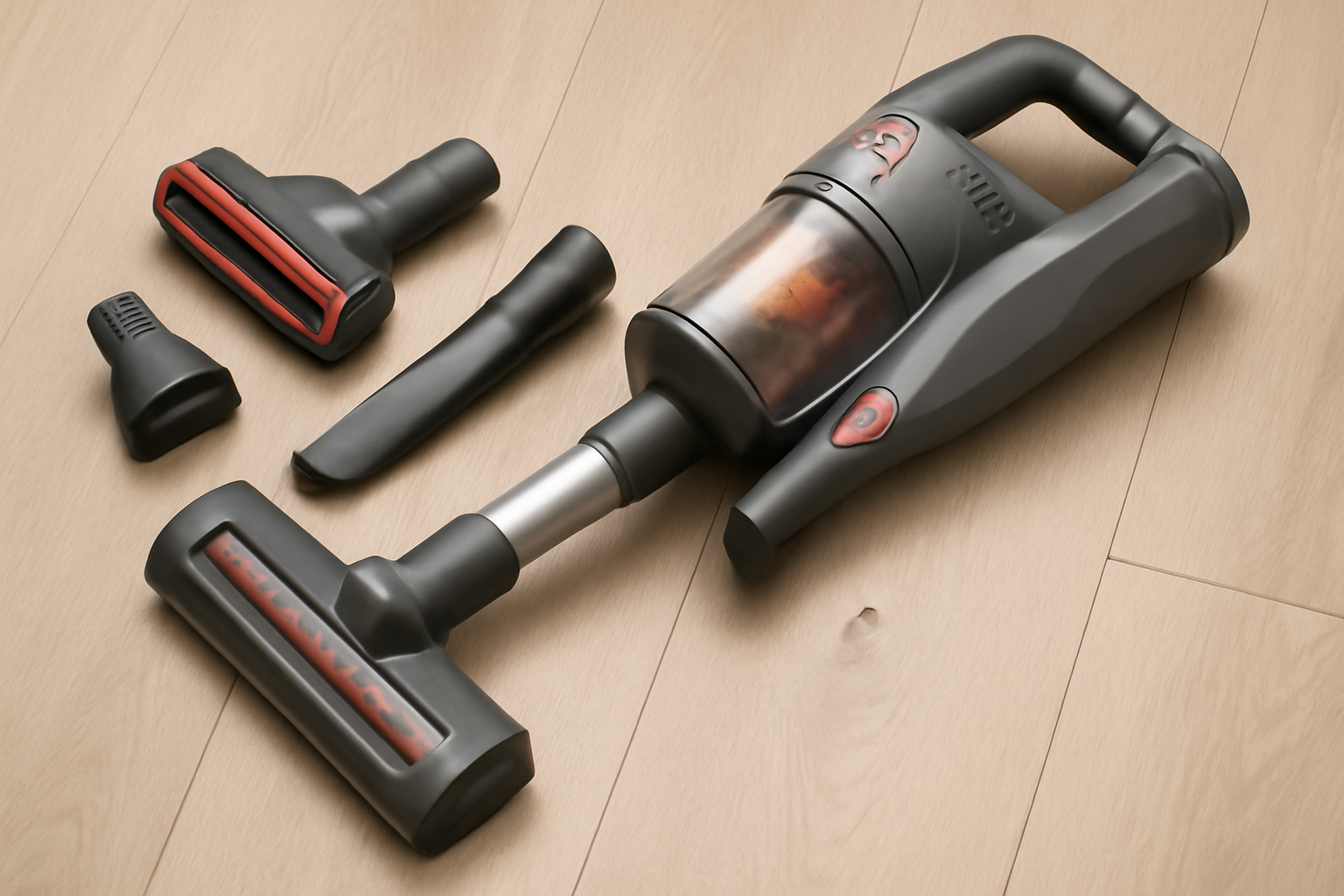
This article is written for vacuum cleaner distributors, procurement directors, engineers, OEM/ODM buyers, and product managers across Europe, the US, and the Middle East.Consumers love stylish designs, quiet motors, lightweight bodies, ultra-strong suction, long runtime, and flawless pet-hair pickup.
But engineers?
They know every “consumer-pleasing feature” hides a brutal engineering cost.
Today, we reveal the 10 features customers love—and why vacuum engineers secretly suffer designing them.
🤐 01|“Make it quieter!” — The Acoustic Nightmare Behind Quiet Vacuum Cleaner Designs
Consumers want silence.
Engineers want sanity.
Unfortunately, these goals conflict.
True “quietness” is not about lowering decibels.
It’s about eliminating:
Harmonic resonance
Housing vibration
Brushroll whine
Airflow turbulence
Motor frequency spikes
A traditional motor generates 4–7 major noise peaks at different frequency bands.
✔ Why engineers suffer
To achieve noise reduction, they must redesign:
Fan blade curvature
Motor suspension
Cyclone geometry
Airflow duct angles
Brushroll isolation
Housing thickness
Each change affects suction, airflow, energy consumption, and heat dissipation.
That’s why a true Quiet Vacuum Cleaner costs significantly more to engineer than a “normal vacuum,” even when the retail price remains similar.
🏋️ 02|“Make it lighter!” — Lightweight Bodies Destroy Structural Stability
Everyone loves the idea of a super lightweight vacuum, especially European and US families with stairs.
But engineers know:
Every gram removed increases vibration, resonance, heat, and structural stress.
Lightweight housings:
Flex more under vacuum pressure
Amplify noise
Crack faster during drops
Increase motor-shaft misalignment
Shorten product lifespan
This is why designing a light vacuum that does not feel cheap is harder than designing a tank-like Upright Vacuum Cleaner.
✔ Trade-off
Lightweight + Durable + Low Cost
= Impossible triangle
Top brands prioritize safety and resonance damping—but many budget vacuums simply feel “plasticky” because their structures are too weak.
🌪 03|“Give us more suction!” — Why 200AW+ Designs Keep Engineers Awake at Night
Consumers love high suction.
Procurement teams love high suction.
Marketing teams worship high suction.
Engineers hate it.
Why?
Because every extra amp of suction increases:
Motor heat
Battery load
Bearing stress
Fan pressure
Airflow turbulence
Noise level
PCB current handling
Thermal protection requirements
You cannot push a motor to 200–250 AW without massively upgrading:
Copper wire thickness
Rotor balancing
Thermal insulation
Fan geometry
Heat conduction pathways
Consumers think “more suction = better.”
Engineers think “more suction = higher warranty risk.”
The winners?
Brands that engineer Energy-Saving Efficient Powerful Vacuum Cleaner systems with stable airflow—NOT brute-force peak suction.
🧵 04|“It must pick up pet hair perfectly!” — The Brushroll Torture Chamber
Pet owners are a huge market.
But for engineers, hair is the enemy.
Why hair pickup is painful to design:
Hair wraps around brushrolls
Hair binds into bearings
Hair clogs cyclones faster
Hair forms mats over pre-filters
Hair melts on motor shafts under heat
To solve this, engineers must add:
Anti-tangle blade structures
Self-cleaning brushrolls
Sealed bearings
Wider suction paths
Enhanced airflow velocity
But every enhancement increases:
Cost
Weight
Complexity
Ironically, the best-performing Vacuum Cleaner for Pet Hair models require engineering similar to commercial-grade floor-care equipment.
🪵 05|“It must work flawlessly on hardwood floors!” — The Low-Drag Suction Puzzle
Hardwood floors require:
Low drag
High dust adhesion
Soft roller surfaces
No scratches
High airflow near the floor
Unfortunately:
Low drag = lower airflow stability
High pickup efficiency = higher drag
This contradiction forces engineers to fine-tune:
Roller softness
Roller diameter
Brush speed
Suction channels
Floor-contact lips
A cheap vacuum may scratch hardwood floors.
A poorly engineered one may leave dust behind.
A great Vacuum Cleaner for Hardwood Floors requires balancing:
Static pressure
Airflow angle
Surface friction
This is far more complex than consumers think.
🔋 06|“I want longer runtime!” — Batteries Don’t Magically Produce More Energy
Consumers expect:
Turbo mode
Quiet mode
Lightweight body
Long runtime
Strong suction
You can pick three, not five.
Why runtime is painful:
Bigger batteries add weight
Smaller batteries overheat
High suction drains power faster
Low wattage reduces pickup
High energy cells increase cost
For Households Vacuum Cleaners and Upright Vacuum Cleaners, brands must balance:
Wh rating
Discharge rate
Internal resistance
Thermal runaway prevention
This balancing act determines whether the vacuum survives one year… or one month.
🌫 07|“The dust bin must be bigger AND easy to clean!” — Physically contradictory requirements
A larger dust bin increases:
Weight
Center-of-gravity stress
Cyclone height
Torque on handle
User wrist strain
Meanwhile, “easy to clean” requires:
Smooth surfaces
Shorter cyclone cores
Larger openings
Fewer locking mechanisms
But a short cyclone + wide airflow path = lower separation efficiency.
Thus, brands must choose:
A big bin that clogs more
A small bin that fills fast
A balanced bin that costs more to engineer
Consumers want all three.
Engineers know it's impossible.
🔩 08|“Make it durable but keep the price low!” — The Eternal War With Budget Constraints
When buyers request:
High suction
Low noise
Long battery
Lightweight
Strong durability
Low price
Fancy design
Engineers hear:
“Please break the laws of physics… cheaply.”
Low-cost plastics introduce:
Creep deformation
Warping
Poor resonance damping
Weak screw retention
Early fatigue cracks
Budget motors introduce:
Excessive vibration
High heat
Rapid PCB aging
A Good budget vacuum cleaner is extremely difficult to design because budget models face the harshest user expectations but the lowest BOM cost.
♻ 09|“Add self-cleaning features!” — Automatic Mechanisms Multiply Failure Points
Self-cleaning systems sound fantastic:
Auto brushroll detangling
Self-rinsing filters
Auto dust compression
Water-flow cycling
But every moving part introduces:
Wear
Clogging
Gear failure
Actuator fatigue
Sensor misalignment
High-end models like 4 in 1 Cordless Smart Wet & Dry Vacuum Cleaner handle this better due to higher-grade components.
Low-cost models?
Self-cleaning becomes self-breaking.
📱 10|“Add smart functions and app connectivity!” — Firmware Becomes a New Failure Source
IoT integration brings:
Firmware bugs
Sensor conflicts
Connectivity issues
Battery drain
Over-the-air update failures
Smart features look sexy.
But they require:
R&D investment
Firmware QA cycles
Regulatory compliance
Long-term maintenance
Most brands underestimate the multi-year commitment behind “smart features.”
🎯 Conclusion: Consumers Want Magic. Engineers Must Deliver Reality.
Across Upright Vacuum Cleaners, Household Vacuum Cleaners, cordless models, and smart wet-dry systems, the engineering team faces the impossible task of merging:
Physics
Cost
Usability
Durability
Aesthetics
Market pressure
Certification requirements
This article exposes the hidden engineering hardships behind features the market demands but rarely understands.
The next time someone asks:
"Why can’t we just make it lighter, quieter, stronger, cheaper, smarter, and longer-lasting?"
Engineers simply smile — and quietly cry inside.
🔖 Hashtags
#lanxstar #vacuum #vacuumcleaner #uprightvacuumcleaners #householdvacuumcleaners#quietvacuum #lownoisevacuum #highsuctionvacuum #lightweightvacuum #floorcare#cleaningindustry #petvacuum #petfamily #hardwoodfloors #engineerlife#productdesign #industrialdesign #batterytech #motornoise #airflowengineering#cyclonetech #filterdesign #qualitycontrol #oemodm #manufacturingchina#globalbuyers #b2bprocurement #eumarket #usmarket #middleeastmarket#cleanhome #smartvacuum #iotdevices #productdevelopment #dustmanagement#durablevacuum #structuredesign #vacuumdistribution #importers #distributors#marketinsights #innovation #engineeringchallenges #vacuumfailure#userexperience #technicaldesign #brushrolltech #hepasystems #powertools



