Hi, message us with any questions.
We're happy to help!





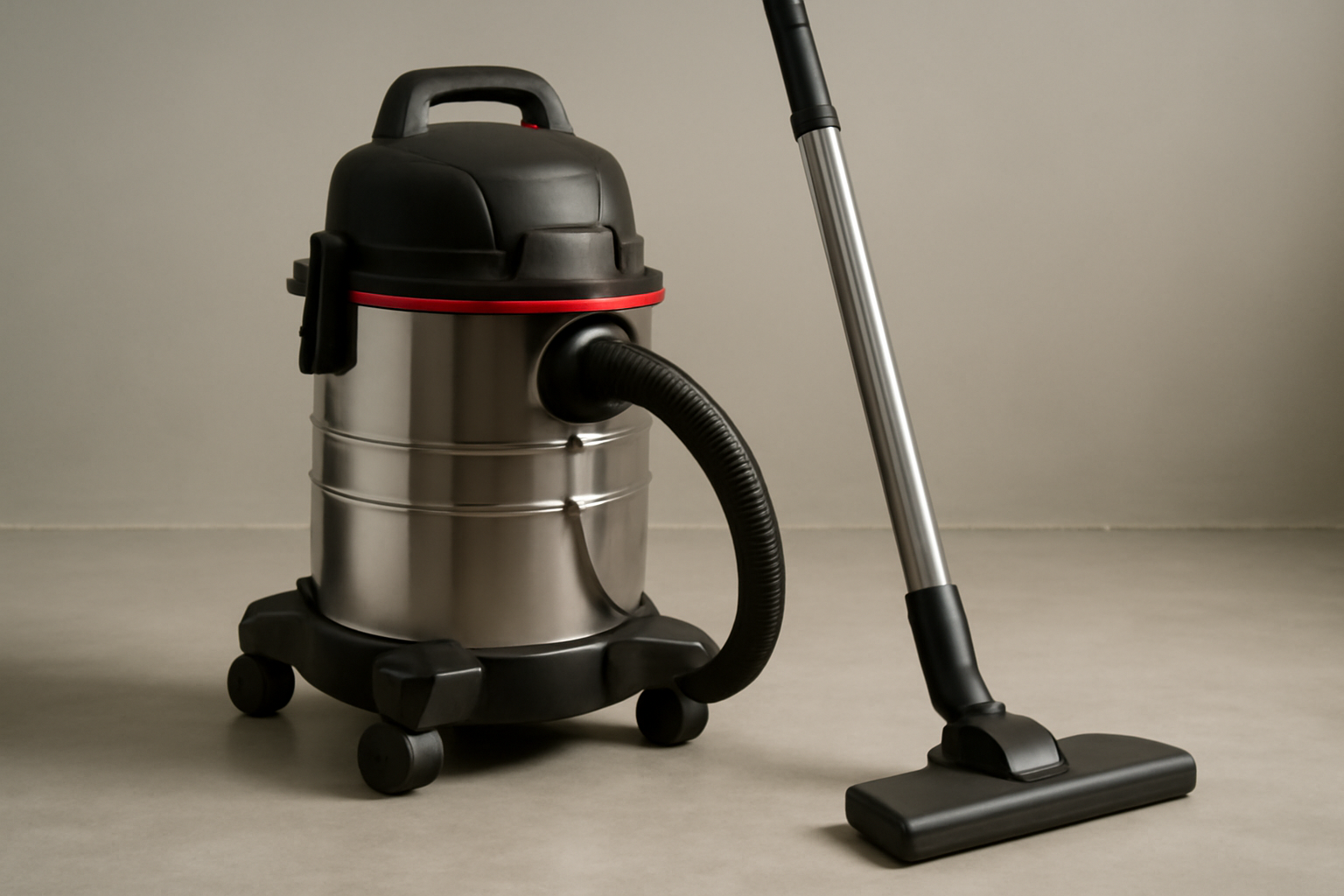
How Smarter Design and Technology Are Transforming Everyday Cleaning
🌍 1. The Global Push Toward Energy-Efficient Appliances
Across global appliance markets, energy efficiency has moved from a secondary design goal to a fundamental expectation. Governments tighten efficiency regulations, consumers weigh running costs, and manufacturers compete on environmental credentials. The vacuum cleaner, often taken for granted as a simple household tool, now sits at the center of this evolution.
Modern energy-efficient vacuums use lighter materials, precision motors, and intelligent sensors to minimize wasted power while maintaining strong cleaning capability. In practical terms, efficiency has become a measurable business advantage: it cuts production costs, reduces energy bills for users, and aligns brands with sustainability requirements from major retail and procurement partners.
⚙️ 2. Inside Engineering Efficiency: Motors, Airflow, and Power Management
Energy efficiency begins at the engineering level. For decades, designers equated performance with motor wattage. Today’s research shows that airflow optimization and sealing integrity yield better suction with less energy.
Advanced brushless motors deliver the same torque as older designs while consuming up to 30 percent less power. Engineers focus on reshaping impellers, smoothing internal ducts, and refining seals to prevent air leaks. These incremental adjustments accumulate into large energy savings across millions of units sold worldwide.
The emphasis on low-energy design also extends to circuit boards that monitor temperature and adjust current automatically, ensuring longevity as well as efficiency. The goal is simple: maximum cleaning for every watt consumed.
🔋 3. Balancing Power and Performance
One of the biggest misconceptions in consumer perception is that high power equals high efficiency. Engineers counter this by proving that suction performance depends on pressure differentials, not raw wattage. New-generation models—comparable to a High Suction Vacuum Cleaner—use precision-balanced fans and sealed chambers to generate stronger airflow at lower energy draw.
Variable-speed motors now adapt in real time to floor type or debris density. When the sensor detects light dust on hardwood floors, the vacuum automatically lowers motor output. On thick carpets, it increases suction momentarily, then returns to an efficient baseline. This kind of dynamic power modulation allows households and professional cleaning teams to save electricity without sacrificing results.
🔇 4. The Quiet Revolution
Noise control, often framed as comfort, is another efficiency issue. A Quiet Vacuum Cleaner doesn’t just reduce sound; it also reflects better mechanical design. Noise results from turbulence, vibration, and air leaks—all indicators of energy loss. Reducing noise means reducing wasted kinetic energy.
Manufacturers achieve this through improved insulation foams, balanced motor mounts, and vibration-absorbing polymers. Commercial cleaning services especially value low-noise operation for offices, hotels, and healthcare facilities where work continues during cleaning hours. Quiet performance therefore doubles as social sustainability: creating healthier, less stressful work environments.
♻️ 5. Materials, Modularity, and Lifecycle Thinking
Energy efficiency extends beyond use-phase electricity. A product’s material footprint—what it takes to build, ship, and dispose of—matters equally. Engineers now choose recyclable polymers and aluminum alloys that maintain strength while reducing weight. Lighter machines consume less energy in transport and operation.
Modular architecture allows easy replacement of worn parts instead of entire units. Some factories design shells and internal frames that snap together without permanent adhesives, simplifying end-of-life recycling. These strategies align with circular-economy principles promoted by many governments and trade bodies.
Lifecycle analysis reveals that roughly one-third of a vacuum cleaner’s lifetime emissions stem from production and logistics. Reducing mass and simplifying assembly can thus deliver significant carbon savings even before the product is ever switched on.
💡 6. Digital Intelligence: Sensors and Smart Control
Data analytics have entered appliance design. Microcontrollers and low-cost sensors track airflow rate, motor load, and filter condition. When resistance increases due to clogging, onboard software recalibrates suction or notifies the user to clean the filter. The result: steady performance with minimal energy waste.
Predictive maintenance also changes procurement models. Commercial fleets of vacuums in hotels or facilities management can monitor each device remotely, scheduling maintenance only when necessary. This avoids premature replacement, reduces downtime, and cuts overall material use—further improving the sustainability score of entire operations.
🌱 7. Procurement Perspective: Efficiency as a Business Metric
For procurement teams in Europe and the Middle East, energy efficiency now influences total cost of ownership. Electricity costs remain volatile; an appliance that uses 20 percent less energy per hour can save thousands of kilowatt-hours annually in large facilities.
Distributors increasingly demand verifiable energy ratings before signing supply contracts. Compliance with regional labels such as the EU Energy Label or local eco-standards also simplifies import approvals. Efficiency data therefore serves as both a marketing differentiator and a regulatory passport.
In tender evaluations, buyers frequently assign quantitative value to lifetime energy cost rather than up-front price alone. As this approach spreads, energy-efficient vacuums secure higher scores and better margins across procurement frameworks.
🔧 8. Lightweight Power: Mobility Meets Sustainability
Designers face another balancing act between power and portability. A Fast Lightweight Vacuum Cleaner minimizes energy by reducing the inertia that motors must overcome. Lightweight composite frames and compact battery systems mean smaller motors can achieve comparable suction.
At the same time, Energy-Saving Efficient Powerful Vacuum Cleaners combine variable-speed motors with optimized battery management. Smart charging circuits prevent over-charging and thermal loss, extending battery life. For cordless units, this contributes directly to sustainability by avoiding frequent battery replacement and e-waste.
From a user standpoint, mobility encourages correct product use. Consumers are more likely to clean promptly with a light, efficient device than postpone heavy chores requiring large mains-powered units. Over time, this behavioral efficiency adds to environmental benefits.
🔋 9. The Next Frontier: Integration Across Wet and Dry Cleaning
Hybrid designs merge vacuuming and mopping into single platforms. These multi-mode devices—similar to Wet Dry Vacuum Cleaners or 4 in 1 Cordless Smart Wet & Dry Vacuum Cleaners—eliminate the need for multiple appliances. One unit cleans liquids and solids, reducing manufacturing volume, packaging, and energy spent on separate devices.
The challenge is balancing suction power with water recovery systems. Efficient pumps and separated airflow paths ensure safety while maintaining high energy performance. As these systems evolve, engineers expect cross-functional cleaners to dominate urban and commercial markets within a few years.
🧭 10. Looking Ahead: Energy Efficiency as Competitive Core
Energy efficiency is no longer a checkbox—it defines competitiveness. In saturated markets, manufacturers that lead in efficiency set benchmarks for policy and consumer expectations. For designers and engineers, it represents a continuing challenge: how to combine power, silence, and durability without inflating energy demand.
For distributors and buyers, the question shifts from “How strong is it?” to “How intelligently does it use power?” The answer increasingly determines which brands enter major procurement networks and which fade away. Vacuum cleaners exemplify a broader truth in modern appliances: the cleanest future is an efficient one.
🔖 Hashtags
#HighSuctionVacuumCleaner #QuietVacuumCleaner #PortableVacuumforTravel #HEPAFilterVacuumCleaner #ApartmentVacuumCleaner #WetandDryVacuumCleaner #vacuumsprocurement #vacuumcleanerdistribution #EcoVacuum #SmartHomeDevices #EnergyEfficiency #SustainableAppliances #CircularEconomy #SmartCleaningTech #LowNoiseDesign #GreenManufacturing #DurableDesign #EcoEngineering #HomeAppliances #GreenInnovation #RecyclableMaterials #HEPAFiltration #AirQualityMatters #SustainableLiving #SmartHomeDevices #LowCarbonAppliances #EcoFriendlyCleaning #QuietTechnology #NextGenVacuum #GreenProcurement #EcoDesign #SmartVacuum #SustainabilityTrends #UrbanLiving #CompactVacuum #CleanAirSolutions #EcoTech #ModernHomeCare #IoTCleaning #EnergySavingAppliance #SustainableProducts #EcoRevolution #VacuumMarketInsights #SmartHomeAppliances #GreenCleaningTools #SustainableEngineering #FutureOfCleaning #EfficientMotorDesign #LightweightVacuum #LifecycleDesign #EnergySmartHome #SustainableInnovation



