Hi, message us with any questions.
We're happy to help!





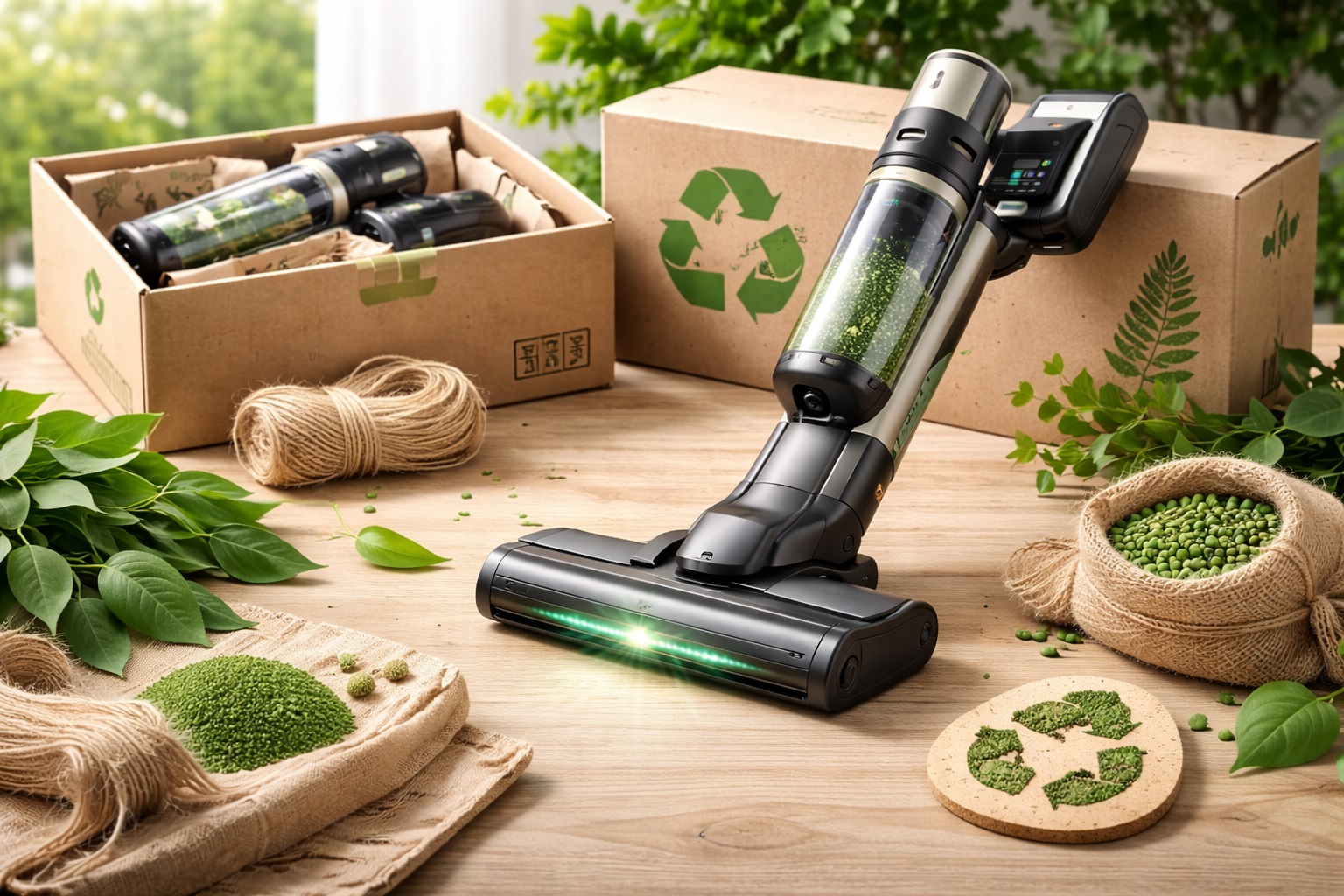
Sustainability is rapidly shifting from “nice-to-have” to “decision factor.” Consumers increasingly reward brands that reduce waste and feel more responsible. Procurement teams are also paying closer attention to material choices, packaging efficiency, and the long-term serviceability of products—because sustainability often aligns with lower total cost of ownership and fewer returns.
But there’s a trap: eco claims can backfire if the product feels fragile, scuffs easily, or arrives damaged due to weak packaging. Real differentiation comes from eco-friendly design that remains durable, repairable, and distribution-ready.
This guide explains how to use eco-friendly materials and sustainable packaging as meaningful differentiators in the vacuum cleaner market—without sacrificing performance, quality perception, or channel profitability.
I. Why sustainability is becoming a vacuum-market differentiator 🌍
Sustainability matters for three reasons:
Consumer trust: eco cues influence click-through and brand preference
Procurement filtering: buyers increasingly compare suppliers on responsible practices
Distribution efficiency: lighter, smarter packaging reduces logistics cost and damage rates
For brands like Lanxstar, sustainability differentiation becomes strongest when it is integrated into product design, packaging, and after-sales systems—not treated as a single “green label.”
II. Eco-friendly materials: choose what survives real life 🧱♻️
Using recycled or lower-impact materials can be a strong story, but only if the product maintains durability and premium feel.
1) Recycled plastics with durability protection
Recycled content can sometimes impact:
surface finish consistency
scratch resistance
long-term color stability
To avoid “eco but cheap-looking” outcomes:
use textures that hide scratches and fingerprints
limit high-gloss parts that show wear
protect high-stress areas (latches, joints, handles) with tougher material choices
This matters across categories, including Fast Lightweight Vacuum Cleaner designs where thin shells can amplify wear visibility.
2) Tactile “quality cues” still matter ✋
Eco materials must still feel solid at touch points:
handle grips
dustbin release buttons
wet/dry tank locks
accessory connectors
If the tactile experience feels fragile, the sustainability story won’t save reviews.
3) Materials that support hygiene (especially wet/dry) 💦
For Wet Dry Vacuum Cleaners and any wet dry vacuum product, materials should support:
easy wipe-down surfaces
resistance to staining and odor absorption
smooth corners to reduce residue traps
When hygiene is easier, users maintain the product—and sustainability improves because the vacuum stays in use longer.
III. Repairability is the most “eco” differentiator that also reduces returns 🔧♻️
The greenest vacuum is the one that lasts. Repairability and serviceability can be a major differentiator for both consumers and procurement teams.
What repairable design looks like
modular battery packs (important for Cordless Vacuum Cleaner platforms)
replaceable brush rolls and belts
accessible filters and seals
standardized fasteners (not glued shut)
This supports a more credible durability story, aligning with Multi-Functional Durable Vacuum Cleaner positioning.
Repairability benefits for channels
For vacuum cleaner distribution, repairable products:
lower return rates
enable parts-based resolutions instead of full-unit swaps
create recurring revenue from parts and consumables
For vacuums procurement, repairability reduces TCO and improves long-term contract value.
IV. Consumables strategy: sustainability that also supports filtration performance 😷
Sustainability is not just the housing material—it’s also how consumables are planned and supplied.
For a HEPA Filter Vacuum Cleaner or Vacuum Cleaner for Allergies, a sustainable consumables approach can include:
clear replacement cadence to prevent performance collapse
availability of replacement filters across regions
packaging design for filters that reduces waste while protecting cleanliness
The best sustainability messaging is practical: “easy to maintain, easy to service, designed to last.”
V. Sustainable packaging: less waste and less damage 📦✅
Packaging is one of the easiest places to reduce environmental impact—but it must still protect the product through logistics.
1) Reduce volume and weight
Smaller packaging reduces shipping cost and emissions. But don’t cut protection too aggressively—damaged products create more waste than extra cardboard ever will.
2) Use molded pulp, optimized inserts, and minimal plastics
Replace excessive foam and plastic where feasible with:
molded pulp inserts
paper-based protection
smarter structural design that controls movement during drops
3) Design for e-commerce expectations
E-commerce packaging must support:
drop protection
clear “what’s included” layout (reduces returns)
fast unboxing without scattered waste
easy recycling instructions
Sustainable packaging becomes a differentiator when customers notice it: fewer unnecessary bags, simple layout, and a product that arrives in perfect condition.
VI. Sustainability + performance differentiation can coexist ⚡🤫
Some teams worry eco design will compromise power or noise. It doesn’t have to.
A sustainable vacuum can still be:
a High Suction Vacuum Cleaner (if airflow and sealing are optimized)
a quiet vacuum cleaner (if vibration and airflow noise are controlled)
an Energy-Saving Efficient Powerful Vacuum Cleaner (efficiency reduces waste and improves runtime)
Sustainability becomes stronger when paired with efficiency—because energy savings are easy to understand and feel.
VII. How to communicate eco claims responsibly (and safely for SEO) ✅
Sustainability claims must be:
specific (what is recycled, what is reduced)
measurable (percent recycled content, packaging reduction goals)
consistent with product reality (durability, repairability, parts availability)
Avoid vague claims like “100% eco-friendly vacuum.” Instead, communicate:
“recycled content in selected components”
“reduced packaging plastics”
“repairable design with replaceable wear parts”
“service and parts plan supports long product life”
Responsible claims protect your brand and your distribution partners from backlash.
VIII. Practical eco differentiation by product category 🧩
Cordless and handheld 🔋
For cordless handheld vacuums and Li-ion Cordless Handheld Vacuum Cleaner products:
emphasize modular battery and charger support
reduce unnecessary packaging size
supply filters and parts regionally
Wet/dry 💦
For wet/dry:
highlight materials that resist residue and odor
promote a Self-Cleaning Vacuum Cleaner workflow that reduces water waste (short cycles, effective rinsing)
ensure tanks are easy to rinse and dry
Multi-surface and hardwood 🪵
For Vacuum for Multi-Surface and Vacuum Cleaner for Hardwood Floors:
avoid finishes that scratch easily
use sustainable textures that look good over time
Conclusion: Sustainability differentiates when it makes the product last longer and ship smarter 🌟
Eco-friendly materials and sustainable packaging become real differentiators when they improve durability, serviceability, and distribution performance—not when they are treated as labels. Build recycled-material choices that survive daily wear, design modular repairable systems that reduce returns, and optimize packaging to cut waste without increasing damage. When sustainability is practical, it earns trust and strengthens global procurement and distribution success. ✅
www.lxvacuum.com
Ideal Readers
Brand owners and product managers
Global vacuum buyers / vacuums procurement teams
Distributors & brand owners / vacuum cleaner distribution professionals
Related Keyword Groups
Lanxstar sustainable vacuum strategy, Lanxstar eco-friendly materials, vacuums procurement, vacuum cleaner distribution, sustainable packaging for vacuums, recycled plastic vacuum housing, scratch resistant eco finish, durable matte texture design, repairable modular vacuum platform, replaceable battery pack design, Cordless Vacuum Cleaner repairability, Li-ion Cordless Handheld Vacuum Cleaner serviceable battery, cordless handheld vacuums sustainable packaging, parts-based warranty resolution, Multi-Functional Durable Vacuum Cleaner long life design, HEPA Filter Vacuum Cleaner consumables plan, Vacuum Cleaner for Allergies filter replacement strategy, low waste filter packaging, replacement brush roll supply, standardized fasteners repairable design, reduced plastic packaging inserts, molded pulp packaging vacuum, e-commerce drop protection packaging, what’s included packaging clarity, lower volume shipping box design, quiet vacuum cleaner sustainable build, Portable Quiet Vacuum Cleaner durable housing, High Suction Vacuum Cleaner efficient airflow, Energy-Saving Efficient Powerful Vacuum Cleaner eco messaging, Fast Lightweight Vacuum Cleaner durable shell, Vacuum for Multi-Surface long-term durability, Vacuum Cleaner for Hardwood Floors scratch resistant finish, Vacuum Cleaner for Pet Hair durable brush head, wet dry vacuum hygienic materials, Wet Dry Vacuum Cleaners odor resistant tank, Wet and Dry Vacuum Cleaner easy rinse surfaces, Self-Cleaning Vacuum Cleaner water efficient cycle, 4 in 1 Cordless Smart Wet & Dry Vacuum Cleaner sustainable workflow, Large-Capacity Wet Dry Vacuum Cleaner durable tank, Car Vacuum Cleaner compact recyclable packaging, Portable Vacuum for Travel minimal waste kit, eco claim compliance safe messaging, sustainable brand storytelling vacuum, distributor-ready parts and service plan, reduced returns through repairability, recyclable cardboard vacuum packaging, packaging emissions reduction strategy, premium eco appliance design cues