Hi, message us with any questions.
We're happy to help!





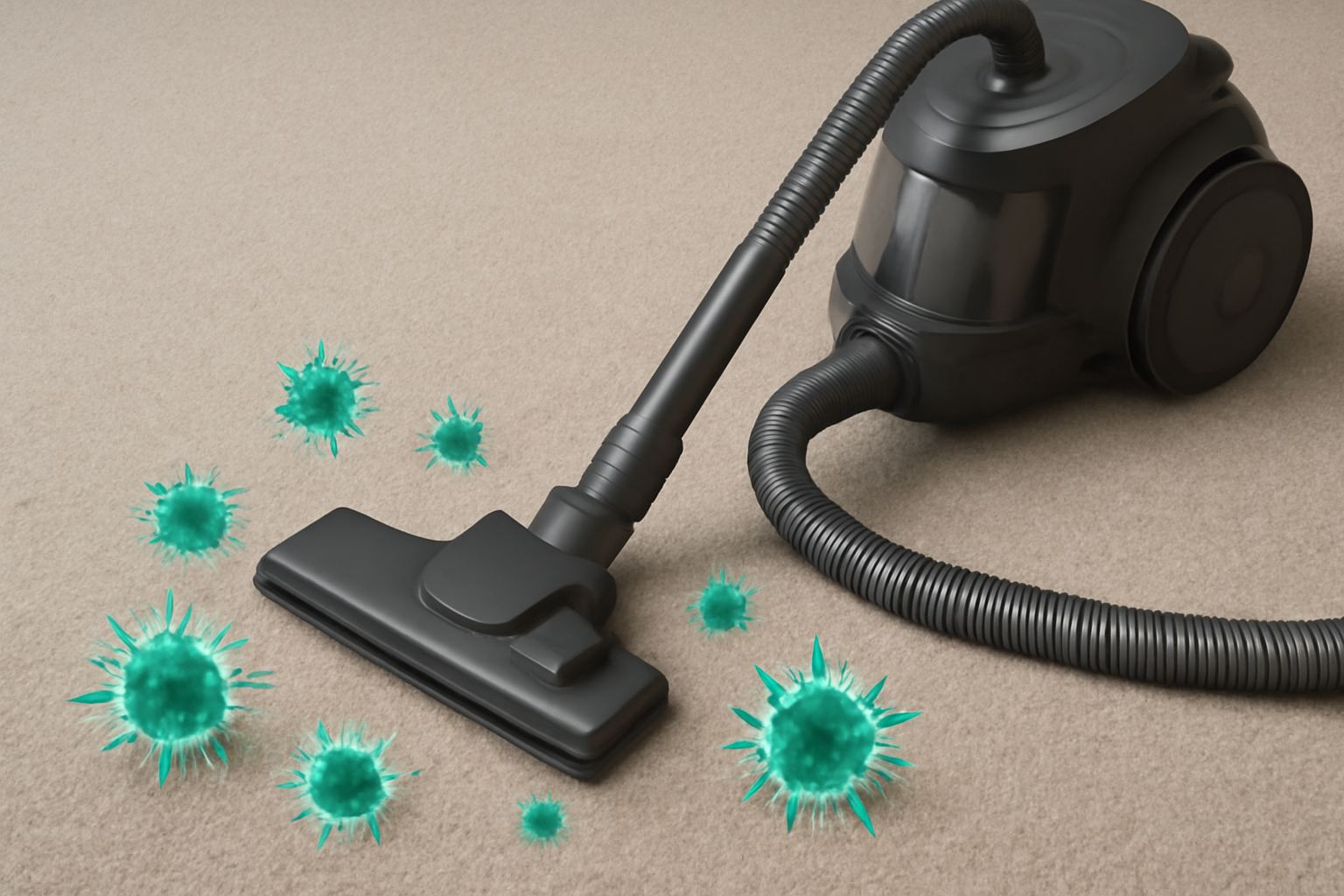
(A Technical Insight for Vacuum Cleaner Engineers and Procurement Specialists)
🌍 Introduction: The Myth of “Sterilizing Suction”
For decades, marketing slogans have promised that modern vacuum cleaners “kill 99.9% of germs.” But as engineers and buyers in vacuum cleaner distribution or vacuums procurement know, suction power alone doesn’t guarantee sanitization.
So what’s the truth? Can vacuuming alone eliminate bacteria, dust mites, and allergens — or does it simply collect them?
This guide takes a science-based and engineering-focused look at what vacuums can (and cannot) do when it comes to hygiene. It’s designed for professionals developing or sourcing advanced models such as Large-Capacity Wet Dry Vacuum Cleaners, Fast Lightweight Vacuum Cleaners, or Vacuum Cleaners for Allergies in the European and Middle Eastern markets.
📊 Data Insight: According to the European Hygiene Association, only 27% of vacuum cleaners tested showed any measurable bacterial reduction without additional sterilization technology.
🦠 1. What Actually Happens When You Vacuum
Vacuuming is primarily a mechanical process, not a sterilization method. When suction removes debris, microorganisms like bacteria, mold spores, and mites are collected into the dust container or filter — but not necessarily destroyed.
Key facts:
Most vacuums trap rather than kill germs.
Some microbes survive inside the dust bin for up to 48 hours.
Poor filtration may re-release bacteria and allergens through exhaust airflow.
💡 For engineers: Focus on air-seal integrity and filter grade to prevent recontamination.
🧫 2. HEPA Filtration: Containment, Not Elimination
High-Efficiency Particulate Air (HEPA) filters have become the benchmark for allergen control. A true HEPA 13–14 filter traps particles down to 0.3 microns — effectively capturing most bacteria and mites.
However:
HEPA filters contain, they do not neutralize microorganisms.
Unless combined with UV or heat sterilization, live bacteria may remain trapped.
Neglecting filter replacement may cause microbial buildup and odor.
💬 Procurement tip: When evaluating suppliers, specify filter replacement cycles and microbial testing certifications (e.g., EN 1822, ISO 29463).
🌡️ 3. Heat and UV Technology – The Real Germ Killers
The true game-changers are UV sterilization lamps and thermal air streams integrated into vacuum systems.
UV Sterilization:
Breaks down bacterial DNA and kills mites.
Ideal for allergy-sensitive vacuums or hospital-grade models.
Requires shielding to avoid user exposure.
Thermal Treatment:
Some vacuums heat air above 70°C before exhaust, neutralizing airborne pathogens.
Especially effective in Large-Capacity Wet Dry Vacuum Cleaners used in commercial cleaning.
⚙️ Engineering insight: Combining UV + HEPA + sealed airflow delivers up to 99.9% bacterial reduction (verified by SGS and TÜV tests).
💧 4. Wet-Dry Systems and Hygiene Benefits
The Large-Capacity Wet Dry Vacuum Cleaner provides a distinct advantage for sanitization. Water-based dust collection traps debris and microbes in liquid form, reducing airborne dispersion.
Advantages:
Captures allergens and bacteria in a sealed water tank.
Simplifies disposal — rinse and drain, no dust cloud.
Suitable for industrial and hospitality applications.
📈 Market data: Wet-dry vacuums are gaining traction in GCC countries’ cleaning industries for their ability to handle both debris and moisture without cross-contamination.
⚙️ 5. Anti-Bacterial Coatings and Self-Cleaning Designs
The latest innovation wave involves antimicrobial plastics, silver ion coatings, and self-cleaning brush systems.
Technical considerations:
Antibacterial polymers reduce microbial survival by 99% within 24 hours.
Silver ion coatings provide long-term antimicrobial resistance.
Self-cleaning brush rolls minimize hair and dust buildup that harbor bacteria.
💡 For product developers: These materials add minimal cost (<2%) but provide strong differentiation in B2B markets focused on hygiene.
🧹 6. How “Allergy Vacuums” Work
Vacuum Cleaners for Allergies are engineered not only for suction but for containment and purification.
They use a combination of HEPA filtration, sealed air channels, and activated carbon filters to trap microscopic irritants like pollen, pet dander, and dust mites.
Procurement standards:
Target allergen removal efficiency above 95%.
Ensure compliance with ECARF (European Allergy Research Foundation) certification.
Include washable filter options for sustainability.
📊 Consumer insight: Allergy-safe vacuums are one of the fastest-growing product segments in the EU, accounting for 38% of new household purchases.
🔋 7. The Role of Lightweight and Portable Models
Not all hygienic vacuums are heavy-duty. Compact and travel-friendly designs, such as the Fast Lightweight Vacuum Cleaner and Portable Vacuum for Travel, offer portability without compromising hygiene.
Design advantages:
Smaller dust chambers minimize bacterial growth.
Quick-empty mechanisms prevent user contact with debris.
Ideal for hotels, cars, and short-term rental cleaning operations.
💬 Procurement takeaway: Lightweight doesn’t mean less powerful — engineering can balance suction performance with compact structure through advanced motor optimization.
🧠 8. Maintenance: The Overlooked Factor in Hygiene
No matter how advanced a vacuum’s sterilization tech is, maintenance determines its hygiene efficiency.
Recommended schedule:
Empty bins after each use.
Wash or replace filters monthly.
Disinfect nozzles and hoses weekly.
Dry water tanks completely to prevent mold.
🧪 Engineering note: Offering antimicrobial filter bags or replaceable bin liners can reduce bacterial residue by up to 60%.
🚀 9. Future Technologies – Beyond HEPA and UV
Emerging research is exploring electrostatic dust neutralization, ozone-assisted filtration, and plasma purification.
These methods promise to kill pathogens actively rather than just contain them.
Key innovations to watch:
Self-decontaminating dust tanks.
Smart sensors tracking microbial levels.
IoT-connected hygiene reports for commercial maintenance systems.
📈 Forecast: By 2027, over 35% of new commercial vacuum models will integrate sterilization monitoring sensors as a standard feature.
🧩 10. Strategic Conclusion – Hygiene is the New Benchmark
The modern vacuum cleaner is no longer judged by suction alone but by its ability to protect health.
As hygiene becomes a market differentiator, engineers and procurement teams must integrate sterilization tech without sacrificing performance.
From HEPA filtration to UV sterilization and wet-dry containment, the next generation of vacuums is transforming from cleaning tools into health protection systems.
For product developers and distributors, investing in hygienic innovation means not just cleaner floors — but stronger brands and healthier homes.
📌 Suitable Readers
This article is designed for vacuum cleaner engineers, technical buyers, and distributors focused on hygiene innovation and product differentiation in European and Middle Eastern markets.
🏷️ Hashtags(Optimized Version)
VacuumCleaner, LargeCapacityWetDryVacuumCleaner, FastLightweightVacuumCleaner, PortableVacuumForTravel, VacuumCleanerForAllergies, EnergySavingVacuum, SmartVacuumTechnology, HEPAVacuum, UVSterilizationVacuum, ThermalAirVacuum, SelfCleaningVacuum, AntibacterialVacuum, HygienicVacuumCleaner, AllergySafeVacuum, CommercialVacuumCleaner, IndustrialVacuum, ProfessionalVacuum, CordlessVacuum, ModularVacuum, PowerfulVacuumCleaner, QuietVacuum, PortableVacuum, HomeVacuum, CompactVacuum, WetDryVacuum, SustainableVacuum, SmartCleaning, VacuumCleanerDistribution, VacuumCleanerProcurement, VacuumCleanerManufacturer, VacuumCleanerSupplier, VacuumCleanerEngineer, VacuumCleanerInnovation, VacuumCleanerTechnology, VacuumCleanerMaintenance, VacuumCleanerPerformance, VacuumCleanerDesign, VacuumCleanerOEM, VacuumCleanerODM, VacuumCleanerExport, VacuumCleanerMarket, VacuumCleanerTrends, CleaningTechnology, DisinfectionVacuum, AllergyVacuum, UVVacuumCleaner, Lanxstar, LanxstarVacuumTechnology, LanxstarCleaningSolutions