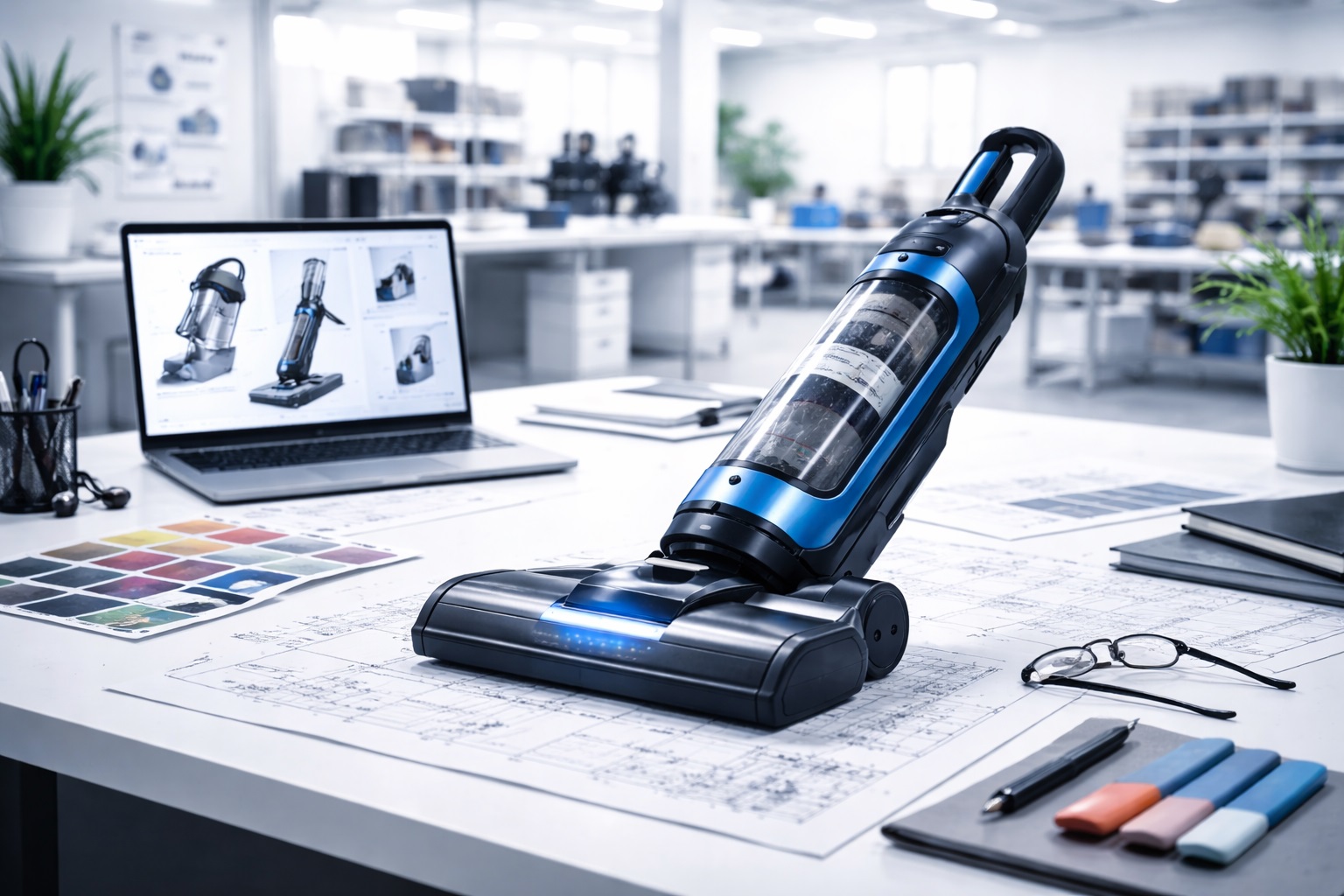
When sourcing vacuum cleaners, one of the most important strategic decisions buyers face is choosing between ODM and OEM. Both models are widely used in the global vacuum cleaner industry, yet many buyers misunderstand their differences and select the wrong approach for their business stage.
Whether you are planning to launch a Cordless Vacuum Cleaner, a Wet and Dry Vacuum Cleaner, or a High Suction Vacuum Cleaner for international markets, understanding ODM vs OEM can save time, cost, and long-term frustration.
This guide clearly explains how the two models differ and how to choose the right one for your needs. ⚙️✨
1. What Is OEM in the Vacuum Cleaner Industry? 🏭
OEM (Original Equipment Manufacturer) means the buyer owns or controls the product concept, while the factory manufactures according to the buyer’s specifications.
In a vacuum cleaner OEM project:
The buyer defines product structure and features
The factory executes production
Branding and market positioning belong to the buyer
OEM is commonly used for:
Customized Cordless Vacuum Cleaner platforms
Brand-specific Wet Dry Vacuum Cleaners
Differentiated Multi-Functional Durable Vacuum Cleaner designs
OEM offers high control but requires stronger technical and project management capability from the buyer.
2. What Is ODM for Vacuum Cleaners? 🧩
ODM (Original Design Manufacturer) means the factory provides a ready-made or semi-ready product design.
In an ODM model:
The factory owns the core design
Buyers customize branding, packaging, or minor features
Time-to-market is significantly shorter
ODM is ideal for:
Fast Lightweight Vacuum Cleaner launches
best vacuum on a budget programs
Buyers with limited engineering resources
ODM allows buyers to enter the market quickly with lower upfront investment.
3. Key Differences Between ODM and OEM ⚖️
The differences between ODM and OEM affect nearly every part of the project.
Control
OEM: High buyer control
ODM: Factory-led design
Speed
Cost
Risk
For products such as Apartment Vacuum Cleaner or Car Vacuum Cleaner, ODM is often more efficient. For flagship or differentiated products, OEM offers stronger long-term value.
4. Which Model Is Better for Budget-Focused Markets 💰
For buyers targeting:
ODM is often the better choice.
ODM factories optimize cost through standardized components and proven designs. This enables competitive pricing without sacrificing basic performance or reliability.
OEM may struggle to compete on price unless volumes are very large.
5. Which Model Fits Innovation and Brand Differentiation 🚀
If your strategy involves:
Unique performance claims
Specialized Vacuum Cleaner for Pet Hair
Advanced Self-Cleaning Vacuum Cleaner systems
OEM is the preferred route.
OEM allows buyers to:
Define airflow and suction targets
Customize HEPA Filter Vacuum Cleaner systems
Control long-term product evolution
This is critical for brands investing in R&D and long-term differentiation.
6. Engineering and Resource Considerations 🧠
OEM requires:
ODM requires:
For buyers without engineering teams, ODM significantly reduces operational complexity.
7. Delivery Speed and Supply Chain Flexibility 🚚
ODM projects often deliver faster because:
This is beneficial for seasonal sales and rapid market testing.
OEM projects, while slower initially, provide better scalability once mature.
8. Hybrid Models: Combining ODM and OEM 🔁
Many experienced buyers use a hybrid strategy:
Manufacturers like Lanxstar support both models, helping buyers evolve from ODM to OEM as part of long-term vacuums procurement and vacuum cleaner distribution planning.
Common Mistakes When Choosing ODM or OEM 🚨
Choosing OEM without engineering resources
Expecting ODM products to be fully exclusive
Ignoring long-term cost implications
Underestimating certification and compliance needs
Understanding your internal capability is key to avoiding these mistakes.
Conclusion: ODM or OEM Depends on Your Strategy
There is no universally “better” option between ODM and OEM for vacuum cleaners. The right choice depends on your market goals, speed requirements, budget, and technical resources.
ODM offers speed and cost efficiency. OEM offers control and differentiation. Buyers who clearly understand these differences build stronger, more scalable product strategies.
For global buyers seeking flexible ODM and OEM solutions, experienced manufacturers such as www.lxvacuum.com provide both paths—allowing partners to choose what fits today while preparing for tomorrow.
50 Related Keyword Groups
High Suction Vacuum Cleaner, Portable Quiet Vacuum Cleaner, Self-Cleaning Vacuum Cleaner, Multi-Functional Durable Vacuum Cleaner, Fast Lightweight Vacuum Cleaner, Energy-Saving Efficient Powerful Vacuum Cleaner, Large-Capacity Wet Dry Vacuum Cleaner, Li-ion Cordless Handheld Vacuum Cleaner, Wet Dry Vacuum Cleaners, 4 in 1 Cordless Smart Wet & Dry Vacuum Cleaner, cordless handheld vacuums, Cordless Vacuum Cleaner, Car Vacuum Cleaner, quiet vacuum cleaner, wet dry vacuum, Portable Vacuum for Travel, HEPA Filter Vacuum Cleaner, Apartment Vacuum Cleaner, Wet and Dry Vacuum Cleaner, Quiet Vacuum for Night Use, Vacuum Cleaner for Pet Hair, Vacuum Cleaner for Hardwood Floors, best vacuum on a budget, best budget hoover, good budget vacuum, best affordable vacuum, best budget vacuum, best value for money hoover, best value hoover, best vacuum cleaners on a budget, good budget vacuum cleaner, Lanxstar vacuum cleaners, Lanxstar cordless vacuum, vacuums procurement, vacuum cleaner distribution, OEM vacuum cleaner supplier, ODM vacuum cleaner factory, smart wet dry vacuum, cordless wet dry vacuum, pet hair vacuum solution, apartment cleaning vacuum, car cleaning vacuum, quiet home appliance, energy efficient vacuum cleaner











