Hi, message us with any questions.
We're happy to help!





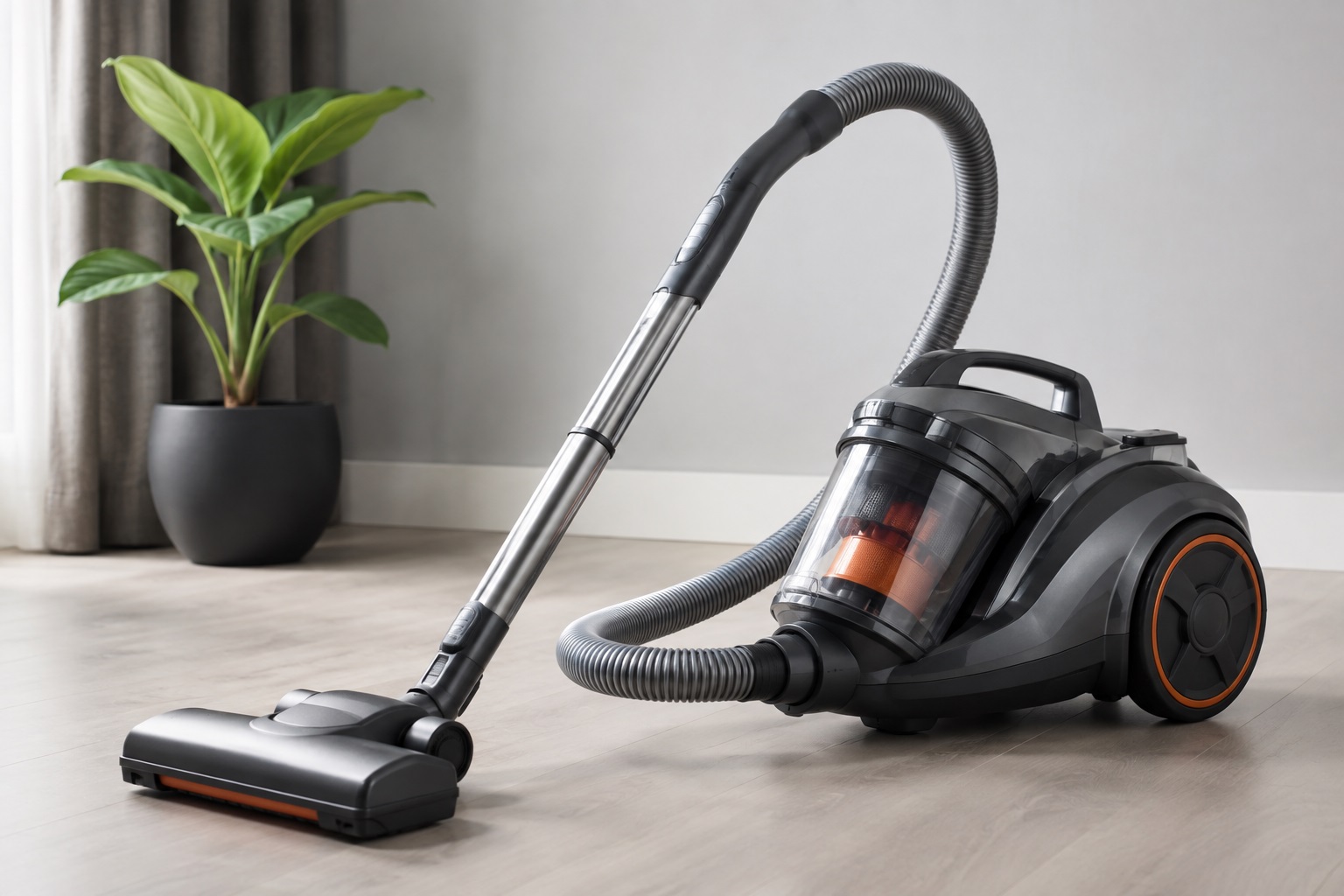
The global cleaning equipment market is highly competitive. Importers and distributors are no longer limited to choosing standard products from a catalog. Through custom vacuum cleaner manufacturing, buyers can create products that better match their target customers, price segments, distribution channels, and brand positioning.
For example, a hotel equipment distributor may require a Portable Quiet Vacuum Cleaner, while an industrial customer could prioritize a High Suction Vacuum Cleaner with a large tank. Construction customers may need a rugged wet dry vacuum cleaner, whereas automotive detailing businesses may prefer compact machines with specialized nozzles.
This makes customization a commercial strategy rather than simply a cosmetic change.
A capable vacuum cleaner manufacturer can potentially customize product appearance, motors, tanks, filters, accessories, packaging, labels, manuals, and selected structural elements according to project feasibility.
💡 Buyer Insight: Start a custom project with the end user's cleaning problem, not with the product color or logo.
2. OEM Vacuum Cleaner Manufacturing
OEM vacuum cleaner manufacturing is one of the most common approaches for wholesalers, distributors, and established cleaning equipment brands.
Under an OEM model, buyers typically select a mature product platform and customize specific elements according to their market requirements. Depending on the manufacturer's capabilities and order volume, customization can include:
Brand logo
Product colors
Rating labels
Carton design
Instruction manuals
Accessory combinations
Power cords and plugs
Filter configurations
Tank capacities
Selected motor specifications
OEM production is especially attractive when buyers want faster market entry without developing an entirely new machine.
📦 For a bulk vacuum cleaner purchase, an existing platform can also reduce development complexity compared with a completely new design.
However, buyers should confirm exactly what “OEM” means to each supplier. Customization scope, MOQ, tooling costs, lead time, certification implications, and packaging requirements can vary significantly.
3. ODM Vacuum Cleaner Development
An ODM vacuum cleaner project usually involves deeper product development.
Instead of adding a brand identity to an existing machine, a buyer may request changes to product structure, appearance, features, accessory systems, or other design elements.
ODM cooperation can be appropriate for established distributors that want differentiated products.
For example, a European commercial cleaning brand might require:
Application: warehouses and workshops
Product type: wet/dry vacuum
Target positioning: professional mid-range
Key requirements: durable tank, convenient drainage, strong mobility, effective filtration
Brand requirement: differentiated appearance and packaging
The manufacturer and buyer can then determine which requirements can be achieved through existing components and which require new engineering or tooling.
⚙️ A serious ODM project requires communication between purchasing, engineering, quality, production, and marketing teams.
This is one reason buyers should evaluate engineering capabilities when selecting a vacuum cleaner manufacturer in China, rather than comparing quotations alone.
4. Private Label Vacuum Cleaner Options
A private label vacuum cleaner is often the fastest route for retailers, e-commerce companies, regional distributors, and cleaning equipment brands that want to sell products under their own name.
Private-label customization commonly focuses on branding and market presentation.
Possible options include logo printing, product labels, customized cartons, manuals, color schemes, barcode labels, accessory packages, and market-specific packaging.
🌍 This approach allows a distributor to build brand recognition while using a proven manufacturing platform.
For buyers searching for wholesale vacuum cleaner solutions, private labeling can also make it easier to create product tiers.
For example:
Entry Level: compact and price-sensitive
Professional: stronger performance and larger capacity
Heavy Duty: designed for demanding commercial or industrial applications
Instead of selling unrelated models, buyers can build a more coherent product family.
5. Customizing Suction Performance and Motor Configuration
Suction is one of the first specifications professional buyers consider.
However, developing a high suction power vacuum cleaner requires more than simply installing a higher-wattage motor.
Vacuum pressure, airflow path, hose dimensions, seals, filter resistance, tank structure, and nozzle design all influence actual cleaning performance.
A dual motor vacuum cleaner may be suitable for certain heavy-duty applications where additional performance is required. However, it can also affect energy consumption, noise, machine dimensions, electrical requirements, and cost.
Therefore, buyers should provide the vacuum cleaner supplier with a realistic application profile.
For example, a customer developing a High Suction Vacuum Cleaner for workshops should explain the expected debris type, working duration, floor conditions, required tank capacity, hose length, and local electrical specifications.
🔧 Engineering decisions should be based on the complete system rather than one headline specification.
6. Wet and Dry Vacuum Cleaner Customization
A professional wet and dry vacuum cleaner can be customized for numerous commercial applications.
Potential markets include:
🏗️ Construction sites
🏭 Manufacturing facilities
📦 Logistics warehouses
🚗 Automotive workshops
🏨 Hotels
🏢 Facility management
🛒 Retail environments
For a wet dry vacuum cleaner for construction site applications, buyers may prioritize a durable tank, robust casters, strong hoses, convenient accessories, and suitable dust filtration.
A warehouse distributor may instead request a Large-Capacity Wet Dry Vacuum Cleaner to reduce emptying frequency across large floor areas.
The wet and dry suction system should also be evaluated according to liquid collection requirements, tank design, drainage convenience, and protection mechanisms.
Customization is most effective when every specification solves a specific operating problem.
7. Tank Material and Capacity Options
Tank configuration strongly affects both product positioning and user experience.
A stainless steel vacuum tank offers a professional appearance and can provide good durability for many commercial applications. Other materials may also be appropriate depending on product design, application, weight targets, and price positioning.
Capacity should be selected carefully.
Larger tanks can benefit factory floor cleaning, workshop maintenance, and logistics warehouse cleaning because operators may spend less time emptying collected material.
Smaller tanks can make a Fast Lightweight Vacuum Cleaner easier to transport between rooms or job sites.
📐 Customization principle: Larger capacity is valuable only when the machine remains practical to move, empty, store, and transport.
For this reason, product engineers should evaluate tank size together with wheel diameter, handle design, drainage, center of gravity, and total filled weight.
8. Filtration and HEPA Options
Filtration can significantly influence the performance and positioning of a custom vacuum cleaner.
A HEPA filter vacuum cleaner may be attractive to buyers serving markets where fine-particle filtration is important. However, filter terminology and performance claims should be supported by appropriate technical specifications and testing.
Customization options may include different filter materials, cartridge designs, pre-filter systems, washable filters, disposable collection bags, and multi-stage filtration configurations.
For an industrial dust extractor, filtration requirements can become much more application-specific.
⚠️ Buyers should identify the dust being collected before specifying filtration.
Some hazardous or regulated dust applications require specialized equipment and applicable certifications. A general-purpose commercial vacuum should not automatically be marketed for those uses.
An experienced industrial vacuum cleaner supplier should help buyers distinguish between general cleaning applications and specialized dust-control requirements.
9. Noise Reduction for Commercial Applications
Noise is increasingly important in commercial cleaning.
A low noise vacuum cleaner can provide a competitive advantage in hotels, offices, schools, retail stores, and other occupied environments.
When developing a Portable Quiet Vacuum Cleaner, manufacturers may evaluate motor selection, airflow design, housing structure, vibration control, seals, and other acoustic factors.
Consider a hotel distributor developing a customized machine.
The buyer may initially ask for maximum motor power. But interviews with housekeeping teams could reveal that maneuverability and lower noise are more important because cleaning takes place close to occupied guest rooms.
In this case, a quieter commercial vacuum cleaner for hotel use may create more value than a larger industrial machine.
🤫 Customization should reflect how customers actually use the product.
10. Energy Efficiency and Product Positioning
Energy consumption matters to both professional operators and distributors.
An energy efficient vacuum cleaner should balance electrical consumption with useful cleaning performance. Simply reducing motor wattage does not guarantee better efficiency.
The objective of an Energy-Saving Efficient Powerful Vacuum Cleaner should be to complete required cleaning tasks effectively while controlling unnecessary energy consumption.
For commercial buyers, this connects directly with total operating cost.
Procurement teams should evaluate:
Purchase price + energy use + consumables + maintenance + labor time + downtime + expected service life.
A machine that costs slightly more initially may provide better long-term value if it cleans efficiently and requires fewer repairs.
This distinction is important when customers search for the best affordable vacuum, best budget vacuum, or good budget vacuum cleaner.
💰 Affordable should mean good lifecycle value—not simply the lowest factory price.
11. Custom Accessories for Different Cleaning Applications
Accessories are one of the easiest ways to adapt a vacuum cleaner to a particular market.
Depending on the product platform, a vacuum cleaner manufacturer may offer different hoses, extension tubes, floor brushes, wet nozzles, crevice tools, round brushes, adapters, and other attachments.
A car detailing vacuum cleaner, for instance, may benefit from flexible hoses and narrow tools that reach between seats.
A machine designed as construction site cleaning equipment may need more robust accessories capable of handling coarse debris.
Hotel and commercial cleaning equipment may prioritize lightweight tools that employees can use repeatedly throughout a shift.
🧹 A carefully selected accessory kit can make an existing vacuum platform feel purpose-built for a specific customer group without requiring a completely new machine design.
12. Case Study: Custom Warehouse Vacuum Cleaner Project
Consider a hypothetical importer developing an industrial wet/dry vacuum for warehouse customers.
The original request was simple:
“We need a powerful 70L industrial vacuum at a competitive price.”
After application analysis, the requirements became more precise.
The customers operated large logistics warehouses where the primary materials were packaging debris, floor dust, sand, and occasional liquids. Machines were moved frequently between different loading and storage areas.
The project therefore focused on:
Large-capacity collection
Strong suction performance
Durable wheel construction
Long working reach
Wet/dry capability
Convenient tank emptying
Practical accessory storage
Replaceable filtration components
Instead of optimizing only motor wattage, the supplier and buyer considered the complete cleaning workflow.
The resulting concept was positioned as an industrial wet and dry vacuum cleaner for warehouse cleaning supplier solution.
📈 This approach gave the distributor clearer product differentiation because every major feature could be connected to an actual customer requirement.
13. Case Study: Private-Label Commercial Vacuum for Hotels
Another hypothetical buyer operates a hospitality equipment distribution business.
Its customers require hotel cleaning equipment that can move easily between guest rooms and corridors.
Rather than selecting a heavy industrial model, the distributor requests a customized commercial grade vacuum cleaner emphasizing compact dimensions, controlled noise, practical accessories, easy maintenance, and branded packaging.
The manufacturer applies the distributor's logo, prepares market-specific manuals and cartons, and configures an appropriate accessory set.
The buyer now has a private label vacuum cleaner positioned specifically for hospitality customers rather than another generic product competing primarily on price.
🏨 The key lesson is that effective customization often comes from market positioning rather than expensive structural changes.
14. Branding, Packaging, and Market-Specific Customization
Product customization does not stop at the vacuum cleaner itself.
Packaging influences retail presentation, logistics efficiency, product protection, and customer perception.
For OEM vacuum cleaner and private-label projects, buyers may discuss:
Logo placement
Product name and model number
Carton graphics
Color specifications
Instruction manuals
Warning labels
Barcodes
Accessory lists
Packaging dimensions
Shipping marks
International buyers should also verify language and labeling requirements for destination markets.
For example, a buyer planning to import vacuum cleaner from China for several European countries may require multilingual documentation and different packaging information from a buyer selling into another region.
🌐 Market compliance should be planned during product development rather than addressed immediately before shipment.
15. MOQ, Tooling, and Bulk Order Planning
Customization usually affects minimum order quantity, cost, and lead time.
Simple logo or carton customization may require relatively limited changes, while structural modifications can involve tooling, engineering, prototypes, testing, and larger order commitments.
When discussing a bulk order vacuum cleaner project, buyers should ask:
What is the MOQ for each customization?
Are there tooling or setup charges?
What is the sample-development timeline?
How long does mass production take?
Which changes require additional testing?
Can customized spare parts be supplied with the order?
A professional industrial vacuum cleaner factory should define these commercial conditions before production begins.
For buyers comparing vacuum cleaner price wholesale, tooling and customization costs should be separated from standard product pricing whenever possible.
16. Quality Control for Customized Vacuum Cleaners
Quality consistency becomes particularly important after customization.
Changing a motor, filter, accessory, electrical component, or structural part can influence product performance. Customized products should therefore follow an agreed verification process.
Depending on the product and market, quality-control procedures may include incoming material inspection, assembly checks, electrical testing, functional testing, suction inspection, leakage checks, appearance inspection, packaging verification, and pre-shipment inspection.
For large wholesale vacuum cleaner orders, buyers can define an approved sample or documented specification as a production reference.
🔍 This helps reduce disagreements about color, accessories, labels, packaging, and technical configuration.
For long-term distribution programs, consistency across repeat orders can be more valuable than achieving the absolute lowest unit price on the first shipment.
17. How to Choose an OEM Industrial Vacuum Cleaner Manufacturer
Selecting an OEM industrial vacuum cleaner manufacturer requires evaluation beyond price.
Buyers should consider manufacturing experience, engineering support, production capacity, quality management, customization range, documentation, communication, delivery reliability, and after-sales support.
A professional cleaning equipment supplier should also be able to explain which customizations are practical and which could negatively affect performance or project economics.
When evaluating a heavy duty vacuum cleaner supplier China, consider asking for:
Factory and production information
Product specifications
Quality-control procedures
Customization examples
Export-market experience
Available certifications and reports
Packaging capabilities
Spare-part support
Production lead times
Warranty terms
🤝 The objective is not simply to find a supplier for one order. For serious private-label brands, the better goal is to establish a manufacturing relationship that can support future product development.
18. Balancing Budget and Product Quality
Many distributors serve price-sensitive markets, so cost remains important.
Keywords such as best vacuum on a budget, best value for money hoover, best value hoover, and best vacuums on a budget demonstrate that customers actively search for affordable alternatives.
For B2B buyers, however, reducing cost should be systematic.
Instead of simply requesting cheaper components, buyers can examine which features customers actually value.
Perhaps a market does not require an oversized tank. Perhaps a simpler accessory kit is sufficient. Maybe expensive cosmetic changes provide little commercial benefit.
Conversely, reducing filter quality, wheel durability, motor reliability, or electrical safety to save a small amount can create substantial after-sales costs.
A good budget vacuum should achieve the right specification at the right cost.
That principle applies equally to retail vacuums and professional industrial cleaning equipment.
19. From Product Idea to Mass Production
A well-managed custom vacuum cleaner project generally moves through several logical stages.
Stage 1 — Market Definition: Identify customers, price positioning, applications, and competing products.
Stage 2 — Product Specification: Define suction, capacity, filtration, accessories, noise expectations, electrical requirements, and appearance.
Stage 3 — OEM/ODM Evaluation: Determine whether an existing platform can meet the requirements or whether deeper development is necessary.
Stage 4 — Sampling: Produce and evaluate samples under realistic cleaning conditions.
Stage 5 — Verification: Confirm technical specifications, branding, packaging, manuals, accessories, and applicable compliance requirements.
Stage 6 — Pilot or Mass Production: Manufacture according to the approved specifications.
Stage 7 — Quality Inspection: Verify products and packaging before shipment.
Stage 8 — Market Feedback: Collect distributor and end-user feedback for future improvements.
🚀 This process can help turn a generic sourcing project into a repeatable product-development strategy.
20. Working With Lanxstar for Custom Vacuum Cleaner Manufacturing
For global buyers, successful customization depends on clear communication between the brand and the manufacturing team.
Lanxstar provides vacuum cleaner manufacturing solutions for buyers exploring OEM, ODM, private-label, wholesale, and commercial or industrial cleaning applications.
Depending on project requirements and technical feasibility, customization can be discussed around product configuration, branding, appearance, tank options, filtration, accessories, packaging, and other market-specific requirements.
Whether a buyer is developing a Multi-Functional Durable Vacuum Cleaner, Fast Lightweight Vacuum Cleaner, commercial wet/dry machine, or heavy-duty industrial cleaning solution, the project should begin with five fundamental pieces of information:
Target market, cleaning application, required specifications, expected order quantity, and target price range.
Providing this information enables a vacuum cleaner manufacturer to assess the project much more effectively than a simple request for the cheapest model.
For distributors, importers, retailers, and product engineers seeking long-term manufacturing cooperation, customization can provide a practical path toward stronger differentiation and more targeted product portfolios.
Conclusion
Custom vacuum cleaner manufacturing gives global buyers the ability to build products around real market requirements rather than relying entirely on standard catalog models.
OEM solutions can provide efficient branding and configuration customization. ODM projects can support deeper product differentiation, while private labeling can help distributors and retailers establish their own product identity.
Regardless of the model chosen, successful development requires careful consideration of suction, airflow, motors, tank capacity, filtration, noise, energy efficiency, accessories, packaging, quality control, compliance, and total cost.
The strongest product is not necessarily the one with the highest motor power, largest tank, or lowest price. It is the vacuum cleaner whose specifications, manufacturing quality, and commercial positioning best match the target customer.
For custom commercial and industrial vacuum cleaner manufacturing solutions, visit www.lxvacuum.com.
If you are interested, please feel free to contact us.
50 Related SEO Keywords
custom vacuum cleaner, custom vacuum cleaner manufacturer, OEM vacuum cleaner, ODM vacuum cleaner, private label vacuum cleaner, Lanxstar, vacuum manufacturer, vacuum cleaner maker, vacuum cleaner manufacturer, vacuum cleaner supplier, vacuum cleaner manufacturer in China, industrial vacuum cleaner factory, industrial vacuum cleaner supplier, commercial vacuum cleaner, industrial vacuum cleaner, wet and dry vacuum cleaner, wet dry vacuum cleaner, High Suction Vacuum Cleaner, Portable Quiet Vacuum Cleaner, Multi-Functional Durable Vacuum Cleaner, Fast Lightweight Vacuum Cleaner, Energy-Saving Efficient Powerful Vacuum Cleaner, Large-Capacity Wet Dry Vacuum Cleaner, high suction power vacuum cleaner, heavy duty vacuum cleaner, dual motor vacuum cleaner, stainless steel vacuum tank, low noise vacuum cleaner, energy efficient vacuum cleaner, HEPA filter vacuum cleaner, wet and dry suction system, industrial dust extractor, commercial grade vacuum cleaner, industrial cleaning equipment, commercial cleaning equipment, cleaning equipment supplier, wholesale vacuum cleaner, bulk vacuum cleaner purchase, bulk order vacuum cleaner, factory direct vacuum cleaner, OEM industrial vacuum cleaner manufacturer, custom industrial vacuum cleaner, custom commercial vacuum cleaner, OEM wet dry vacuum cleaner, private label wet dry vacuum cleaner, warehouse cleaning solution, construction site cleaning equipment, hotel cleaning equipment, car detailing vacuum cleaner, industrial equipment supplier