Hi, message us with any questions.
We're happy to help!





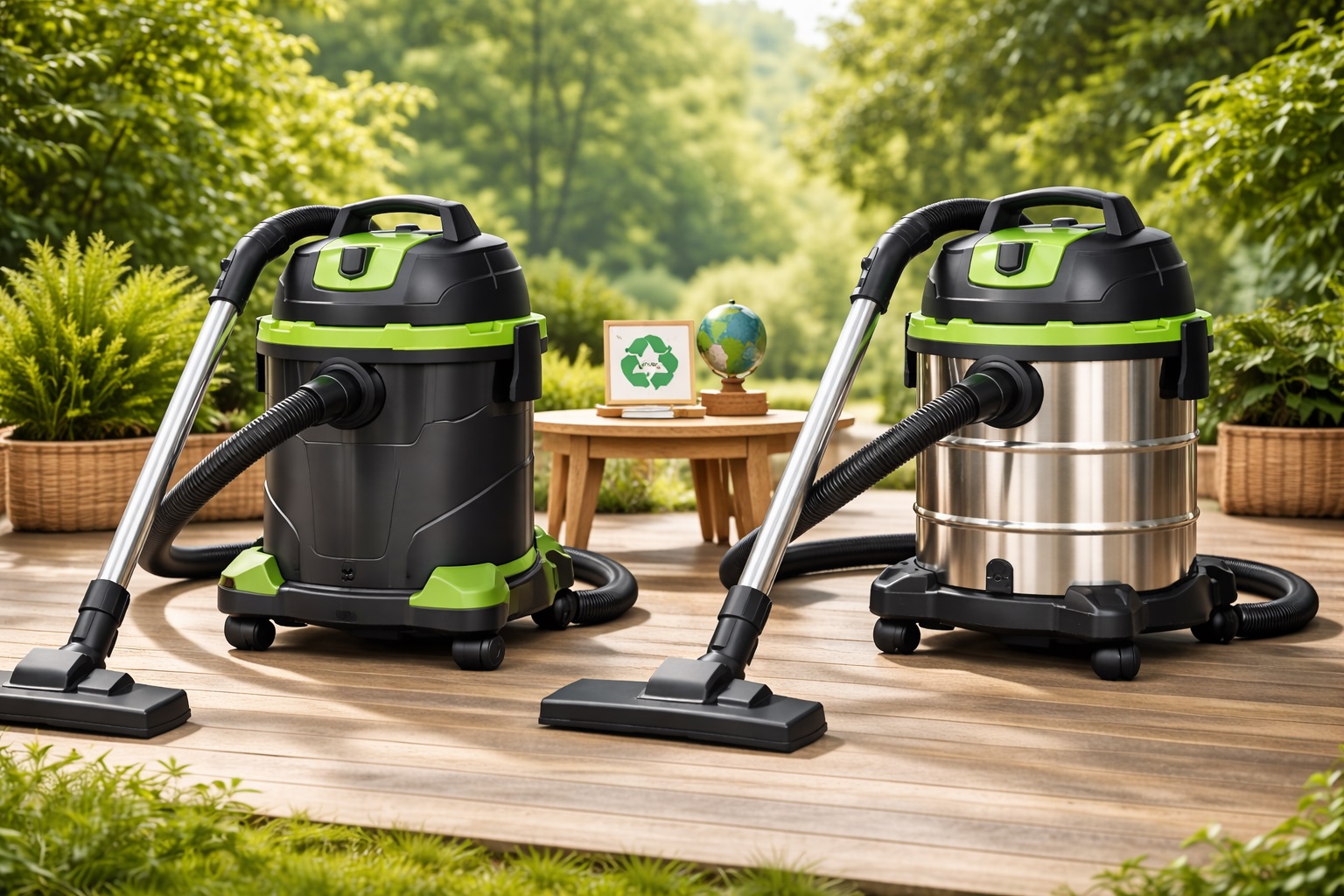
As sustainability regulations and environmental awareness continue to shape purchasing behavior across Europe, material choice has become a defining factor in cleaning equipment selection. Buyers are no longer evaluating vacuum cleaners based only on suction power or price—they are also considering durability, waste generation, and lifecycle impact.
Among barrel vacuum cleaners, the debate often centers on plastic versus stainless steel construction. Understanding how these materials affect sustainability is essential for making informed decisions in the EU market.
1. Why Material Choice Matters in the European Market
Europe emphasizes lifecycle responsibility.
EU environmental policies increasingly evaluate products based on how long they last, how easily they can be repaired, and how much waste they generate over time. Material choice directly influences all three factors.
Material is not cosmetic—it defines sustainability.
2. Plastic Barrel Vacuum Cleaners: Key Characteristics
Plastic barrels offer initial advantages.
They are lightweight, cost-effective, and easy to mold into compact designs. Plastic barrel vacuum cleaners are often positioned as best vacuum on a budget or good budget vacuum cleaner solutions.
However, sustainability challenges emerge over time.
3. Durability Comparison: Plastic vs Stainless Steel ♻️
Durability defines lifecycle length.
Plastic barrels are more prone to cracking, deformation, and wear under repeated commercial use. Stainless steel barrels, by contrast, resist impact, corrosion, and chemical exposure.
A Multi-Functional Durable Vacuum Cleaner is more achievable with stainless steel construction.
4. Waste Generation and Replacement Cycles
Short lifespans increase waste.
Plastic barrel vacuum cleaners often require replacement after a few years, contributing to electronic and material waste. Stainless steel models significantly reduce replacement frequency.
Fewer replacements mean less waste entering the EU disposal system.
5. Repairability and Component Replacement 🔧
Repair-friendly design supports sustainability.
Stainless steel barrel vacuum cleaners are typically built with modular structures, making motors, hoses, and filters easier to replace. Plastic housings often crack during repair attempts.
Repairability keeps products in use longer.
6. Energy Efficiency Over the Product Lifecycle ⚡
Energy use must be evaluated long-term.
Both plastic and stainless models can be designed as Energy-Saving Efficient Powerful Vacuum Cleaner systems. However, stainless steel units maintain airflow stability longer due to reduced structural degradation.
Stable performance supports consistent energy efficiency.
7. High Suction Stability Without Structural Fatigue
Performance longevity matters.
A High Suction Vacuum Cleaner housed in stainless steel experiences less vibration-related fatigue. Plastic housings may loosen or warp over time, reducing suction efficiency.
Structural stability protects performance.
8. Noise Control and Vibration Management 🤫
Noise pollution is part of sustainability.
Stainless steel barrels provide better vibration damping and motor isolation, supporting quiet vacuum cleaner and Quiet Vacuum for Night Use applications in urban European environments.
Lower vibration improves both comfort and longevity.
9. Wet and Dry Use: Material Resistance 💧
Wet cleaning adds stress.
In Wet Dry Vacuum Cleaners, exposure to moisture, chemicals, and debris accelerates wear. Stainless steel barrels handle wet environments far better than plastic alternatives.
Material resistance improves safety and durability.
10. Recyclability and Circular Economy Alignment
End-of-life impact matters.
Stainless steel is highly recyclable and aligns well with Europe’s circular economy initiatives. Mixed plastics are harder to recycle and often end up in landfills.
Recyclability strengthens sustainability credentials.
11. Weight vs Longevity Trade-Off
Plastic is lighter, but lighter is not always greener.
While plastic barrels reduce transport weight, stainless steel’s extended lifespan offsets higher initial material impact through long-term use.
Longevity often outweighs short-term efficiency.
12. Cost Perspective: Short-Term vs Long-Term Value
Upfront price can be misleading.
Plastic barrel vacuums may appear more affordable initially. However, stainless steel models often become the best value for money hoover when evaluated over years of operation.
Total cost of ownership favors durability.
13. Suitability for European Homes and Businesses
Different use cases require different priorities.
For light household use, plastic may suffice. For apartments, offices, workshops, and commercial spaces, stainless steel barrel vacuums offer greater sustainability and reliability.
Use context determines material suitability.
14. Implications for EU Procurement Decisions
From a vacuums procurement perspective, stainless steel barrel vacuum cleaners offer lower lifecycle risk, reduced waste, and better alignment with EU sustainability goals.
Procurement strategies increasingly prioritize long-term impact.
15. Distribution Strategy in the EU Market
For vacuum cleaner distribution, stainless steel barrel vacuums reduce warranty issues and enhance brand credibility among eco-conscious European buyers.
Durable products strengthen distributor reputation.
16. Manufacturer Design Responsibility
Sustainability begins at design stage.
Manufacturers such as Lanxstar prioritize stainless steel construction, modular repair-friendly designs, and energy-efficient systems to support greener vacuum cleaner solutions for Europe.
Responsible design creates lasting value.
Conclusion
When comparing plastic vs stainless barrel vacuum cleaners, stainless steel clearly offers stronger sustainability advantages for the EU market. Through durability, repairability, recyclability, and long-term energy efficiency, stainless steel barrel vacuums reduce waste and align with Europe’s environmental priorities.
For European buyers and global distributors targeting the EU, stainless steel barrel vacuum cleaners represent the greener, smarter long-term choice.
To explore sustainable stainless steel barrel vacuum cleaner solutions designed for Europe, visit
www.lxvacuum.com
50 Related Keyword Groups
Lanxstar vacuum cleaner, plastic barrel vacuum, stainless steel barrel vacuum, eco vacuum EU, Multi-Functional Durable Vacuum Cleaner, High Suction Vacuum Cleaner, Energy-Saving Efficient Powerful Vacuum Cleaner, Large-Capacity Wet Dry Vacuum Cleaner, Wet Dry Vacuum Cleaners, Wet and Dry Vacuum Cleaner, HEPA Filter Vacuum Cleaner, quiet vacuum cleaner, Quiet Vacuum for Night Use, Apartment Vacuum Cleaner, Vacuum Cleaner for Hardwood Floors, Vacuum Cleaner for Pet Hair, Car Vacuum Cleaner, Portable Quiet Vacuum Cleaner, Fast Lightweight Vacuum Cleaner, best vacuum on a budget, best budget hoover, good budget vacuum, best affordable vacuum, best value for money hoover, best value hoover, best vacuum cleaners on a budget, best vacuums on a budget, good budget vacuum cleaner, sustainable vacuum materials, circular economy cleaning equipment, vacuums procurement, vacuum cleaner distribution



