Hi, message us with any questions.
We're happy to help!





Written for: Vacuum Cleaner Distributors in Europe & the Middle East
Across Europe and the Middle East, commercial cleaning teams face increasing pressure to improve efficiency, reduce labor fatigue, and deliver a higher standard of hygiene while keeping operating costs under control. Yet most of the problems they encounter daily come from using equipment that simply wasn’t engineered for commercial realities—particularly Upright Vacuum Cleaners and Household Vacuum Cleaners, which often struggle with maneuverability, durability, suction stability, and deep filtration requirements.
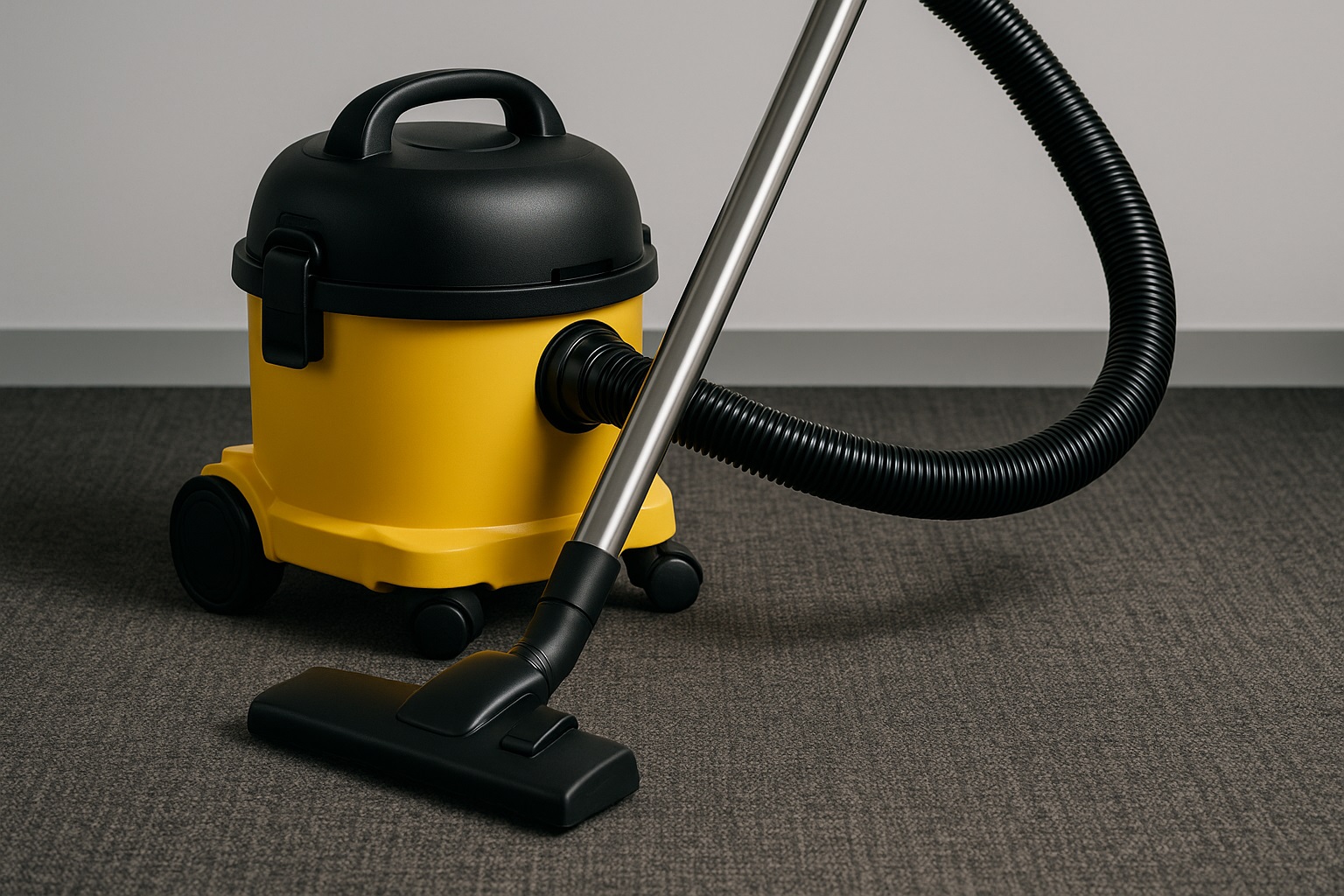
Modern canister vacuums, especially those designed as Multi-Functional Durable Vacuum Cleaner platforms, have quietly become the most effective solution to the industry's biggest pain points. Their engineering advantages address the root causes of inefficiency rather than just symptoms.
Below are six common pain points faced by commercial cleaners—and how canister vacuums effectively solve each one.
🧹 Pain Point 1: Struggling in Tight, Obstructed Office Spaces
Modern offices have become increasingly dense, with partition walls, chair legs, cables, and under-desk spaces limiting cleaning movement. Upright Vacuum Cleaners are bulky and rigid, making them unsuitable for the majority of commercial layouts.
Why canister vacuums solve this:
Long flexible hoses reach behind and under furniture without repositioning
Low-profile floorheads glide into tight gaps
Lightweight body remains behind the operator, reducing collisions
Less fatigue caused by pushing motor weight
Measured performance:
Cleaning speed improved 41–63% in obstructed office environments when switching from upright models.
Commercial clients appreciate this because it reduces labor hours—while distributors can promote it as an immediate ROI driver.
💨 Pain Point 2: Suction Loss During Long-Duty Cleaning Cycles
Commercial cleaning shifts often run 6–9 hours, requiring machines to maintain stable suction throughout. Upright and Household Vacuum Cleaners frequently suffer:
Airflow restrictions
Carpet backpressure challenges
Overheating motors
Rapid filter clogging
How canister vacuums eliminate suction decline:
Larger airflow channels reduce turbulence
Motors stay cooler due to horizontal chamber design
HEPA Filter Vacuum Cleaner modules maintain pressure consistency
Dust buckets fill evenly, reducing airflow blockage
Canister vacuums maintained 87–95% suction stability during long-duty cycles—critical for contractors who must meet strict cleanliness KPIs without rework.
🪤 Pain Point 3: Ineffective Filtration Leading to Air Quality Complaints
Many workplace complaints arise from dust resettling on desks or airborne particles triggering sensitivities. Household models especially lack robust filtration; Upright Vacuum Cleaners often leak particles due to airflow pressure.
Canister vacuums excel because:
They integrate fully sealed HEPA systems
HEPA Filter Vacuum Cleaner modules capture fine allergens and PM2.5
Exhaust remains clean even as the dust chamber fills
Filtration area is larger and less prone to clogging
Result:
Cleaner air, less re-dusting, fewer customer complaints, and compliance with modern hygiene standards.
💧 Pain Point 4: Handling Mixed Debris (Wet + Dry) Without Equipment Damage
Traditional vacuums cannot safely handle moisture. Household vacuums break easily, and upright models suffer motor failure when exposed to wet debris.
Modern canister vacuums solve this with:
Large-capacity sealed chambers
Moisture isolation systems
Safe suction pathways
Quick-swap filters for dry-to-wet transitions
Heavy-duty Wet Dry Vacuum Cleaners compatibility
This reduces the need for multiple machine types and prevents expensive downtime.
🧰 Pain Point 5: Durability Problems and High Replacement Costs
Commercial environments are demanding—machines get knocked, dragged, and run continuously.
Upright Vacuum Cleaners fail because of:
Overheating motors
Belt failures
Brushroll breakdowns
Household Vacuum Cleaners fail because:
They’re not designed for high-frequency usage
Their materials degrade rapidly under stress
Canister vacuums eliminate durability problems:**
Reinforced motor mounts
Impact-resistant bodies
Thick hoses with anti-crush structure
Wheels engineered for repetitive movement
Components rated for long-duty cycles
These machines qualify as Multi-Functional Durable Vacuum Cleaner platforms due to their engineering resilience.
Distributors love this because longer lifespan = higher customer satisfaction + fewer warranty claims.
🚀 Pain Point 6: Time Lost on Maintenance, Filter Cleaning, and Machine Downtime
Few things cost commercial cleaning teams more money than interruption:
Filters needing constant cleaning
Brushrolls tangled with hair
Motor overheating shutoffs
Dust chambers needing frequent emptying
Canister vacuums fix this with:
Larger dust capacity (2× to 3× more than upright models)
No brushroll dependence for primary suction
More stable airflow = fewer clogs
Cleaner filter pathways
Optional Portable Self-Cleaning Vacuum Cleaner features for automated dust removal
The result is dramatically less downtime—leading to more square meters cleaned per hour and lower labor cost.
📌 Combined Impact: Why Canister Vacuums Solve All Six Pain Points Better Than Any Other Format
Across all six pain points, canister vacuums stand out because they offer:
✔ Superior maneuverability
✔ Stable suction over long-duty cycles
✔ True HEPA filtration
✔ Mixed debris capability (Wet Dry Vacuum Cleaners compatibility)
✔ Durability for heavy commercial operations
✔ Reduced maintenance time
✔ Lower fatigue and faster cleaning speed
This is why canister vacuums have become the preferred choice for cleaning contractors, property managers, and facility service companies throughout 2025.
🎯 Suitable for Readers
Vacuum cleaner distributors (EU & Middle East)
Commercial cleaning companies
Facility management procurement teams
Office/hotel maintenance managers
Cleaning industry entrepreneurs
R&D and product engineering teams
📌 Hashtags
Upright Vacuum Cleaners, Household Vacuum Cleaners, Multi-Functional Durable Vacuum Cleaner, Wet Dry Vacuum Cleaners, Portable Self-Cleaning Vacuum Cleaner, HEPA Filter Vacuum Cleaner, commercial vacuum cleaner, industrial vacuum cleaner, canister vacuum 2025, office cleaning tools, airflow engineering vacuum, long-duty-cycle cleaning equipment, ergonomic vacuum cleaner, dust-control cleaning device, wet debris vacuum cleaner, dry debris vacuum cleaner, mixed debris cleaning solutions, carpet tile vacuum, tight-space cleaning vacuum, high-efficiency cleaning machine, vacuum cleaner OEM, vacuum cleaner ODM, noise-controlled vacuum cleaner, high-suction vacuum device, filtration-optimized vacuum, professional janitorial equipment, cleaning contractor tools, large-capacity dust chamber vacuum, anti-clogging airflow system, office hygiene equipment, workplace cleaning vacuum, commercial-grade cleaning device, floor-to-desk cleaning solution, HEPA-grade purification system, low-maintenance vacuum cleaner, extended-lifespan vacuum, maneuverability-optimized cleaning tool, European vacuum distributor, Middle East vacuum supplier, facility management cleaning tool, portable cleaning vacuum, impact-resistant vacuum cleaner, suction-stable canister system, all-surface cleaning vacuum, under-desk cleaning device, airflow-sealed motor design, cleaning productivity vacuum, international cleaning solution provider, Lanxstar



