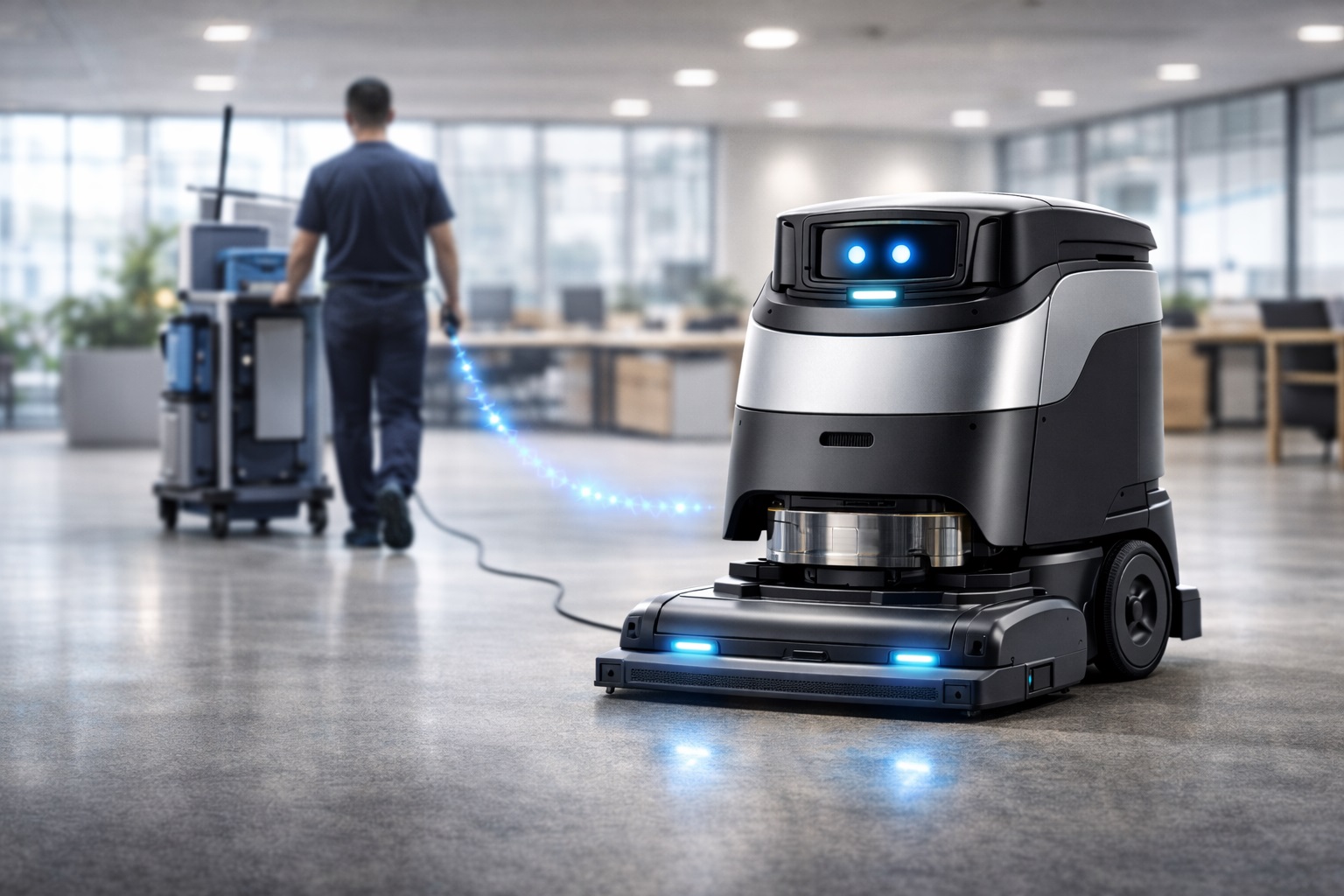
Labor is no longer just expensive — it is unstable.
Across Europe and the Middle East, cleaning companies face a shared reality:
labor availability fluctuates, experience levels vary, and service expectations continue to rise. The challenge is no longer temporary shortages, but the inability to rely on labor consistency.
In response, many organizations are shifting toward a reduced-labor cleaning model — not by lowering standards, but by redesigning workflows around smarter equipment.
At the center of this shift is the modern wet and dry vacuum cleaner, no longer a basic tool, but a labor-multiplying system.
👷 1️⃣ Reduced-Labor Does Not Mean Reduced Quality
A common misconception is that fewer workers automatically lead to lower service quality.
In practice, reduced-labor models focus on:
A modern Wet and Dry Vacuum Cleaner allows one operator to handle spills, debris, and routine cleaning without interruption — eliminating downtime that previously required additional staff or overlapping roles.
🔄 2️⃣ Multi-Function Equipment Replaces Multi-Person Tasks
Traditional cleaning workflows often assign:
A Multi-Functional Durable Vacuum Cleaner consolidates these steps into a single, continuous workflow.
This allows cleaning companies to:
The productivity gain comes not from speed alone, but from removing friction between tasks.
⚡ 3️⃣ Speed and Weight Are Critical in Labor-Constrained Environments
When staffing is limited, physical efficiency becomes operational efficiency.
A Fast Lightweight Vacuum Cleaner enables:
Faster movement between rooms and zones
Reduced operator fatigue during long shifts
More stable performance over the course of the day
This is especially relevant in Apartment Vacuum Cleaner applications, where cleaners navigate stairs, corridors, and compact layouts under tight time windows.
🌱 4️⃣ Energy Efficiency Reduces Indirect Labor Pressure
Labor efficiency is not only measured in minutes — it is also measured in interruptions.
An Energy-Saving Efficient Powerful Vacuum Cleaner:
Optimizes suction to shorten cleaning cycles
Runs cooler, reducing heat-related stoppages
Requires less frequent maintenance intervention
When equipment behaves predictably, supervisors spend less time troubleshooting and reallocating staff — an often overlooked labor cost.
🛠️ 5️⃣ Durability Is the Backbone of Reduced-Labor Operations
Reduced-labor models are fragile if equipment fails.
A Multi-Functional Durable Vacuum Cleaner is essential because:
There are fewer backup operators available
Equipment downtime affects entire schedules
One failure can cascade across multiple sites
Durability is not about longevity alone — it is about protecting lean systems from disruption.
🔍 Practical Example: One Operator, Multiple Responsibilities
A regional cleaning company servicing apartment complexes and mixed-use buildings in Europe faced persistent labor instability.
Instead of increasing headcount, the company redesigned workflows around wet and dry vacuum cleaner platforms that combined spill pickup, dry debris removal, and quiet operation.
The results were measurable:
Fewer operators required per site
Shorter average cleaning times
Reduced onboarding time for new staff
More predictable daily output
The company did not reduce service scope.
It reduced dependence on manpower stability.
🏢 6️⃣ Apartments Are Accelerating the Reduced-Labor Shift
Apartment and residential environments expose labor inefficiencies quickly.
In these settings:
One delay affects many occupants
Noise and speed matter equally
Space constraints punish bulky equipment
An Apartment Vacuum Cleaner that is lightweight, quiet, and multi-functional enables smaller teams to maintain service levels without extending working hours.
📊 7️⃣ How Buyers Are Evaluating Labor Impact Today
Professional buyers are changing the questions they ask.
Instead of focusing only on headcount, they now evaluate:
How many tasks one operator can complete per shift
Whether a wet and dry vacuum cleaner reduces setup and transition time
If equipment reliability supports lean staffing
Whether energy efficiency lowers supervision and maintenance burden
This reflects a shift from labor planning to system design thinking.
🚀 Final Insight: Reduced-Labor Is Rarely a Choice — It Is a Response
Reduced-labor cleaning models are rarely adopted by preference.
They emerge when the old, labor-heavy model stops working reliably.
Organizations that succeed in this transition do not simply ask people to work harder.
They invest in:
Fast, lightweight equipment
Durable, multi-functional platforms
Energy-efficient, high-performance systems
In modern commercial cleaning, the vacuum cleaner is no longer a cost item — it is part of the workforce architecture.
📌 Suitable Readers
Commercial cleaning company owners
Facility management procurement teams
Apartment and residential cleaning operators
B2B vacuum equipment buyers
Cleaning equipment distributors
📌 Hashtags
wet and dry vacuum cleaner, Multi-Functional Durable Vacuum Cleaner, Fast Lightweight Vacuum Cleaner, Energy-Saving Efficient Powerful Vacuum Cleaner, Apartment Vacuum Cleaner, Wet and Dry Vacuum Cleaner, reduced labor cleaning, commercial cleaning productivity, professional vacuum cleaner, labor efficient cleaning equipment, facility cleaning solutions, apartment cleaning equipment, lightweight commercial vacuum, B2B cleaning solutions, industrial cleaning machines, durable vacuum systems, energy efficient cleaning equipment, cleaning workflow optimization, modern cleaning technology, commercial hygiene solutions, vacuum equipment strategy, cleaning company operations, janitorial equipment professional, scalable cleaning operations, labor instability solutions, cleaning efficiency tools, professional cleaning services, facility maintenance equipment, cleaning business scalability, smart cleaning equipment, commercial cleaning ROI, operational efficiency cleaning, advanced cleaning machines, cleaning equipment lifecycle, Lanxstar