Hi, message us with any questions.
We're happy to help!





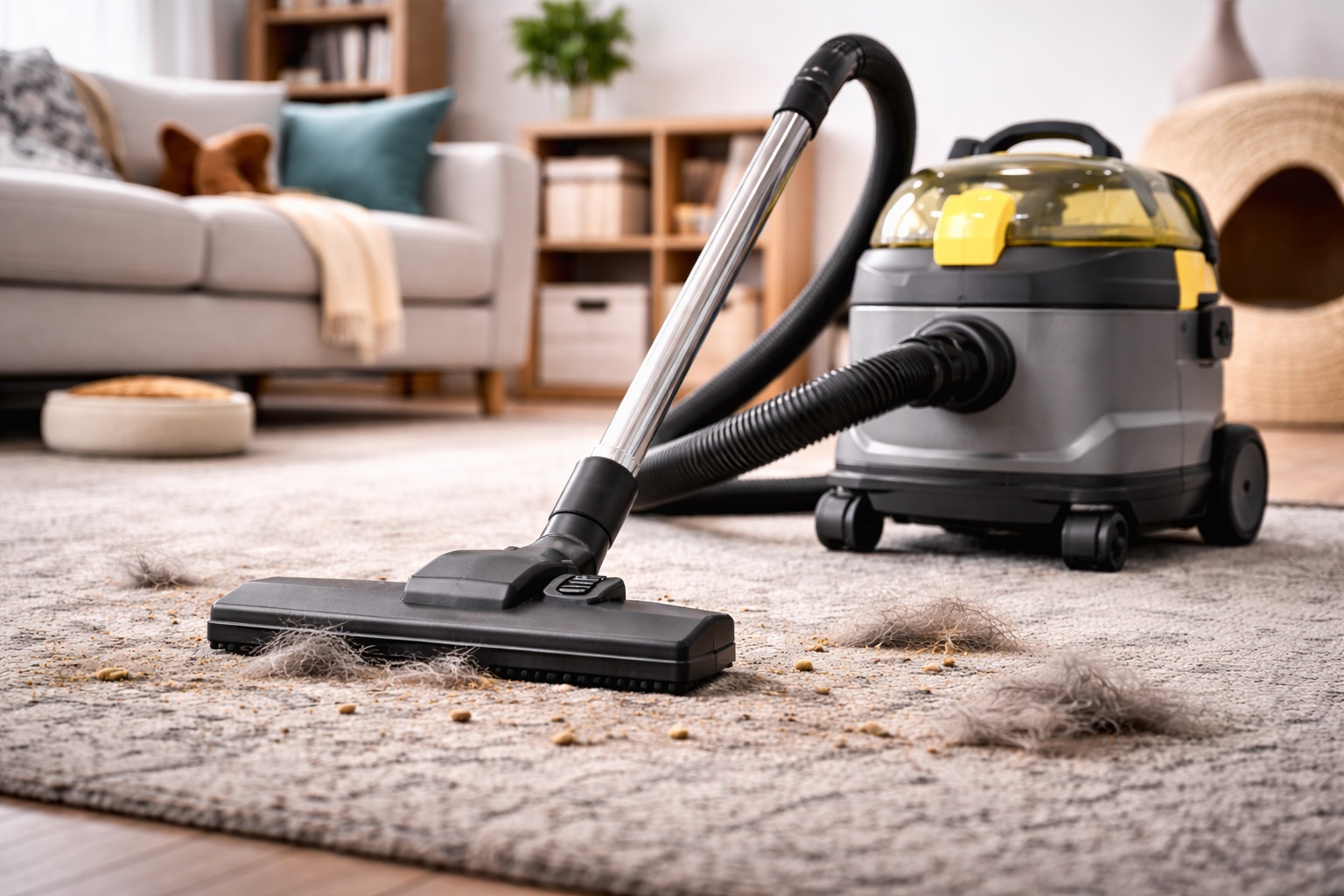
When cleaning staff complain, managers often hear familiar explanations:
“They lack motivation.”
“Turnover is unavoidable in this industry.”
“People just don’t want to work as hard anymore.”
But experienced operators know a different reality:
When good workers complain, the problem is rarely their attitude—it’s usually their tools.
In many commercial cleaning operations, staff dissatisfaction does not begin with people.
It begins with poor equipment.
This article explains why frontline complaints often originate from the tools cleaners use every day, how those frustrations quietly turn into turnover and absenteeism, and what smarter companies are doing to address the root cause.
🧠 1. Complaints Rarely Start With Words—They Start With Fatigue
Cleaning is physically demanding work.
When equipment increases that burden unnecessarily, complaints are only a matter of time.
Poorly designed vacuum cleaners often:
Feel heavy or poorly balanced
Require constant pushing, pulling, or lifting
Accelerate arm, shoulder, and lower-back fatigue
A Fast Lightweight Vacuum Cleaner reduces strain by:
Improving maneuverability
Reducing effort per movement
Allowing consistent pacing across long shifts
Reality managers often miss:
Fatigue accumulates silently—complaints come later.
⚠️ 2. Noise Is a Hidden Morale Killer—Especially on Long Shifts
Noise doesn’t just affect clients.
It wears down workers hour after hour.
Loud vacuum cleaners:
Increase stress and irritation
Make communication difficult
Create tension between staff and supervisors
A Quiet Vacuum Cleaner immediately improves the work environment, while a Quiet Vacuum for Night Use is essential for overnight and early-morning teams.
If equipment is loud enough to disturb customers, it is loud enough to exhaust employees.
🌙 3. Night Shifts Amplify Every Equipment Problem
Night shifts are where equipment problems become people problems—fast.
During night operations:
Fewer supervisors are present
Fatigue is already higher
Noise complaints carry greater risk
Heavy, loud, or unreliable equipment during night shifts leads to:
Faster burnout
Higher absenteeism
Stronger resistance to night assignments
Quiet, efficient, and reliable machines are not a luxury for night work—they are a retention tool.
🕒 4. Inefficient Equipment Feels Like Disrespect for Staff Time
When vacuum cleaners:
Lose suction quickly
Require multiple passes
Clog repeatedly with debris or pet hair
staff feel they are being asked to compensate for poor tools.
A purpose-built Vacuum Cleaner for Pet Hair prevents repeated work in pet-friendly buildings, serviced apartments, and mixed-use facilities.
Staff perception matters:
Inefficient tools signal that management values short-term savings over daily effort.
🔄 5. Constant Tool Switching Breaks Workflow—and Trust
Many teams are still expected to:
Use one vacuum for dry debris
Another for wet spills
Additional tools for special areas
This constant switching:
Interrupts workflow
Increases mistakes
Frustrates experienced staff
A wet and dry vacuum cleaner, especially when designed as a Multi-Functional Durable Vacuum Cleaner, allows staff to handle most situations without stopping or switching equipment.
Every unnecessary tool change reminds workers that the system was not designed for them.
🧹 6. Equipment Failures Turn Workers Into Problem-Solvers
Nothing damages morale faster than a breakdown mid-shift.
When vacuum cleaners fail, staff are forced to:
Share machines
Wait for replacements
Explain delays they didn’t cause
A Multi-Functional Durable Vacuum Cleaner built for continuous commercial use reduces these disruptions and restores a sense of control.
Key insight:
When tools fail, employees absorb the pressure—not management.
📌 Case Insight: Complaints Fell Without Changing the Team
A commercial cleaning contractor managing office buildings and serviced apartments faced:
Rising staff complaints
Night-shift resistance
Increased absenteeism
Instead of replacing workers, management upgraded equipment standards:
Faster, lighter vacuum designs
Quieter machines for night operations
Multi-functional systems capable of handling pet hair and spills
Within months, supervisors reported:
Fewer complaints
More stable night-shift staffing
Improved overall morale
The workforce didn’t change.
The equipment did.
🚀 What Smart Cleaning Companies Understand
High-performing companies no longer assume staff complaints are a “people issue.”
They ask:
Does our equipment increase fatigue unnecessarily?
Does noise make long shifts harder than they need to be?
Are workers compensating for poor performance or breakdowns?
Can one machine handle most scenarios reliably?
This reframes procurement as a human-performance decision, not just a purchasing one.
✅ Management Self-Check: Before Blaming Staff, Check This
If cleaning staff complain regularly, review the following first:
Are machines heavy or difficult to maneuver?
Is noise a common issue, especially on night shifts?
Do operators need multiple passes to finish basic tasks?
Are staff switching machines frequently during one shift?
Do breakdowns force workers to improvise or wait?
If you answer “yes” to three or more, the issue is likely equipment—not attitude.
✅ Conclusion: Better Equipment Builds Better Teams
Cleaning staff complaints often appear to be about motivation, pay, or discipline.
In reality, many begin with daily friction caused by poor equipment.
By investing in:
Fast, lightweight designs
Quiet operation for day and night use
Reliable, multi-functional wet & dry capability
Strong performance on pet hair and mixed surfaces
cleaning companies reduce fatigue, frustration, and turnover—without increasing headcount.
Better tools don’t just clean better.
They make people want to stay.
👥 Suitable Readers
Commercial cleaning company owners
Facility management leaders
HR and operations managers
B2B vacuum cleaner procurement teams
EU & Middle East cleaning contractors
🔖 Hashtags
wet and dry vacuum cleaner, Multi-Functional Durable Vacuum Cleaner, Quiet Vacuum Cleaner, Fast Lightweight Vacuum Cleaner, Vacuum Cleaner for Pet Hair, Quiet Vacuum for Night Use, cleaning staff retention, workforce stability cleaning, commercial cleaning equipment, professional vacuum systems
low noise cleaning tools, ergonomic cleaning equipment, night shift cleaning solutions, labor efficiency cleaning, commercial janitorial tools, durable cleaning machines, employee satisfaction cleaning, cleaning workflow optimization, industrial vacuum solutions, human centered equipment
vacuum reliability standards, cleaning fatigue reduction, staff friendly cleaning tools, professional cleaning operations, facility management tools, sustainable cleaning equipment, commercial cleaning efficiency, smart cleaning technology, cleaning team productivity, operational morale
EU cleaning equipment market, Middle East cleaning industry, commercial cleaning strategy, workforce cost control, advanced vacuum design, cleaning performance improvement, people first cleaning, commercial vacuum solutions, retention focused equipment, Lanxstar