Hi, message us with any questions.
We're happy to help!





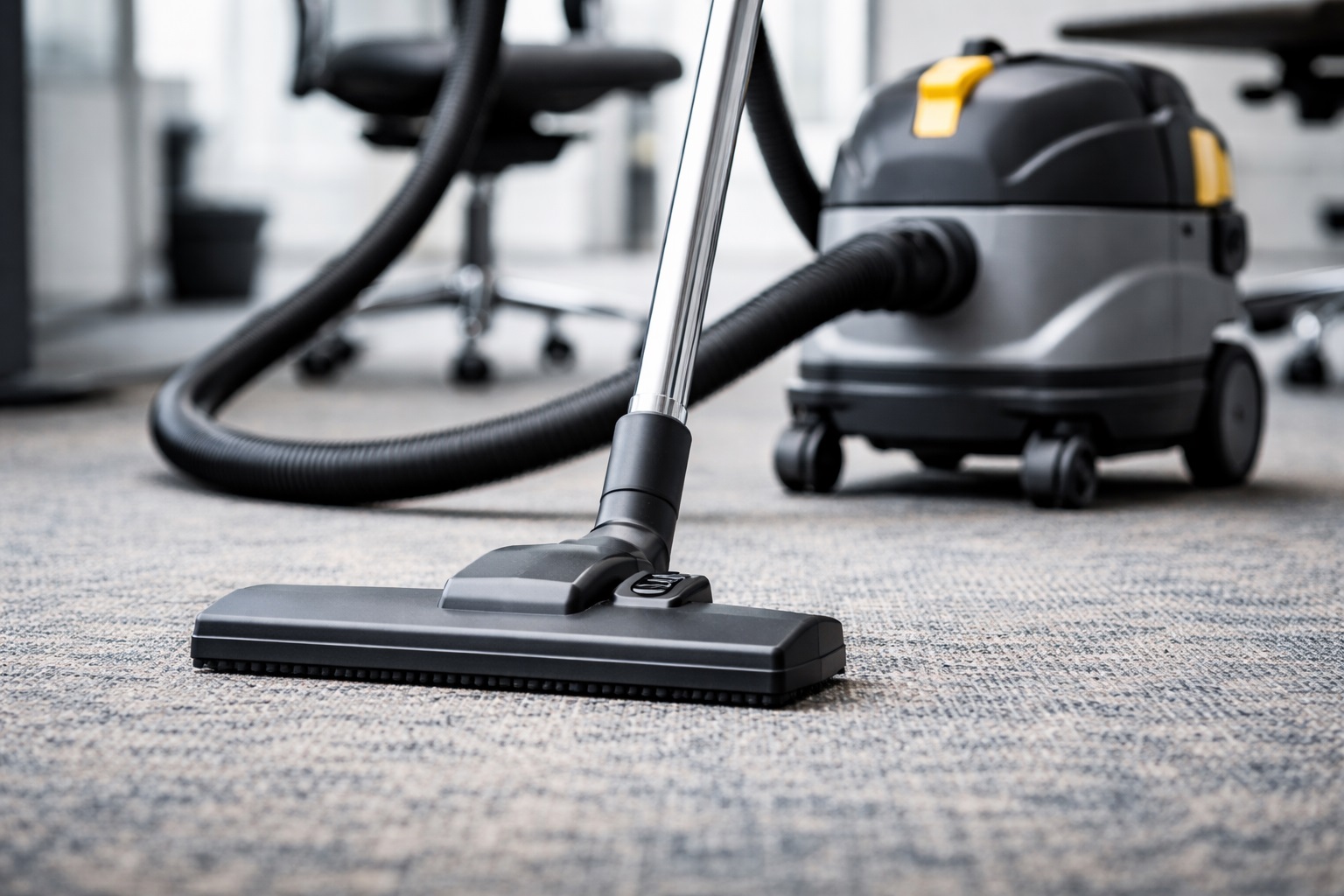
Commercial cleaning operations across Europe and the Middle East are under pressure like never before. Labor costs continue to rise, energy prices remain volatile, and clients demand faster turnaround, higher hygiene standards, and zero operational disruption.
Yet one critical factor is often overlooked:
traditional vacuum cleaners.
The problem is not that these machines are defective.
The problem is that they were designed for a cleaning reality that no longer exists.
This article explains why traditional vacuum cleaners are slowing down commercial cleaning teams, reveals common procurement blind spots, and shows how forward-thinking B2B buyers are responding.
🧠 1. The Uncomfortable Truth: “Good Enough” Equipment Kills Productivity
Most traditional vacuum cleaners still used in commercial environments were designed for:
Short operating cycles
Limited daily runtime
Single-surface cleaning
Modern commercial cleaning teams operate under completely different conditions:
Multi-hour or multi-shift workloads
Large, mixed-surface facilities
Strict contract-based timeframes
Here is the reality many buyers underestimate:
A vacuum cleaner that performs “well enough” for 30 minutes can become a serious bottleneck after four hours.
A true High Suction Vacuum Cleaner built for commercial use maintains stable airflow under continuous load—something most traditional designs simply cannot deliver.
Buyer insight:
When suction drops mid-shift, cleaning speed drops disproportionately due to rework and repeated passes.
⚠️ 2. Anti-Common Sense Insight: Higher Wattage Does Not Mean Better Cleaning
Many procurement teams still assume:
“More watts equal more cleaning power.”
In real-world commercial use, this mindset often leads to:
Higher energy consumption
Faster motor degradation due to heat buildup
An Energy-Saving Efficient Powerful Vacuum Cleaner focuses on airflow optimization, sealed systems, and motor efficiency, not raw wattage.
The result is:
Consistent suction
Lower electricity costs
Longer service life
This is why energy-efficient commercial vacuum systems often outperform older, high-wattage machines in long shifts.
🕒 3. Time Loss Is Invisible—Until You Multiply It
Traditional vacuum cleaners slow teams down in small but compounding ways:
Frequent dust container emptying
Manual equipment changes between surfaces
Poor performance on embedded dirt
Each delay may seem minor. But when multiplied across:
10 workers × 6 hours × 300 working days,
those minutes turn into thousands of lost labor hours per year.
A Multi-Functional Durable Vacuum Cleaner minimizes these losses by handling:
Dry debris
Liquid spills
Fine dust
Mixed environments
Fewer interruptions mean faster workflows and fewer operational errors.
❌ 4. Procurement Mistake #1: Buying for One Surface Instead of the Whole Facility
Many buyers still source equipment based on a single dominant surface:
Carpet
Tile
Hardwood
Modern facilities rarely work that way.
A Vacuum Cleaner for Hardwood Floors that also performs reliably on carpets and transition zones eliminates:
Redundant equipment
Training complexity
Storage and logistics issues
This is why wet and dry vacuum cleaner systems are becoming the standard choice in hotels, shopping malls, and healthcare facilities.
🔇 5. Noise Is No Longer a Detail—It’s a Contract Risk
Night cleaning is now essential in:
Hotels
Office buildings
Hospitals
Traditional vacuum cleaners often exceed acceptable noise thresholds, leading to:
Guest complaints
Restricted operating hours
Contract penalties
A Quiet Vacuum for Night Use enables uninterrupted cleaning during off-peak hours.
Key insight:
Noise compliance directly affects client retention—not just operator comfort.
❌ 6. Procurement Mistake #2: Ignoring Operator Fatigue
Many traditional vacuum designs are:
Heavy
Poorly balanced
Difficult to maneuver in tight spaces
Over time, this leads to:
Faster operator fatigue
Higher injury risk
Increased staff turnover
Modern commercial vacuum systems prioritize ergonomics because human efficiency is part of machine efficiency, especially in labor-constrained markets.
🔧 7. Downtime Costs More Than Repairs
When a traditional vacuum fails, the real cost is rarely the repair itself. It is:
Missed deadlines
Emergency equipment replacement
Reduced client confidence
A Multi-Functional Durable Vacuum Cleaner built with industrial-grade components significantly reduces unplanned downtime and improves operational predictability.
For contract-based cleaning companies, reliability often matters more than peak performance.
📌 Case Study: How a Middle East Cleaning Company Improved Productivity by 27%
Background
A mid-sized commercial cleaning company in the Middle East serviced:
Four- and five-star hotels
Large commercial complexes
Night-time office cleaning contracts
The company employed approximately 60 frontline cleaners and relied primarily on traditional dry vacuum cleaners, selected mainly based on low unit price and high wattage.
Challenges Identified
During a contract review, management discovered several recurring issues:
Frequent noise complaints during night cleaning
Multiple machines required for different surfaces
Noticeable suction loss after 2–3 hours of continuous use
Energy costs increased by over 18% year-on-year
Strong negative feedback from operators regarding weight and overheating
These issues were not obvious in equipment purchase costs but directly impacted efficiency, contract stability, and workforce morale.
Solution: From Single-Function Tools to a System-Based Approach
The company revised its procurement strategy and standardized on equipment with:
wet and dry vacuum cleaner capability
Continuous-performance High Suction Vacuum Cleaner design
Quiet Vacuum for Night Use for hotel and office environments
Energy-Saving Efficient Powerful Vacuum Cleaner architecture
Safe operation on stone and wood surfaces using a Vacuum Cleaner for Hardwood Floors
Industrial-grade construction via a Multi-Functional Durable Vacuum Cleaner platform
The focus was not on changing brands, but on unifying workflow and performance standards.
Results After Six Months
Without increasing headcount, the company reported:
~27% improvement in cleaning productivity per operator
Near elimination of night-time noise complaints
Over 40% reduction in equipment downtime
Approximately 14% decrease in energy-related operating costs
Improved staff retention based on internal feedback
Most importantly, the company used low-noise, high-efficiency night cleaning as a core differentiator in two subsequent hotel tenders—and won both.
🚀 8. What High-Performing Cleaning Companies Do Differently
Leading cleaning operators no longer ask:
“What is the cheapest vacuum we can buy?”
They ask:
Does this improve labor efficiency?
Can one machine replace multiple tools?
Is it suitable for night operations?
Will performance remain stable over years of use?
These questions separate cost-focused buyers from growth-focused buyers.
✅ Conclusion: Traditional Vacuums Are Not Broken—They’re Outdated
Traditional vacuum cleaners are slowing down commercial cleaning teams not because they fail to function, but because commercial cleaning has evolved faster than the equipment.
Upgrading to:
High suction systems
Energy-efficient designs
Quiet night-use machines
Multi-functional wet and dry platforms
is no longer optional. It is essential for scalable, competitive, and profitable operations.
🔖 Hashtags
wet and dry vacuum cleaner, Multi-Functional Durable Vacuum Cleaner, High Suction Vacuum Cleaner, Energy-Saving Efficient Powerful Vacuum Cleaner, Vacuum Cleaner for Hardwood Floors, Quiet Vacuum for Night Use, commercial vacuum systems, industrial cleaning equipment, facility cleaning solutions, hotel cleaning machines
hospital vacuum standards, night cleaning equipment, low noise vacuum, energy efficient cleaning tools, B2B vacuum buyers, commercial cleaning technology, professional vacuum supplier, industrial vacuum solutions, cleaning equipment distributor, facility management tools
hard floor vacuum systems, multi surface vacuum cleaner, commercial cleaning innovation, vacuum performance optimization, cleaning contract efficiency, vacuum lifecycle cost, industrial suction technology, commercial cleaning ROI, smart cleaning equipment, durable vacuum design
heavy duty vacuum cleaner, commercial janitorial tools, industrial cleaning machines, professional cleaning workflow, vacuum noise compliance, energy cost reduction cleaning, EU cleaning equipment market, Middle East cleaning industry, facility operations efficiency, commercial cleaning strategy, Lanxstar