Hi, message us with any questions.
We're happy to help!





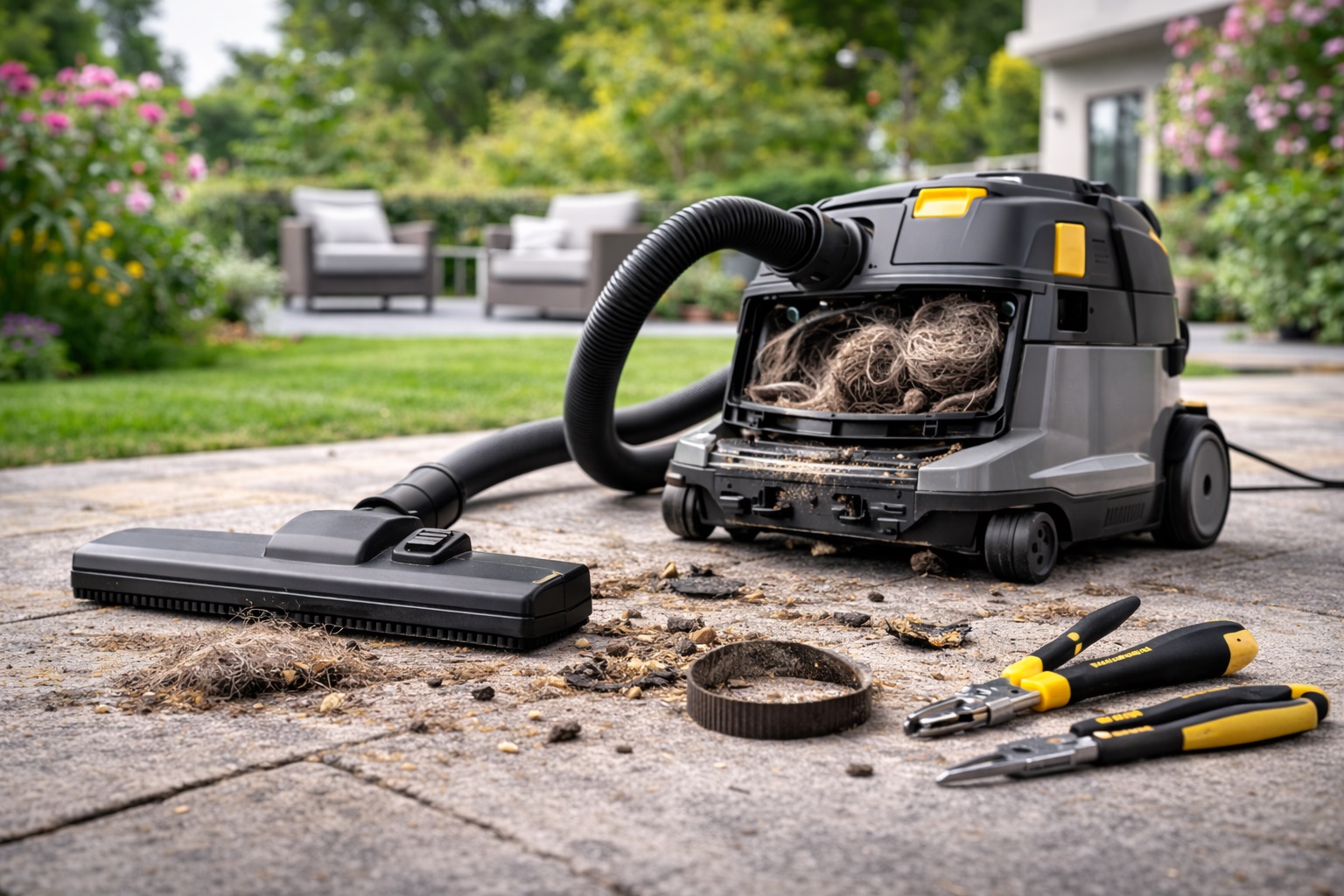
When vacuum cleaners break down repeatedly, frustration is inevitable.
The next step is usually blame—either on the equipment or on the supplier.
But in professional commercial cleaning operations, especially across Europe and the Middle East, experienced buyers know this:
Breakdowns don’t mean the product failed—they usually mean the system was poorly matched.
Frequent failures are rarely caused by a single mistake.
They are signals of misalignment between equipment design, real usage conditions, and supplier responsibility.
This article explains how to identify whether recurring vacuum breakdowns are caused by equipment mismatch, genuine supplier failure, or procurement blind spots—and how mature buyers prevent the problem from repeating.
🧠 1. The Wrong First Question Buyers Ask
Most teams start with:
“Why does this vacuum keep breaking?”
A more accurate question is:
“Was this vacuum designed for how we actually use it?”
Breakdowns often occur when:
Residential or light-duty machines are pushed into heavy commercial use
Equipment is selected by price rather than duty cycle
Performance is judged in demos, not full working shifts
A Multi-Functional Durable Vacuum Cleaner is engineered for:
Long daily operating hours
Repeated movement across large areas
Mixed wet and dry tasks
When a machine is used outside its design limits, failure is predictable—not accidental.
⚠️ 2. Equipment Issue or Supplier Issue? Start With Design Boundaries
Before blaming a supplier, buyers should assess the equipment itself:
Is it a true wet and dry vacuum cleaner, or is it being forced to handle liquids it was never designed for?
Is the motor rated for continuous commercial duty cycles?
Are seals, filters, and housings built for frequent maintenance and heavy use?
A Large-Capacity Wet Dry Vacuum Cleaner reduces:
Overfilling
Clogging
Thermal and airflow stress on the motor
Key insight:
Most breakdowns happen when machines operate outside their intended design envelope.
🕒 3. When “High Performance” Turns Into a Reliability Risk
High suction looks impressive on paper—but only if it can be sustained.
Machines marketed for extreme performance may:
Overheat during long shifts
Experience premature seal degradation
Require frequent service interruptions
An Energy-Saving Efficient Powerful Vacuum Cleaner focuses on:
Controlled airflow
Thermal stability
Consistent performance over time
A true High Suction Vacuum Cleaner delivers power without sacrificing reliability.
If failures increase after extended use, the issue is rarely coincidence.
🧹 4. Surface Mismatch: A Silent Breakdown Accelerator
Surface mismatch is one of the most underestimated causes of failure.
Common examples include:
Excessive suction on hardwood floors
Incorrect brush systems increasing resistance
Fine dust penetrating seals and filters
A Vacuum Cleaner for Hardwood Floors is designed to balance:
Suction strength
Brush contact
Airflow control
Using the wrong machine on the wrong surface accelerates wear—and often leads to unfair blame placed on suppliers.
🚗 5. Category Misuse: The Car Vacuum Cleaner Problem
Another frequent source of breakdowns is category misuse.
A Car Vacuum Cleaner is ideal for:
Tight spaces
Short-duration tasks
Light debris
It is not designed for:
Long commercial shifts
Large-area cleaning
Wet debris or heavy dirt loads
Stretching a tool beyond its intended role almost guarantees frequent failures—regardless of brand or supplier quality.
🔄 6. When It Is a Supplier Problem (Clear Responsibility)
To be fair, some breakdown patterns are clearly supplier-related.
It is primarily a supplier issue when:
Equipment repeatedly fails within rated operating conditions
Failures occur across multiple sites with identical usage
Spare parts, service support, or documentation are inadequate
The supplier recommended a model that does not fit the buyer’s workflow
A professional supplier should:
Understand real operating conditions
Recommend appropriate categories and capacities
Support maintenance and lifecycle planning
Procurement maturity is defined by how clearly responsibility is shared—not avoided.
📌 Case Insight: Why Changing Suppliers Didn’t Solve the Problem
A regional cleaning contractor experienced frequent vacuum failures across multiple locations.
The first response was to replace the supplier.
The outcome:
Similar breakdown patterns
Continued downtime
Rising maintenance costs
Only after reassessing:
Actual duty cycles
Surface types
Wet and dry usage frequency
did the company standardize on:
Multi-Functional Durable Vacuum Cleaner platforms
Large-Capacity Wet Dry Vacuum Cleaner systems
Energy-efficient, stable-performance designs
Breakdowns dropped—not because the supplier changed, but because the equipment finally matched reality.
🚀 How Professional Buyers Prevent Repeat Breakdowns
Experienced buyers don’t ask:
“Who should we blame?”
They ask:
Was the equipment selected for real working conditions?
Are duty cycles aligned with design limits?
Is capacity appropriate for shift length and debris load?
Does the supplier understand our actual workflow?
This mindset transforms breakdowns from recurring surprises into preventable outcomes.
✅ Procurement Decision Checklist (Before Switching Suppliers)
If vacuum breakdowns keep happening, follow this order:
Confirm usage reality: shift length, surfaces, wet/dry frequency
Match duty cycle to machine design, not price
Verify capacity against real debris volume
Check surface compatibility, especially hardwood floors
Review supplier recommendations and support commitments
Only then evaluate whether a supplier change is justified
If steps 1–4 are unclear, changing suppliers will not fix the problem.
✅ Conclusion: Breakdowns Are Signals, Not Accidents
Frequent vacuum breakdowns are rarely random.
They point to:
Equipment mismatch
Unrealistic expectations
Weak alignment between buyer and supplier
By choosing properly designed:
wet and dry vacuum cleaner systems
Multi-Functional Durable Vacuum Cleaner platforms
Large-Capacity Wet Dry Vacuum Cleaner solutions
Energy-efficient, stable-performance machines
buyers move from reactive repairs to predictable, reliable operations.
The real question is not “Who failed?”
It is “Was this system designed to succeed?”
🔖 Hashtags
wet and dry vacuum cleaner, Multi-Functional Durable Vacuum Cleaner, Large-Capacity Wet Dry Vacuum Cleaner, Energy-Saving Efficient Powerful Vacuum Cleaner, Vacuum Cleaner for Hardwood Floors, Car Vacuum Cleaner, commercial vacuum breakdowns, industrial cleaning equipment, facility maintenance tools, professional vacuum systems
equipment reliability management, vacuum lifecycle cost, cleaning equipment procurement, B2B vacuum buyers, commercial cleaning operations, heavy duty vacuum cleaner, industrial vacuum solutions, cleaning workflow optimization, maintenance cost reduction, operational risk management
vacuum performance stability, energy efficient cleaning equipment, large facility cleaning tools, surface specific vacuum design, durable cleaning machines, professional cleaning standards, equipment duty cycle matching, supplier relationship management, cleaning system design, reliability focused procurement
EU cleaning equipment market, Middle East cleaning industry, commercial cleaning strategy, downtime reduction tools, advanced vacuum engineering, smart cleaning technology, scalable cleaning equipment, commercial vacuum solutions, procurement best practices, Lanxstar



