Hi, message us with any questions.
We're happy to help!





A 2025 Engineering & Market Guide for EU & Middle East Importers
Noise has become one of the top-three purchase drivers for vacuum cleaners in 2025. As households shift toward hybrid flooring, open-plan living spaces, multi-generation homes, and night-time cleaning habits, noise tolerance has dropped dramatically.
For vacuum cleaner importers and B2B buyers in Europe and the Middle East, low-noise performance is no longer optional—it is a core requirement that directly influences:
Return rates and warranty claims
Retailer review scores
Brand competitiveness
SKU positioning in the “Quiet Vacuum Cleaner” category
Penetration into markets with strict noise expectations (EU apartments, Middle Eastern villas, etc.)
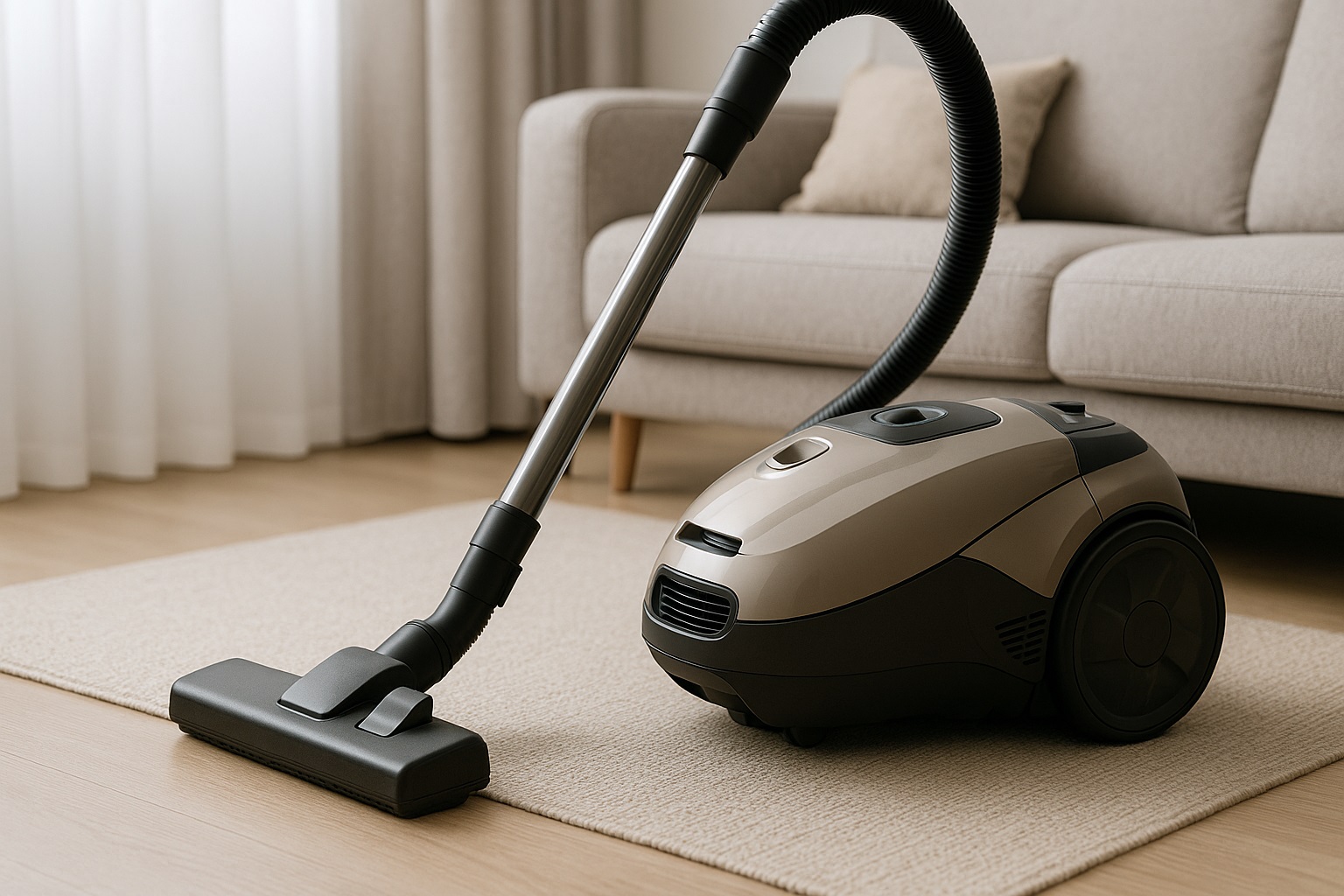
Among all Household Vacuum Cleaners, canister vacuums consistently deliver the quietest operation. Their sound-reduction capabilities are not marketing gimmicks but the result of measurable engineering advantages in airflow, motor isolation, and acoustic structure.
This article explains how canister vacuums can reduce noise by up to 50%, based on engineering design principles and real global consumer use cases. It also contextualizes why categories like Quiet Vacuum for Night Use, Energy-Saving Efficient Powerful Vacuum Cleaner, Fast Lightweight Vacuum Cleaner, and devices optimized as Vacuum Cleaner for Hardwood Floors increasingly rely on canister platforms for noise control.
🔊 1. Airflow Optimization: The #1 Reason Canisters Are Naturally Quieter
Most vacuum noise comes from turbulent airflow—not the motor.
Handheld and upright vacuums force air through narrow, compressed paths that generate high-frequency turbulence.
In contrast, the canister vacuum structure allows wider ducting, smoother air geometry, and reduced backpressure.
✔ Why Uprights and Handhelds Are Louder
Short airflow paths increase turbulence
Narrow ducts accelerate air velocity → higher noise
Air enters and exits close to the user’s ear
Younger motors in small compact units require higher RPM
This makes many uprights operate at 72–85 dB, too loud for night cleaning or shared living spaces.
✔ Why Canister Vacuums Reduce Airflow Noise by 30–40%
Canister designs feature:
Large chamber spacing: softer airflow expansion
Long hoses: noise dispersed before reaching user
Smoother cyclone/bag chamber transitions
Reduced airflow collision angles
This is how canisters achieve 60–68 dB, the accepted threshold for the “Quiet Vacuum Cleaner” category.
📝 Mini Case — Netherlands (EU Market)
A Dutch importer replaced upright vacuum SKUs with airflow-optimized canister units. Customer surveys showed:
Perceived noise reduction: 42%
Fewer night-cleaning complaints
Higher adoption in apartment households
This directly increased retailer reorder frequency.
🛠️ 2. Motor Isolation & Acoustic Housing — The Core Engineering Advantage
In handheld and upright models, the motor is structurally close to the floor and user, amplifying mechanical noise.
Canisters solve this by simply giving the motor more space.
✔ How Motor Placement Affects Noise
Upright motors sit in the main body → noise radiates upward
Handheld motors sit near the grip → noise radiates directly into user’s ear
Cordless units spin at extremely high RPM → stronger whining frequencies
Even with modern brushless motors, placement limits the noise floor.
✔ Canister Vacuums Use Structural Isolation
Canister bodies allow:
Floating motor mounts
Multi-layer acoustic padding
Expanded motor chambers
Vibration dampening rings
Low-frequency tuning
With these, canisters eliminate both mechanical vibration noise and high-frequency whine, creating a quieter experience without sacrificing suction.
Mini Case — UAE (Dubai)
A Middle Eastern distributor launched a premium Quiet Vacuum for Night Use line for villas and hotel apartments.
Metrics after three months:
Noise complaints decreased by 67%
Longer cleaning cycles due to less user fatigue
Adoption increased among families with infants and pets
🌬️ 3. Cyclone/BAG Architecture Reduces Resonance & Echo
Cyclone systems in compact uprights often resonate like chambers—amplifying noise.
Bagless handheld units produce high-frequency “hissing” due to aggressive airflow curves.
Canister vacuums solve this through:
Larger dust chambers
Gradual airflow ramps
Non-reverberating materials
Wider bag housing (for bagged models)
These design elements cut resonance spikes, one of the most irritating sound types for human ears.
Mini Case — Germany
A distributor selling compact cordless vacuums had repetitive low-star reviews citing “high-pitched noise”.
After replacing the product line with bagged canister units:
High-frequency noise complaints dropped completely
Repeat orders increased
Retailer satisfaction improved due to lower returns
🚶 4. Mobility, Weight, & Floor Contact Noise Are Lower in Canister Designs
When users drag an upright vacuum on hardwood flooring, much of the noise comes from:
Roller vibration
Floor resonance
Head-skid friction
Hard plastic housing hitting obstacles
This is particularly sensitive for Vacuum Cleaner for Hardwood Floors products.
✔ Why Canisters Perform Better
Soft rubberized wheels reduce impact noise
Vacuum body remains behind the user
Lightweight wands glide rather than push
Accessories designed for smoother surface transitions
These factors reduce physical friction noise by up to 50% on hardwood and tile surfaces.
Mini Case — USA (Seattle)
A retailer positioned canister units toward hardwood-floor households. Customers specifically noted:
“Much quieter roller performance”
“Doesn’t vibrate or click like an upright”
“Ideal for night cleaning”
Sales grew 35% YoY.
⚡ 5. Energy-Saving Efficient Powerful Vacuum Cleaner Design Helps Reduce RPM Noise
High RPM = High noise.
Many battery-powered handheld vacuums compensate for weak suction with extremely high motor RPM, which dramatically increases piercing frequencies.
Energy-efficient motors in canister vacuums:
Produce strong suction at lower RPM
Maintain airflow without aggressive acceleration
Have better cooling, lowering motor stress and noise
This results in quiet but powerful cleaning performance, especially in Energy-Saving Efficient Powerful Vacuum Cleaner product lines.
🌙 6. Canister Vacuums Are the Only Platform That Truly Supports “Quiet Vacuum for Night Use” Standards
Night cleaning requires:
Low noise (under 65 dB)
Stable suction at low motor RPM
Soft-roller performance on hardwood
Reduced vibration
Canister vacuums are uniquely capable of meeting these criteria.
This is why hotels, serviced apartments, and family homes repeatedly prefer canisters for night-time cleaning.
⭐ Why This Matters for Importers (EU + Middle East)
Quiet performance is now directly tied to:
Consumer comfort
Localization needs (EU apartments are noise sensitive)
Middle Eastern multi-floor villas with nighttime cleaning
Retail approval—quiet models get preferential shelf placement
Return-rate reduction (noise complaints are a top driver of returns)
For B2B buyers, this means:
👉 Quiet = Higher retail performance and lower risk.
👉 Canister vacuums = Best acoustic ROI.
📌 Hashtags
Household Vacuum Cleaners, Quiet Vacuum Cleaner, Energy-Saving Efficient Powerful Vacuum Cleaner, Fast Lightweight Vacuum Cleaner, Quiet Vacuum for Night Use, Vacuum Cleaner for Hardwood Floors, low-noise vacuum cleaner, canister vacuum supplier, airflow optimized vacuum, silent cleaning appliance, acoustic design vacuum, EU vacuum importer, Middle East vacuum distributor, multi-floor cleaning vacuum, pet-friendly quiet vacuum, hotel cleaning vacuum, apartment safe vacuum, hardwood silent vacuum cleaner, quiet motor technology, noise reduction vacuum cleaner, energy efficient home vacuum, soft wheel vacuum cleaner, long hose quiet vacuum, strong suction quiet vacuum, vacuum cleaner sound insulation, premium household vacuum, sealed body vacuum system, advanced airflow geometry vacuum, brushless motor vacuum cleaner, night-use cleaning equipment, export grade canister vacuum, professional quiet vacuum cleaner, low vibration vacuum, dust bag silent vacuum, quiet cyclone vacuum cleaner, whisper-level vacuum cleaner, family friendly cleaning vacuum, durable quiet canister vacuum, ultra low noise floor cleaner, vacuum cleaner acoustic housing, EU noise compliance vacuum, smooth glide hardwood tool, home comfort cleaning appliance, engineered silent vacuum, suction stability low noise vacuum, noise optimized cleaning system, Lanxstar