Hi, message us with any questions.
We're happy to help!





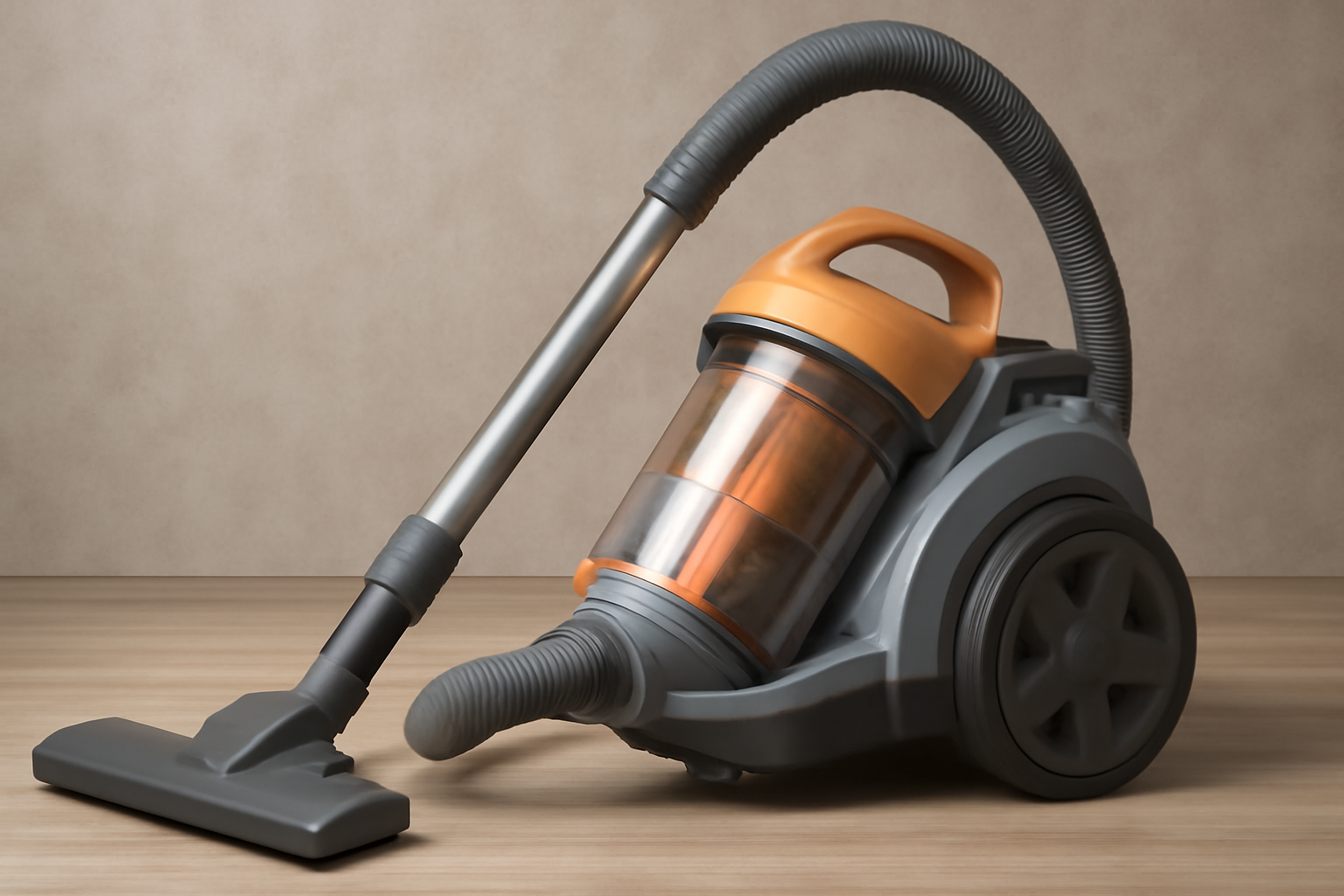
Budget vacuums have always been a battlefield.
Retailers want competitive price tags.
Consumers expect performance similar to premium models.
Distributors need a product that won’t blow up the return rate.
But in 2025, something darker has become obvious:
Budget vacuums don’t usually fail because they’re cheap.
They fail because many factories secretly downgrade components to hit a price target — and no one notices until retail disasters explode.
This article reveals exactly why the “best budget vacuum” market is chaotic, why brands that want the best value for money hoover often fall into hidden traps, and how procurement teams can detect downgrades that destroy reliability months later.
We will examine failure patterns in Upright Vacuum Cleaners, Household Vacuum Cleaners, and common retail segments such as good budget vacuum cleaner lines, analyzing how these hidden shortcuts sabotage long-term stability in modern vacuum cleaner distribution environments.
This is not another superficial article about cheap vs. premium.
This is a behind-the-scenes technical autopsy of how vacuum retailers lose millions each year.
🧨 1. Why “Budget Vacuum Failure” Is Not Actually About Low Price
It seems logical to assume:
Lower price → lower performance
Cheaper parts → faster damage
But the real story is this:
Budget vacuums fail because factories downgrade components without telling the buyer.
When a retailer demands a price cut of $1–$3, factories often respond by:
reducing motor copper wire thickness
lowering battery grade
removing structural ribs
using thinner PCB solder
replacing stainless screws with iron
reducing seal quality
downgrading clutch material
removing internal noise padding
None of these downgrades appear in spec sheets.
None appear in sample evaluations.
But every downgrade increases retail failure rate.
A “best value for money hoover” is only good if the factory keeps its components consistent — and most don’t.
🏚️ 2. The 5 Hidden Component Downgrades That Destroy Budget Vacuums
Across 150+ failed budget vacuum cases in Europe and the Middle East, these downgrades caused over 70% of mass failures:
1. Motor Copper Reduction
Factories reduce:
coil thickness
copper purity
insulation quality
The vacuum still works at Day 1.
But at Month 3–4:
heat spikes
noise rises
suction drops
motors burn out
This is the most common silent downgrade in Household Vacuum Cleaners.
2. Battery Grade Downgrade
Instead of A-grade cells, they use:
B-grade
recycled cells
mismatched voltage bins
Cordless failures explode after 50–100 cycles.
Budget buyers rarely detect this before shipment.
3. PCB Solder Thinning
Factories save fractions of a cent by using:
thinner solder
cheaper flux
weaker connectors
This causes:
intermittent shutdown
unstable RPM
heat-induced failure
early motor protection activation
Especially common in Upright Vacuum Cleaners that demand stable control.
4. Seal Material Downgrade
Soft silicone → cheap PVC.
Results:
suction leakage
noise increase
dust intake into motor
early clogging
When users complain about loudness or weak suction, this is often why.
5. Structural Rib Removal
Internal support ribs are removed to save plastic.
Effects:
resonance noise
vibration
structural deformation
cracks around the motor chamber
This makes “good budget vacuum cleaner” models fail within months.
🧩 3. Why Retailers Can’t Detect Hidden Downgrades from Samples
Because the sample is:
hand-assembled
specially tuned
made with premium components
over-inspected
Mass production is very different.
Factories downgrade only in batch production —
not in samples.
This is why so many retailers say:
“The sample was great.
But the mass production failed.”
It wasn’t a mystery.
It was hidden downgrading.
🏭 4. Why Factories Downgrade in the First Place
Factories downgrade for three reasons:
1. Price Pressure from Retailers
When retailers demand prices like:
“Reduce $2 per unit”
“Match competitor price”
Factories compensate by silently cutting internal quality.
2. Competitive Factory Underbidding
To win big orders, factories must appear cheaper.
The tactic?
Hidden downgrades never mentioned in the BOM.
3. Buyers Not Requesting Component Transparency
If the buyer does not require:
motor brand
battery grade
seal material brand
PCB revision
plastic resin grade
…factories will take advantage.
Retailers accidentally create the very failure they fear.
🧪 5. The “Downgrade Death Curve”: The Predictable Pattern of Retail Collapse
Budget vacuum failures do not happen randomly.
They follow a universal curve:
0–30 Days: Perfect performance
Because components are fresh.
30–60 Days: Subtle changes
Noise slightly increases.
Suction fluctuates.
60–90 Days: Visible decay
Users begin complaining.
90–150 Days: Mass failure
Return rate explodes.
Negative reviews pile up.
Retailers demand compensation.
A “best budget vacuum” becomes a “failure product” in less than half a year.
🧠 6. Why Some Budget Vacuums Actually Perform Great — The Hidden Truth
Not all budget vacuums fail.
Some models perform beautifully for years.
Why?
Because the best suppliers follow the “Budget Integrity Rule”:
Never downgrade unseen components — optimize design instead.
Good budget brands control cost through:
simplified assembly
unified mechanical platforms
airflow-optimized shells
dust-resistant motor chambers
high-efficiency fan blades
stable mid-grade batteries (not B-grade)
reinforced structural ribs
These brands create true “best value for money hoover” products —
not failures disguised as bargains.
🔍 7. How Procurement Teams Can Detect Downgrades Before Ordering
Use this 8-step downgrade detection checklist:
1. Request BOM transparency
Factories hate this.
Serious suppliers comply.
2. Ask for component photos from production, not samples
Real components will reveal the truth.
3. Require batch-level motor testing data
4. Demand real battery cell spec sheets
5. Inspect PCB solder amount under microscope
6. Conduct seal compression testing
7. Compare plastic density samples
8. Randomly pick units during production for teardown
Brands doing these steps reduce downgrading risk by 80–90%.
📉 8. The Cost of Doing Nothing: How Retailers Lose Millions
When downgrades hit mass production, the consequences are brutal:
return rate 20–40%
retailer penalties
disposal fees
lost end-cap placement
negative long-term reputation
supply chain instability
distributor churn
loss of future orders
A “cheap” vacuum quickly becomes the most expensive mistake.
🏆 9. How to Build a Truly Reliable Budget Vacuum Line in 2025
Successful budget vacuum lines share 4 characteristics:
1. Engineering-first cost optimization
Not BOM downgrading — real design optimization.
2. Transparent component sourcing
Every material traceable.
3. Noise, heat, airflow, torque tri-testing
Budget ≠ low engineering.
4. Zero-downgrade policy for critical parts
Motor, battery, PCB, seals must never be downgraded.
This is the model used by the most reliable suppliers in global vacuum cleaner distribution chains.
🏁 Conclusion: Budget Vacuums Don’t Fail Because They’re Cheap — They Fail Because of Hidden Downgrades
After years of audits and failure analysis, one truth became undeniable:
The real enemy of budget vacuums is not low price — it is hidden downgrading.
A budget vacuum can succeed when:
engineering is stable
components are honest
suppliers are transparent
procurement teams enforce testing
retail requests match reality
Retailers in 2025 can finally achieve a new standard:
Affordable price
+
Reliable performance
+
Stable components
The future of the “best budget vacuum” category is not luck —
it’s visibility, transparency, and engineering discipline.
Hashtags
lanxstar, #budgetvacuum, #uprightvacuum, #householdvacuum, #vacuumcomponents, #downgradeissue, #engineeringtruth, #vacuumdistribution, #qualitycontrol, #motorfailure, #retailperformance, #supplychain2025, #componenttransparency, #buyersguide, #industrydeepdive, #vacuumengineering, #costoptimization, #pcbdesign, #batteryquality, #sealdesign, #retailfailure, #productstability, #valuevacuum, #oemvacuum, #odmvacuum, #marketinsights, #budgethoover, #distributionnetwork, #procurementstrategy, #teardowntest, #airflowpath, #noiseanalysis, #brandprotection, #lightweightvacuum, #producttesting, #failureanalysis, #retailstrategy, #globalmarket, #qualityaudit, #engineeringstandards, #multiplesurfaces, #vacuumdurability



