Hi, message us with any questions.
We're happy to help!





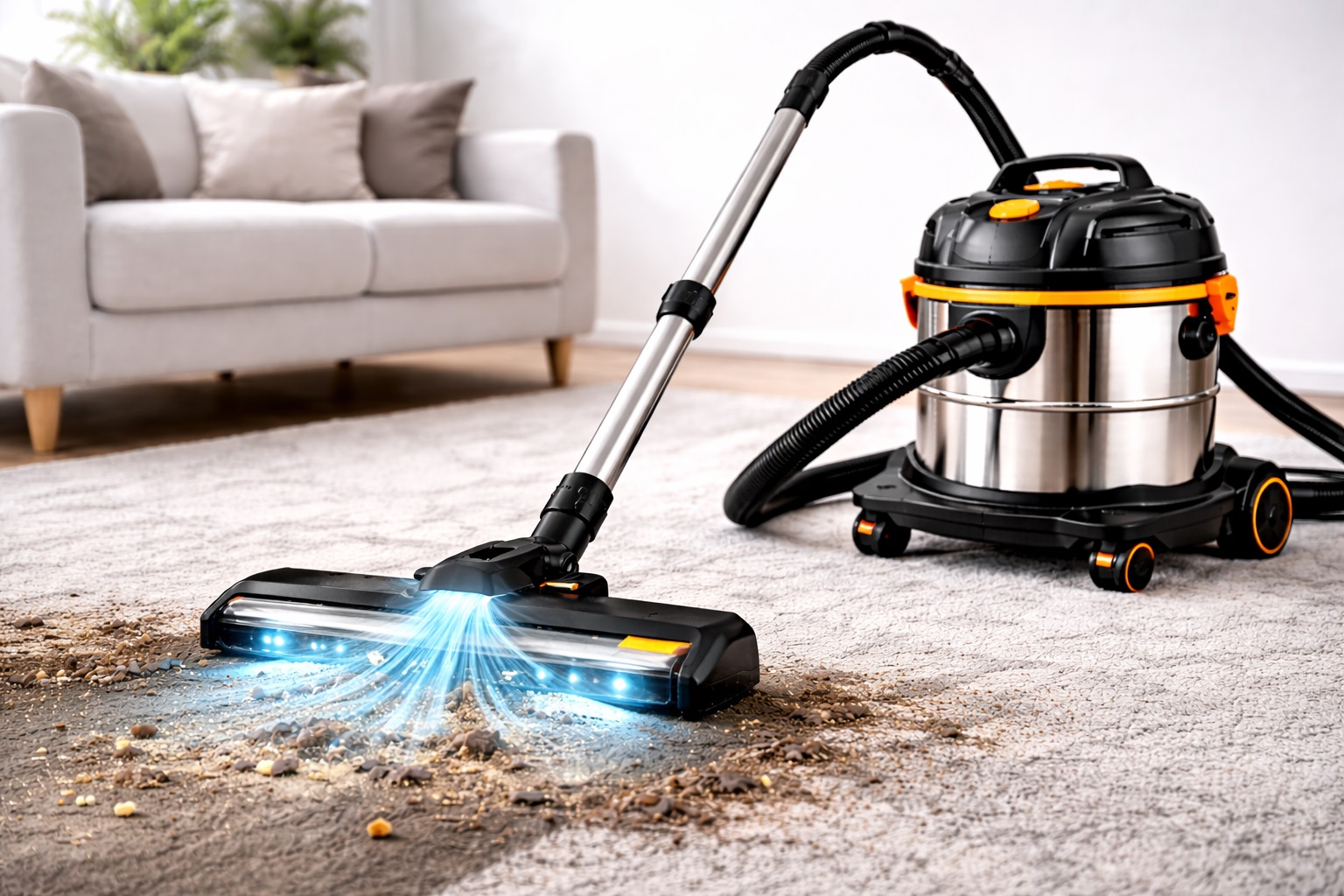
🚨 Stop Believing the “Power” Myth (Shareable Hook)
High suction doesn’t automatically mean high cleaning.
Most “powerful” vacuums fail for one of these reasons:
They move debris instead of capturing fine dust.
They lose performance after filters load (the “10-minute collapse”).
Their floor head design wastes suction at the point that matters.
✅ 3 conclusions procurement teams can act on today
Floor-head efficiency often decides more real pickup than peak suction numbers.
A true High Suction Vacuum Cleaner must stay stable after dust loading, not only “fresh out of the box.”
A Barrel Vacuum Cleaner is often the safest platform for consistent real-world performance across Household Vacuum Cleaners portfolios—while Upright Vacuum Cleaners remain a strong “carpet hero” option.
🧩 Performance Verdict Box (Screenshot-Friendly)
A vacuum is truly “powerful” only if it proves:
Strong pickup at the floor (not just high numbers)
Stable performance after filter loading (no sudden drop)
Effective heads/tools for each job (hardwood, rugs, pet hair, corners)
A Barrel Vacuum Cleaner often wins because its architecture makes airflow routing, cooling, and accessory specialization easier—while still allowing you to stock Upright Vacuum Cleaners for carpet-first segments.
🧠 I. Suction Strength 101: What “High Suction” Actually Means
When buyers ask for a High Suction Vacuum Cleaner, they usually mean:
“It picks up heavy debris quickly”
“It doesn’t leave fine dust behind”
“It doesn’t feel weak after a few minutes”
But manufacturers describe suction with different metrics, which causes confusion.
✅ The three performance variables you must separate
Suction (kPa / mmH₂O): pressure difference (pull).
Airflow (L/s or CFM): the volume of air moved (transport).
Head efficiency: how well the head converts suction + airflow into real pickup.
📌 Speed Card: kPa vs Airflow vs Head Efficiency (Screenshot-Friendly)
Use this as a quick explanation for buyers, sales teams, and product pages:
Suction (kPa) answers: Can it pull strongly?
Airflow (L/s / CFM) answers: Can it carry debris through the path?
Head efficiency answers: Does the head actually lift dust into the airflow—or blow it away?
Rule of thumb:
A vacuum can have high kPa and still clean poorly if airflow collapses or the head scatters fine dust—especially on hard floors.
⚙️ II. Why Head Design Beats Raw Suction (Especially on Hardwood)
If you’ve seen a vacuum “push crumbs around,” you’ve seen head inefficiency.
A great head must do two jobs:
Lift debris into the airflow
Seal and channel air so it doesn’t blow debris away
🪵 For a Vacuum Cleaner for Hardwood Floors, the head matters more than the motor
Hardwood needs:
soft-contact edges (parquet brush / felt strip / soft roller)
rubberized wheels to reduce scuff risk
suction control to prevent sticking and grit dragging
wide intake to avoid “snowplow” pushing
Why barrel designs benefit: head swapping and specialization are easier. You can sell one canister base with different heads, building a hardwood kit without redesigning the whole machine.
🔥 III. Why Suction Drops in Real Homes (and How Barrel Designs Help Prevent It)
Many vacuums start strong and then feel weak—this is usually predictable.
⚠️ The 4 most common reasons suction collapses
Filter loading: fine dust blocks pores → airflow drops.
Air leaks: weak seals or assembly variance → suction wasted.
Clogs: hair + debris choke narrow bends → partial blockage.
Thermal throttling: heat buildup reduces efficiency or triggers protection.
🧩 Performance Drop Card: Cause → Fix (Shareable)
Filter loads too fast → increase filter surface / add better pre-filtration / simplify cleaning access
Leaks at joints → stronger gaskets, tighter tolerances, leak-check in QC
Hair clogs bends → wider air path, fewer sharp turns, anti-tangle head that prevents “hair ropes”
Overheats → better cooling path, thermal design review, stable motor protection behavior
Why barrel architecture often helps
smoother internal airflow routing
more space for cooling and insulation
easier access to filters for cleaning
accessory-driven solutions to prevent head clogging
This is the “hidden power” advantage: power that remains usable after 10–20 minutes, not only at minute one.
🐾 IV. Pet Hair Performance: What Strong Suction Looks Like in the Real World
A Vacuum Cleaner for Pet Hair must handle fiber, not just dust. Strong suction alone won’t prevent:
hair wrap on brushrolls
clogs in tight bends
performance drop as filters load with dander
✅ The pet-hair performance stack (what to demand)
Anti-tangle brush geometry: combs and roller design that strips hair.
Clog-resistant air path: fewer sharp turns and narrow choke points.
Mini motorized tool: pet hair lives on sofas and beds.
Easy maintenance workflow: if cleaning is hard, owners won’t do it.
Barrel advantage: you can build pet performance via tool kits while keeping the canister base stable—ideal for a Multi-Functional Durable Vacuum Cleaner strategy.
🪵 V. Hardwood Performance: The Fine-Dust Truth Test
Hardwood is where “not actually cleaning” gets exposed first because fine dust is easy to scatter.
A strong Vacuum Cleaner for Hardwood Floors should:
pick up fine dust without blowing it into the air
avoid dragging grit that causes scratches
✅ Quick hardwood effectiveness checks (buyer demo-ready)
Flour line at baseboard: one pass should remove most of it
Scatter test: light sand/grounds should not “spray outward” before pickup
Glide test: head should not stick so hard that users drag it
🚗 VI. Car Cleaning Performance: Why Tools Matter More Than Body Shape
A vacuum can be a great home unit and still fail as a Car Vacuum Cleaner if the kit is wrong.
What car cleaning really requires
long crevice tool for seat rails
brush tool for fabric and vents
flexible hose reach
stable suction through attachments (no sudden drop)
Why barrel often wins: hose-and-tool ergonomics are native, so suction is delivered where debris hides.
🧰 VII. Multi-Functional Durable Vacuum Cleaner: Turning Performance Into a Product System
Performance is not just a promise—it’s a lineup strategy.
A Multi-Functional Durable Vacuum Cleaner approach uses:
one reliable canister platform
multiple head/tool bundles for different buyers
spare parts planning to protect reputation
🎯 A simple 3-SKU architecture (one base unit, three profit drivers)
Essential SKU: combo head + crevice + dusting brush
Hardwood SKU: parquet/soft roller head + suction control emphasis
Pet SKU: turbo/motorized head + anti-tangle + mini tool
This improves conversion and reduces returns from mismatched expectations.
🧪 VIII. Verify “High Suction” in 60 Minutes (Procurement Protocol)
✅ Test A: Pickup track (hard floor + rug edge)
Debris mix: sand + cereal + hair
Measure passes required and whether debris scatters
✅ Test B: Fine dust line (edge cleaning)
Flour line along baseboard
One pass test; check remaining dust line
✅ Test C: Hair wrap + clog test
Pet hair on rug; run 3–5 minutes
Inspect brushroll and bends for wrap/clogs
✅ Test D: 10-minute drift test
Run 10 minutes under normal load
Note suction feel, heat, and noise change
A real High Suction Vacuum Cleaner should feel stable and controlled—not dramatic at first and disappointing later.
🧯 IX. 4 Common Myths That Cause Bad Purchases (High-Share Section)
Myth 1: Wattage = suction power.
Reality: wattage is input. Cleaning depends on system efficiency, sealing, and head design.
Myth 2: Suction (kPa) = pickup.
Reality: without airflow and a good head, kPa doesn’t become cleaning.
Myth 3: One head can do every floor perfectly.
Reality: mixed floors need specialization—especially hardwood vs rugs.
Myth 4: “High suction” is proven at startup.
Reality: real performance is what remains after 10–20 minutes and partial filter loading.
❓ X. “Performance Audit” 10 Questions to Ask Any Supplier
Use this list before you commit to containers:
What are your measured suction + airflow values, and under what test condition?
How does performance change after partial filter loading (show data or demonstrate)?
What are the top clog points in your airflow path, and how did you redesign them?
How does the floor head prevent fine dust scatter on hard floors?
What hardwood-safe options do you provide (parquet/soft roller, wheel materials, suction control)?
How do you handle hair wrap (comb design, roller material, access for cleaning)?
What happens at thermal limit—does it throttle smoothly or hard shutdown?
What leak-check or seal verification do you run in QC (sampling rate, method)?
What is your spare parts plan for heads/hoses/filters for 24–36 months?
What batch traceability exists for motors and key plastics (so failures can be isolated)?
These questions separate “catalog claims” from real engineering capability.
🧭 XI. Barrel vs Upright: Which Format Delivers “Power” Better?
Barrel Vacuum Cleaner often wins when:
you need mixed-surface performance
hardwood is common
pet hair requires tool flexibility
you want a platform system with multiple kits
Upright Vacuum Cleaners often win when:
the home is carpet-first
the buyer wants “one-piece push-and-go” convenience
integrated carpet agitation is the top priority
In a balanced assortment, barrel becomes the “power + flexibility” platform, and upright becomes the “carpet hero.”
✅ Conclusion
The real power of a Barrel Vacuum Cleaner isn’t just raw suction numbers—it’s usable suction delivered to the floor head, maintained over time as filters load, and applied through the right heads and tools for each job. That’s why barrel platforms often outperform in modern Household Vacuum Cleaners lineups: they support a true High Suction Vacuum Cleaner story without relying on wattage alone, they scale into a Multi-Functional Durable Vacuum Cleaner system via accessories, and they handle demanding use cases like Vacuum Cleaner for Pet Hair and Vacuum Cleaner for Hardwood Floors through specialization rather than compromise.
Upright Vacuum Cleaners still serve carpet-first segments well, but if you want stable, repeatable performance across real homes—and a product line you can scale with fewer returns—barrel vacuums are a strong foundation.
📌 Hashtags
barrelvacuumcleaner, householdvacuumcleaners, uprightvacuumcleaners, highsuctionvacuumcleaner, multifunctionaldurablevacuumcleaner, vacuumcleanerforpethair, vacuumcleanerforhardwoodfloors, suctionstrength, airflowrate, kPaVsAirflow, headEfficiency, realworldpickup, fineDustPickup, edgeCleaning, parquetbrush, softrollerhead, suctioncontrol, rubberizedwheels, mixedfloorcleaning, carpetAndHardfloor, turbobrushhead, antiTangleBrush, miniMotorizedTool, clogResistance, filterLoadStability, sealedAirPath, thermalmanagement, motorProtection, performanceDriftTest, warehouseTestProtocol, procurementChecklist, vendorAudit, sparePartsPlanning, warrantycostcontrol, returnsReduction, accessorybundleStrategy, productlineStrategy, privateLabelVacuum, OEMvacuumcleaner, ODMvacuumcleaner, EUappliancechannel, MiddleEastdistribution, GCCretail, Lanxstar



