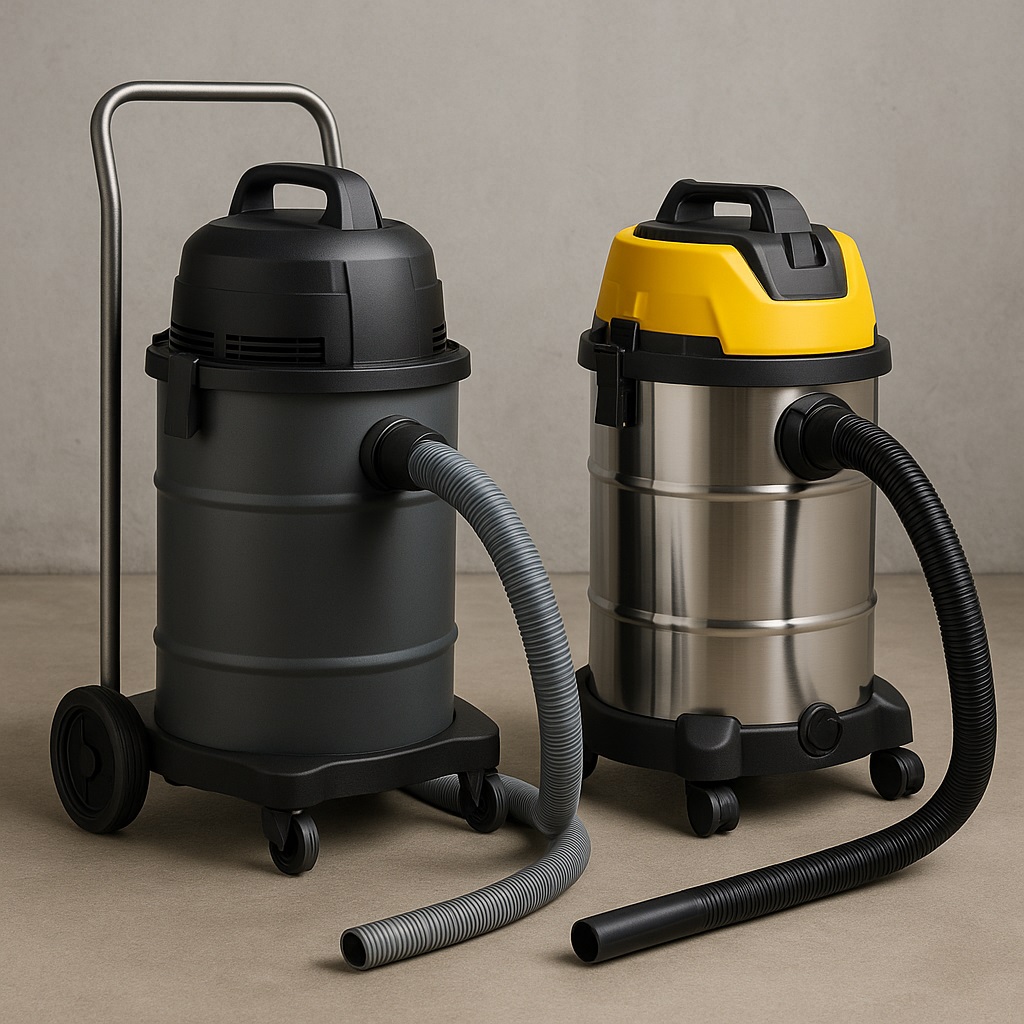
When selecting professional cleaning equipment, businesses often face a key decision: barrel vacuum cleaner or wet-dry vacuum? Both options are widely used in commercial environments, yet they serve different purposes and excel in different scenarios.
Understanding the strengths and limitations of each type is essential for making the right investment—especially for organizations focused on productivity, safety, and long-term cost efficiency.
1. Core Design and Intended Use 🔍
Barrel vacuum cleaners are primarily designed for dry debris and dust removal in commercial and industrial environments. They focus on:
Wet-dry vacuums, on the other hand, are built for versatility. They can handle:
Liquid spills
Wet debris
Mixed cleaning tasks
The first step in choosing is understanding whether your cleaning needs are mainly dry, wet, or mixed.
2. Cleaning Performance and Suction Stability ⚡
Barrel vacuum cleaners are optimized for consistent dry suction performance, especially over long cleaning cycles. Their airflow systems are designed to maintain suction even as the container fills with dust.
Wet-dry vacuums provide flexibility, but:
For large-scale dry cleaning tasks, barrel vacuum cleaners typically deliver more stable and predictable performance.
3. Capacity and Productivity 🪣
Capacity plays a critical role in commercial productivity.
Barrel vacuum cleaners usually offer:
Larger dry waste capacity
Fewer interruptions for emptying
Higher efficiency in offices, hotels, warehouses, and factories
Wet-dry vacuums may require more frequent maintenance when switching between wet and dry cleaning, which can slow down operations in high-frequency cleaning environments.
4. Maintenance and Operational Complexity 🔄
From a maintenance perspective, barrel vacuum cleaners are generally simpler:
Wet-dry vacuums require:
For organizations with large cleaning teams, simpler maintenance often translates into lower operating risk and training costs.
5. Durability and Long-Term Reliability 🔧
Commercial barrel vacuum cleaners are built for long service life with:
Wet-dry vacuums can be durable, but frequent switching between applications may increase wear on internal components if not properly maintained.
In environments with continuous dry cleaning demands, barrel vacuum cleaners often demonstrate better long-term reliability.
6. Safety and Hygiene Considerations 🦺
Wet-dry vacuums are essential where liquid spills are common, such as workshops or food-processing areas. However, improper handling of wet waste can create hygiene risks.
Barrel vacuum cleaners:
Reduce airborne dust through sealed systems
Are ideal for dry industrial debris
Support advanced filtration for cleaner indoor air
Selecting the right type helps maintain safer and more hygienic workspaces.
7. Cost Efficiency and Total Cost of Ownership 💰
While wet-dry vacuums offer versatility, they may come with:
Barrel vacuum cleaners often provide:
For many commercial users, this results in a lower total cost of ownership.
Which One Should Commercial Buyers Choose? 📊
Choose barrel vacuum cleaners if your operations focus on dry debris, large areas, and continuous cleaning.
Choose wet-dry vacuums if liquid spills and mixed cleaning tasks are frequent and unavoidable.
In many commercial settings, barrel vacuum cleaners remain the primary cleaning solution, with wet-dry vacuums used as supplementary equipment.
Conclusion: Matching the Vacuum to the Cleaning Task 🏆
Both barrel vacuum cleaners and wet-dry vacuums play important roles in commercial cleaning. However, for businesses prioritizing efficiency, durability, and long-term cost control in dry-cleaning environments, barrel vacuum cleaners are often the better choice.
By matching equipment to real operational needs, businesses can maximize productivity and minimize unnecessary costs.
For businesses looking to source reliable commercial vacuum solutions and explore long-term cooperation opportunities, more information is available at www.lxvacuum.com.
Target Readers (After the Article) 🎯
Commercial cleaning procurement managers
Facility management companies
Professional cleaning contractors
Warehouse and industrial site operators
Vacuum cleaner distributors and wholesalers
50 Related Keyword Groups (Comma-Separated)
barrel vacuum cleaner, wet dry vacuum, commercial vacuum cleaner, industrial vacuum cleaner, barrel vs wet dry vacuum, wet dry vacuum comparison, commercial cleaning vacuum, industrial cleaning vacuum, barrel vacuum for commercial use, wet dry vacuum for industrial use, high capacity barrel vacuum, professional vacuum cleaner, commercial floor cleaning vacuum, warehouse vacuum cleaner, factory vacuum cleaner, heavy duty vacuum cleaner, industrial dust vacuum, liquid spill vacuum cleaner, dry debris vacuum cleaner, commercial vacuum performance, vacuum cleaner maintenance, commercial vacuum efficiency, cost effective commercial vacuum, commercial vacuum ROI, commercial vacuum procurement, vacuum cleaner distributor, industrial vacuum supplier, barrel vacuum durability, wet dry vacuum maintenance, commercial cleaning equipment, professional cleaning solutions, janitorial cleaning machines, large area cleaning vacuum, industrial facility vacuum, commercial vacuum system, commercial vacuum reliability, industrial cleaning safety, dust control vacuum cleaner, commercial vacuum investment, barrel vacuum cleaner supplier, wet dry vacuum supplier, B2B vacuum cleaner market, commercial vacuum sales, industrial vacuum accessories, professional cleaning equipment, commercial cleaning productivity











