Hi, message us with any questions.
We're happy to help!





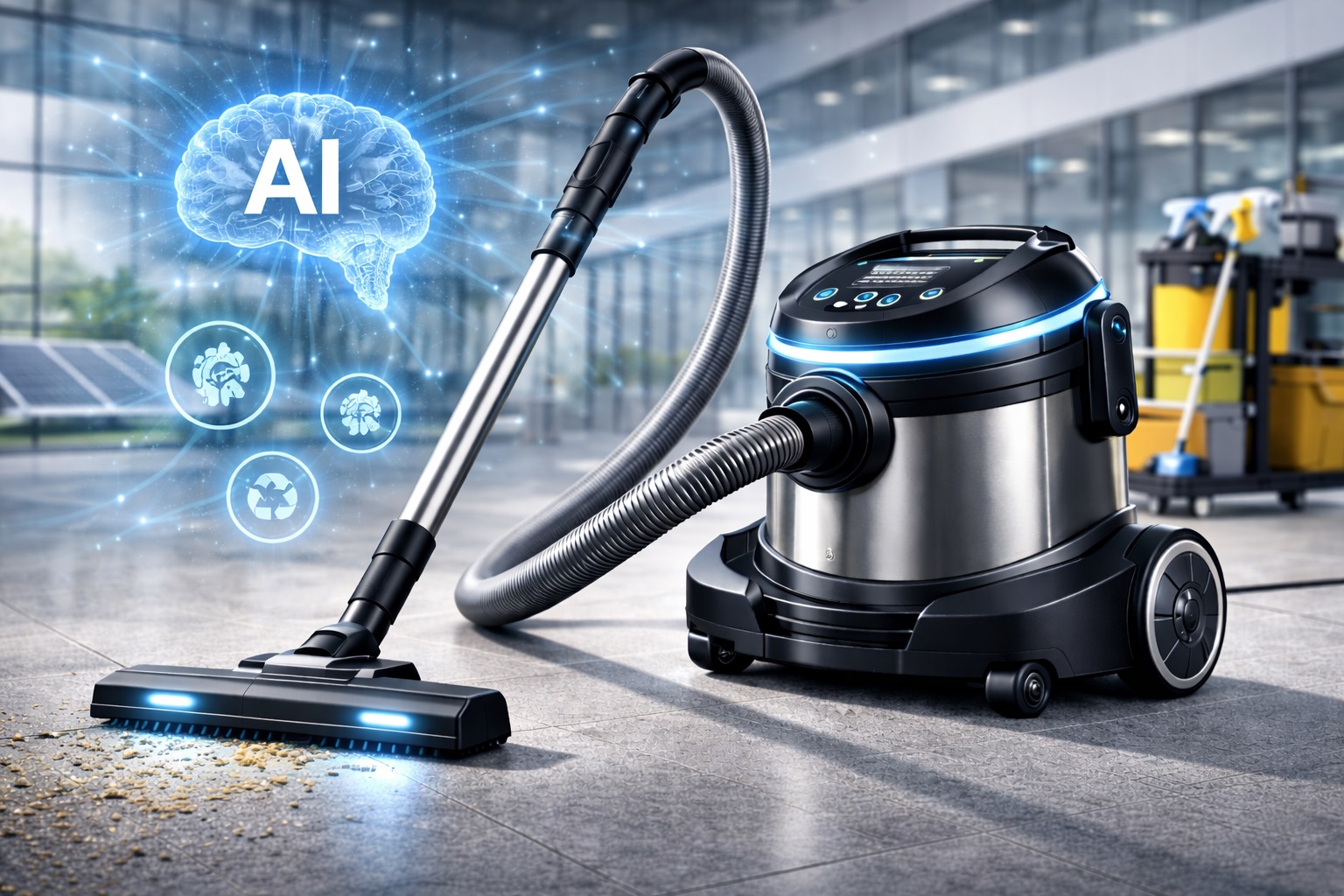
🧠 Introduction: AI Meets Commercial Cleaning
Artificial Intelligence (AI) is no longer confined to academic research or high‑tech industries — it’s rapidly penetrating everyday appliances, including barrel vacuum cleaners. For businesses focused on operational efficiency, cleanliness standards, and sustainability, integrating AI into cleaning tools unlocks a new generation of smart systems that make decisions, optimize performance, and reduce human workload.
Today’s AI‑enabled vacuum cleaners combine traditional hardware with intelligent software, delivering not just suction but sense, adapt, and act capabilities. This article explores how AI reshapes business cleaning with upright vacuum cleaners, household vacuum cleaners, HEPA filter vacuum cleaners, portable self‑cleaning vacuum cleaners, quiet vacuum for night use, and (critically) 4 in 1 cordless smart wet & dry vacuum cleaners.
⚡ Smart Navigation & Adaptive Cleaning: The AI Advantage
One of the most powerful uses of AI in barrel vacuum cleaners is environmental perception — the ability to sense a space and make real‑time decisions about how, where, and when to clean.
📍 Key Capabilities
Spatial Mapping & Path Planning: AI algorithms allow vacuums to build virtual maps of complex spaces (offices, hotels, airports) and optimize cleaning paths, reducing redundant passes and increasing coverage efficiency.
Obstacle Detection & Avoidance: Machine vision and sensors help devices detect furniture, equipment, and foot traffic — dynamically rerouting without human intervention.
Adaptive Suction Control: Instead of static settings, AI analyzes surface type (tile vs carpet vs upholstery) and adjusts suction power, conserving energy while maintaining cleaning quality.
Business Benefit:
Facilities using AI‑enabled vacuums see a measurable reduction in cleaning cycles and improved consistency across floors, decreasing labor costs and extending machine life.
Case Example:
A large corporate campus in Europe deployed AI‑powered barrel vacuums across open and partitioned office areas. Over six months, cleaning time decreased by 30%, while energy consumption dropped by 18% due to adaptive suction and optimized routing.
🤝 AI + Connectivity: Integrating Cleaning into Smart Workflows
AI‑driven barrel vacuum cleaners aren’t standalone devices; they’re part of a wider data ecosystem that connects machines, managers, and operational insights.
📲 Data Platforms & Dashboards
With IoT integration, vacuums transmit performance metrics to centralized systems:
Total cleaning hours
Suction cycles per surface type
Filter health and replacements
Battery usage and charging trends
Operational alerts (clogs, faults, low battery)
These insights allow facility managers to schedule maintenance proactively, reduce downtime, and allocate staff where they are truly needed.
📅 Smart Scheduling
AI analyzes historical usage patterns and foot traffic trends to intelligently schedule cleaning during low‑occupancy periods — a major advantage for entities requiring quiet vacuum for night use without disturbing occupants or violating noise ordinances.
Real World Use:
A hotel chain integrated AI‑connected vacuums with its building management system. The system identified peak and slack hours, automatically scheduling quiet night cycles for minimal occupant disruption — improving guest satisfaction scores without additional staff hours.
🛠️ Predictive Maintenance: Smarter, Less Reactive Care
Traditional maintenance is reactive — fix it when it breaks. AI shifts this paradigm toward predictive maintenance, where systems alert technicians before performance degrades.
🧪 What AI Predicts
Motor wear based on vibration and power draw
Filter saturation before pressure loss occurs
Battery health and optimal recharge cycles
Brush and roller condition via runtime patterns
Business Impact:
Preventive interventions cut unplanned downtime by up to 40% compared to traditional maintenance schedules. For assets like portable self‑cleaning vacuum cleaners, which are often moved between zones, this reliability is crucial to high utilization.
🔄 Self‑Optimization Through Machine Learning
Machine learning (ML), a subset of AI, enables vacuum cleaners to learn from each cleaning cycle — refining routines and adjusting behaviors over time.
🧠 Learning in Practice
Pattern recognition: AI identifies dirt‑prone zones and adjusts future cleaning routes.
User Behavior Modeling: Recognizes peak activity times and cleaning preferences.
Energy Conservation: Over time, ML predicts when full suction power is necessary vs when reduced power suffices.
Example:
A corporate facility tracked three months of cleaning data and found that ML‑driven units reduced total energy consumption by 22%, all while increasing cleanliness metrics per square meter cleaned.
🐾 Special Use Cases: Pet Hair & HEPA Performance
In environments like residential common areas, veterinary clinics, or pet‑friendly workplaces, AI enhances specific cleaning challenges:
Vacuum Cleaner for Pet Hair: AI recognizes dense hair fields and switches to optimized brush or turbine mode automatically, reducing time and energy.
HEPA Filter Performance: Intelligent monitoring alerts staff when filter efficiency deteriorates, ensuring high air quality and compliance with health standards.
Market Insight:
Facilities with pets or allergen concerns report up to twice the improvement in perceived cleanliness when HEPA vacuums have AI‑based filter monitoring vs manual schedules.
🧘♂️ Quiet Operation & Intelligent Noise Management
AI doesn’t just optimize cleaning tasks — it improves the experience of cleaning in sensitive environments.
🤫 Quiet Mode Intelligence
Dynamic Noise Adjustment: AI balances suction and acoustic pressure, ensuring quiet operation while maintaining cleaning effectiveness.
Time‑Aware Modes: Intelligent scheduling restricts high‑power modes to daytime and shifts to quiet vacuum for night use during off hours.
This functional layering of AI increases user comfort and minimizes disruption in spaces like hospitals, libraries, and hospitality venues.
🤖 AI and Human Collaboration: Optimizing Workflows
Far from replacing human cleaners, AI in barrel vacuum cleaners enhances their effectiveness:
Assistant Mode: AI can suggest cleaning routes to staff via mobile apps.
Hybrid Workflows: Staff can intervene only when necessary, while AI handles routine floor maintenance.
Example:
In a mixed‑use commercial facility, cleaning staff reported a 40% productivity increase as AI took over repetitive tasks and freed personnel for targeted deep cleaning or customer‑facing duties.
📊 AI Trends in the Barrel Vacuum Market
Here’s what industry data and trends indicate:
| Trend | Impact |
|---|---|
| Smart Navigation | Operational cost savings |
| IoT Connectivity | Real‑time performance insights |
| Predictive Maintenance | Reduced downtime & repair costs |
| Machine Learning | Continuous performance improvement |
| Quiet Intelligent Scheduling | Noise compliance & user comfort |
Market Prediction:
According to industry analyses, AI‑enabled cleaning equipment is projected to grow at more than 20% CAGR through 2028, outpacing traditional automated systems.
🧠 Conclusion: AI as a Competitive Differentiator
As businesses modernize their operations, AI in barrel vacuum cleaners will shift from “nice‑to‑have” to must‑have competitive advantages:
✔ Lower operational costs and labor savings
✔ Higher consistency and measurable cleaning outcomes
✔ Predictive insights that extend machine life
✔ Data‑driven decisions for facility management
✔ Better user experience through quiet, intelligent operation
Whether used in hospitality, healthcare, education, or enterprise facilities, AI‑driven vacuum cleaners — from upright vacuum cleaners to 4 in 1 cordless smart wet & dry vacuum cleaners and portable self‑cleaning models — represent the future of smart, efficient, and sustainable cleaning.
Hashtags
Lanxstar, UprightVacuumCleaners, HouseholdVacuumCleaners, 4in1CordlessSmartWetDryVacuumCleaner, PortableSelfCleaningVacuumCleaner, QuietVacuumForNightUse, HEPAFilterVacuumCleaner, SmartCleaningAI, AICleaningSolutions, IntelligentVacuumSystems, PredictiveMaintenanceCleaning, IoTConnectedVacuum, CleaningDataAnalytics, AdaptiveSuctionTech, EnergyOptimizedCleaning, MachineLearningVacuum, SmartSchedulingCleaning, AIEnhancedCleaning, QuietNightCleaningTech, CommercialFacilityCleaning, SmartFacilityMaintenance, EnergyEfficientSmartVacuum, DigitalCleaningInsight, CleaningWorkflowOptimization, ConnectedCleaningTools, UserBehaviorCleaning, PetHairAIRecognition, RealTimeCleaningFeedback, CleanAirSmartMonitoring, FacilityCleaningTrends, AIInHouseholdAppliances, SmartHomeVacuumIntegration, PerformanceDrivenCleaning, AutomatedRouteOptimization, IntelligentSurfaceDetection, BuildingManagementCleaningIntegration, SmartCleaningDashboards, ECSustainabilityCleaning, NextGenCleaningTech, RoboticsAssistedVacuum, DataDrivenFacilityCleaning, AIOptimizationVacuum, SmartFilterHealthAlerts, CommercialCleaningInnovation.