Hi, message us with any questions.
We're happy to help!





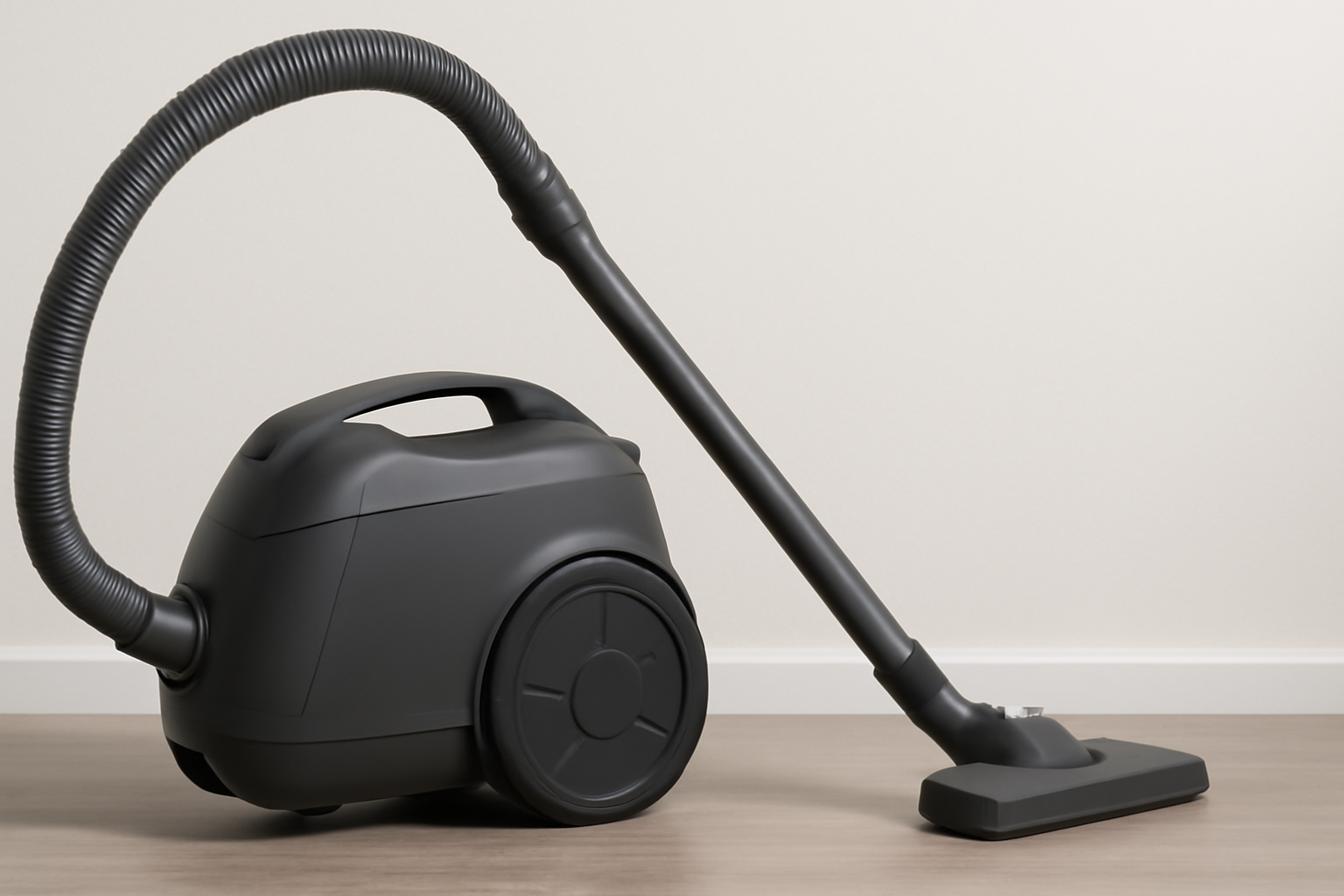
The hidden operational barriers keeping your store from exponential growth — and the five data-driven ways to overcome them.
🧩 1. The “Growth Plateau” Is a Systemic Problem, Not a Marketing One
Most Amazon sellers mistake stagnation for poor advertising. But when a store stops scaling, the problem isn’t your ad copy—it’s operational misalignment.
In the vacuum cleaner category, where global competition has intensified, sellers often run into three hidden ceilings:
Product saturation: dozens of near-identical listings for Upright Vacuum Cleaners and Household Vacuum Cleaners with no real feature differentiation.
Margin compression: freight, PPC, and FBA storage fees quietly erode profits.
Data blindness: sellers optimize for keywords, not lifetime customer value.
The truth? Your growth plateau isn’t a sign of failure. It’s an indicator that your brand needs a system-level recalibration—product, logistics, and data alignment.
📊 2. Product Differentiation: Competing Beyond “Another Vacuum”
In Amazon’s algorithm, visibility favors value density—listings that provide unique, quantifiable advantages. Yet most sellers rely on templated claims: “high suction,” “lightweight,” “quiet.”
To break the plateau, you must shift from marketing adjectives to measurable product innovation. For example:
Instead of “high suction,” specify air watt (AW) rating verified by third-party testing.
Instead of “low noise,” list certified decibel levels under 60 dB.
If you’re promoting a Large-Capacity Wet Dry Vacuum Cleaner, highlight measurable benefits like dual-tank separation (wet vs. dry) or 20% faster motor cooling efficiency. These details win buyer trust and improve conversion rates.
💡 Real OEM Insight
Ask your factory to run suction curve tests and provide you with video documentation. Use that as A+ content. Authentic technical validation beats any marketing gimmick—and Amazon’s A10 algorithm now rewards verified multimedia data.
⚙️ 3. Supply Chain Physics: The Hidden Bottleneck of Scaling
You can’t scale sales if you can’t scale supply. Most sellers rely on batch-based ordering cycles and face inventory gaps every 90–120 days.
The result? Stockouts trigger algorithm penalties, while overstocking drains liquidity.
The solution lies in predictive logistics modeling.
By tracking sell-through velocity and applying a 1.25× safety coefficient, you can balance risk and flexibility.
Even better—work with suppliers who offer semi-finished product storage. This enables on-demand final assembly under your SKU, reducing lead time by 30%.
For advanced models like Cordless Handheld High Suction Vacuum Cleaner, suppliers with modular design lines can pivot faster, allowing you to replenish inventory before competitors even confirm quotes.
💬 4. Reviews, Returns, and the Algorithmic Snowball Effect
Most sellers underestimate the long-tail impact of reviews. On Amazon, reviews don’t just shape consumer perception—they reshape the algorithm.
Negative feedback on “suction inconsistency” or “short battery life” signals algorithmic downgrades, limiting visibility even if your advertising budget grows.
To combat this, integrate post-purchase feedback analysis into your operations:
Cross-reference return reasons with engineering defects (e.g., motor burn-in rate >2%).
Quantify recurring complaint ratios.
Feed insights back into OEM design cycles.
This is where real R&D collaboration matters. The best factories treat feedback as product roadmap data, not as an after-sales nuisance.
👉 Pro Tip: Align your Amazon defect reports with factory FMEA (Failure Mode and Effect Analysis). That’s how you engineer a rating rebound from 4.0⭐ to 4.6⭐ in 90 days.
🧠 5. Brand Value Through Data: The Missing Multiplier
Scaling on Amazon is not about “more ads”—it’s about data compounding.
Sellers who move from transactional thinking to data thinking grow exponentially.
Here’s how the top 1% of sellers operate:
They track keyword ROI by device segment (desktop vs. mobile) and adjust bidding windows accordingly.
They connect advertising data with inventory velocity, identifying real-time profitability thresholds.
They run A/B tests on video duration, image sequence, and FAQ placement—focusing on behavioral conversion metrics rather than impressions.
A high-performing listing is now a data product, not a content product.
🧩 6. How to Break the Plateau: Integrate the Five Levers
| Growth Lever | Core Problem Solved | Implementation Metric |
|---|---|---|
| Product Engineering | No feature differentiation | Unique functional data per SKU |
| Predictive Logistics | Stockout & cashflow waste | ≤10% deviation in lead time |
| R&D Collaboration | Product quality drift | <2% complaint ratio |
| Data-Driven Advertising | Wasted PPC budget | ≥15% ACoS improvement |
| Review Engineering | Low organic rank | Rating ≥4.5 sustained 90 days |
The lesson? Scaling isn’t a marketing sprint—it’s a systems marathon.
When you synchronize R&D feedback loops, factory agility, and algorithm learning, your store evolves from retail operation to data ecosystem.
🏁 Final Thought: Scaling Requires Building Depth, Not Speed
If your Amazon vacuum cleaner store has plateaued, you’re not alone.
Every fast-growing seller eventually hits the wall between optimization and reinvention.
Your next phase of growth won’t come from chasing another trending keyword—it’ll come from tightening your OEM collaboration, improving logistics precision, and mastering the data economics behind every unit sold.
Growth doesn’t stop because the market is saturated. It stops when you stop engineering your value chain.
🔚 Hashtags
#VacuumCleaner #UprightVacuumCleaners #HouseholdVacuumCleaners #LargeCapacityWetDryVacuumCleaner #CordlessHandheldHighSuctionVacuumCleaner #VacuumCleanerForPetHair #QuietVacuumForNightUse #VacuumCleanerForHardwoodFloors #CarVacuumCleaner #vacuumsProcurement #vacuumCleanerDistribution #Lanxstar #VacuumCleanerTechnology #AmazonSellerTips #EcommerceGrowth #SmartSourcing #OEMVacuumSupplier #ODMVacuumFactory #ProductDifferentiation #SupplyChainOptimization #PredictiveLogistics #ReviewManagement #QualityControl #BrandScaling #DataDrivenMarketing #CommercialVacuum #GlobalCleaningMarket #B2BProcurement #EnergyEfficiency #RDFocusedVacuum #HighEfficiencyMotor #EcoVacuumDesign #SilentCleaning #CustomerFeedbackLoop #ProductEngineering #InventoryPlanning #SmartProcurement #EuropeanBuyers #MiddleEastDistribution #PerformanceTesting #WarehouseAutomation #AfterSalesSupport #DurableVacuumDesign #TradeRiskManagement #ProcessOptimization #NextGenVacuum #DigitalTransformation #SuctionPerformance #EcommerceStrategy #OnlineStoreScaling



