Hi, message us with any questions.
We're happy to help!





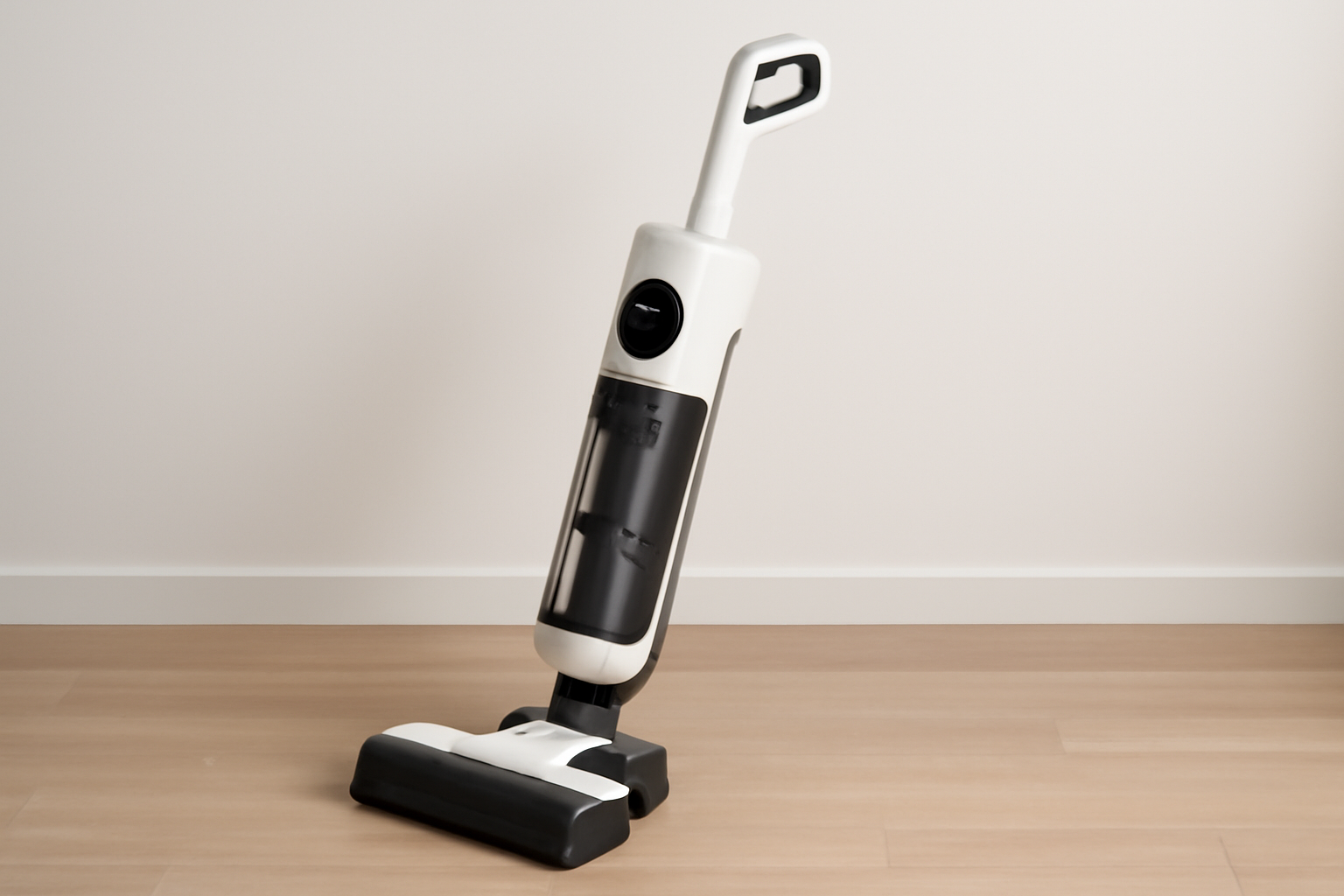
🌫 The Invisible Threat Inside “Clean” Spaces
In the wake of the pandemic, air has become the new frontier of hygiene.
While floors, tables, and handles are visibly cleaned, airborne particles — viruses, allergens, and ultrafine dust — remain unseen but dangerous.
As the World Health Organization (WHO) confirmed airborne transmission pathways for respiratory viruses, air filtration technology has shifted from luxury to necessity.
This is where Smart Vacuums enter the picture — evolving from simple dust collectors into AI-powered air quality guardians.
For engineers and procurement professionals, these innovations mark the convergence of vacuuming, purification, and environmental intelligence.
1️⃣ The Evolution of the Vacuum: From Floor Cleaner to Air Purifier
Traditional vacuums were designed solely to remove visible debris. Post-COVID, the mission expanded to encompass air purification and pathogen mitigation.
Modern systems, such as Upright Vacuum Cleaners and Household Vacuum Cleaners, are now equipped with multi-stage HEPA filtration, activated carbon traps, and real-time air sensors.
When combined with Energy-Saving Efficient Powerful Vacuum Cleaner technology, these systems can clean surfaces while continuously refreshing ambient air.
The smart vacuum of 2025 isn’t just a cleaner — it’s an ecosystem that breathes with the room it sanitizes.
2️⃣ The Post-Pandemic Shift: Air Quality as a Health Metric
According to the European Centre for Disease Prevention and Control (ECDC), 90% of indoor environments exceed safe particulate levels during standard cleaning.
This insight prompted the creation of “air-integrated cleaning standards” — where vacuums are part of broader HVAC and filtration systems.
Smart vacuums equipped with HEPA H14 filters are now being deployed in:
Hospitals, to prevent secondary airborne infections
Hotels, to maintain allergen-free rooms
Airports and offices, for continuous micro-particle capture
The shift toward Vacuum Cleaner for Allergies and Vacuum for Multi-Surface configurations demonstrates how cleaning technology has become part of public health infrastructure.
3️⃣ Engineering the Smart Vacuum: What’s Inside the System 🧠
Behind every 4 in 1 Cordless Smart Wet & Dry Vacuum Cleaner lies a suite of sensors and intelligent logic.
These machines combine:
PM2.5 and CO₂ sensors for air quality detection
AI-based surface mapping to optimize suction and filtration load
HEPA + electrostatic + photocatalytic filters for multi-stage purification
Energy recovery motors that reuse kinetic airflow to reduce power consumption
R&D engineers are increasingly collaborating with environmental scientists to design vacuums that respond to real-time contamination levels, dynamically adjusting suction speed and filtration density.
4️⃣ Integration with Smart Building Systems 🏢
In Europe and the Middle East, commercial buildings are transitioning toward IoT-enabled facility management.
Smart vacuums now connect directly to central dashboards via Wi-Fi or Zigbee, syncing with air purification, HVAC, and disinfection robots.
For example:
When CO₂ or dust concentration spikes, the vacuum automatically initiates a cleaning cycle.
In hospitals, data from Smart Vacuum Technology feeds into the facility’s air safety management system, helping compliance with ISO 14644 cleanroom standards.
This integration marks a new phase of autonomous hygiene ecosystems, where vacuums, air purifiers, and environmental sensors work together.
5️⃣ The Role of Artificial Intelligence in Air Hygiene 🤖
AI-driven vacuums are more than just “connected” — they’re context-aware.
They analyze spatial usage patterns, identify high-traffic or high-contamination zones, and adjust cleaning behavior accordingly.
For instance:
In a hotel lobby, AI algorithms detect guest density via sound and motion data, increasing suction frequency.
In offices, vacuums can synchronize with HVAC systems to align airflow direction with particle filtration zones.
These innovations turn cleaning into a predictive operation — anticipating contamination before it spreads.
6️⃣ Sustainability and Energy Efficiency 🌱
With energy costs surging across the EU and GCC, vacuum manufacturers face dual pressure: maintain high performance while lowering carbon footprint.
This has accelerated the development of Energy-Saving Efficient Powerful Vacuum Cleaner platforms, which leverage:
Brushless motors for higher efficiency
Recyclable filter materials
Smart standby modes that reduce idle consumption
A growing number of public procurement tenders — particularly in the UAE, Germany, and the UK — now include sustainability scoring criteria.
Thus, the eco-performance of smart vacuums is becoming as crucial as their cleaning efficiency.
7️⃣ Market Adoption: A New Era for B2B Buyers 📈
B2B buyers in the Middle East and Europe are leading adoption for three main reasons:
Compliance with new air hygiene mandates
Operational cost reduction through smart automation
Brand differentiation through visible cleanliness and air quality metrics
Procurement managers are increasingly requesting Cordless Smart Vacuum Cleaners with IoT integration, real-time monitoring, and mobile app control — especially in the healthcare, hospitality, and education sectors.
8️⃣ Technical Challenges and Opportunities for Innovation ⚙️
Despite progress, smart vacuums face ongoing engineering challenges:
Miniaturizing HEPA systems without airflow loss
Extending battery life for Cordless Vacuum Cleaner designs
Balancing suction noise levels with performance
Integrating reliable air data calibration across multiple sensors
These technical frontiers open R&D opportunities for sensor fusion algorithms, modular filter architectures, and AI-based maintenance prediction — all of which will define the next decade of vacuum evolution.
9️⃣ The Future Outlook: Towards the “Breathing Machine”
By 2030, the smart vacuum will likely merge with home air purifiers into a single multi-functional environmental cleaner.
Manufacturers, guided by the European Cleaning & Hygiene Technology Alliance (ECHTA), are already testing hybrid prototypes that can:
Purify, humidify, and sanitize simultaneously
Share air-quality data with public health dashboards
Self-sterilize filters via UV or plasma treatment
The smart vacuum of the future won’t just clean the air — it will understand it.
🔟 Conclusion: Intelligent Cleanliness for a Fragile World
The pandemic taught humanity that invisible threats can halt global systems.
In response, technology has evolved to make cleanliness visible, measurable, and intelligent.
Smart vacuums — equipped with HEPA filtration, real-time sensing, and AI automation — stand at the forefront of this transformation.
For product developers, procurement leaders, and engineers, the message is clear:
Air is now an asset — and managing it intelligently defines the next generation of health and innovation.
🧩 Hashtags
Upright Vacuum Cleaners, Household Vacuum Cleaners, Energy-Saving Efficient Powerful Vacuum Cleaner, 4 in 1 Cordless Smart Wet & Dry Vacuum Cleaner, Vacuum Cleaner for Allergies, Vacuum for Multi-Surface, Smart Vacuum Technology, HEPA Filtration System, Cordless Vacuum Cleaner, Cordless Handheld Vacuum Cleaner, Smart Cleaning Devices, Commercial HEPA Vacuum, Industrial Cleaning Equipment, Smart Air Purification, AI Cleaning Technology, Smart Home Cleaning, Air Filtration System, IoT Cleaning Innovation, Hospital Air Hygiene, GCC Cleaning Industry, Middle East Smart Cleaning Market, B2B Cleaning Solutions, Sustainable Cleaning Equipment, Clean Air Technology, Multi-Functional Durable Vacuum Cleaner, Quiet Industrial Vacuum, Energy Efficient Vacuums, Post-Pandemic Air Filtration, Smart Sanitation Ecosystem, Air Quality Management Systems, Smart Cleaning Automation, Facility Cleaning Solutions, Building Hygiene Data, Smart HVAC Integration, Advanced Cleaning Robotics, Environmental Health Engineering, Intelligent Cleaning Systems, Smart Cleaning Management, Infection Control Equipment, Hospital Air Purification, AI-Powered Vacuum Systems, Smart Home Hygiene, Airborne Pathogen Control, Industrial Smart Vacuums, Air Quality Monitoring, Smart Building Cleaning, Healthcare Cleaning Innovation, Lanxstar



