US and EU Vacuum Cleaner Market Entry Requirements and Latest Compliance Standards
Explore the key US and EU vacuum cleaner market entry requirements and the latest compliance standards essential for businesses targeting these regions in 2025.
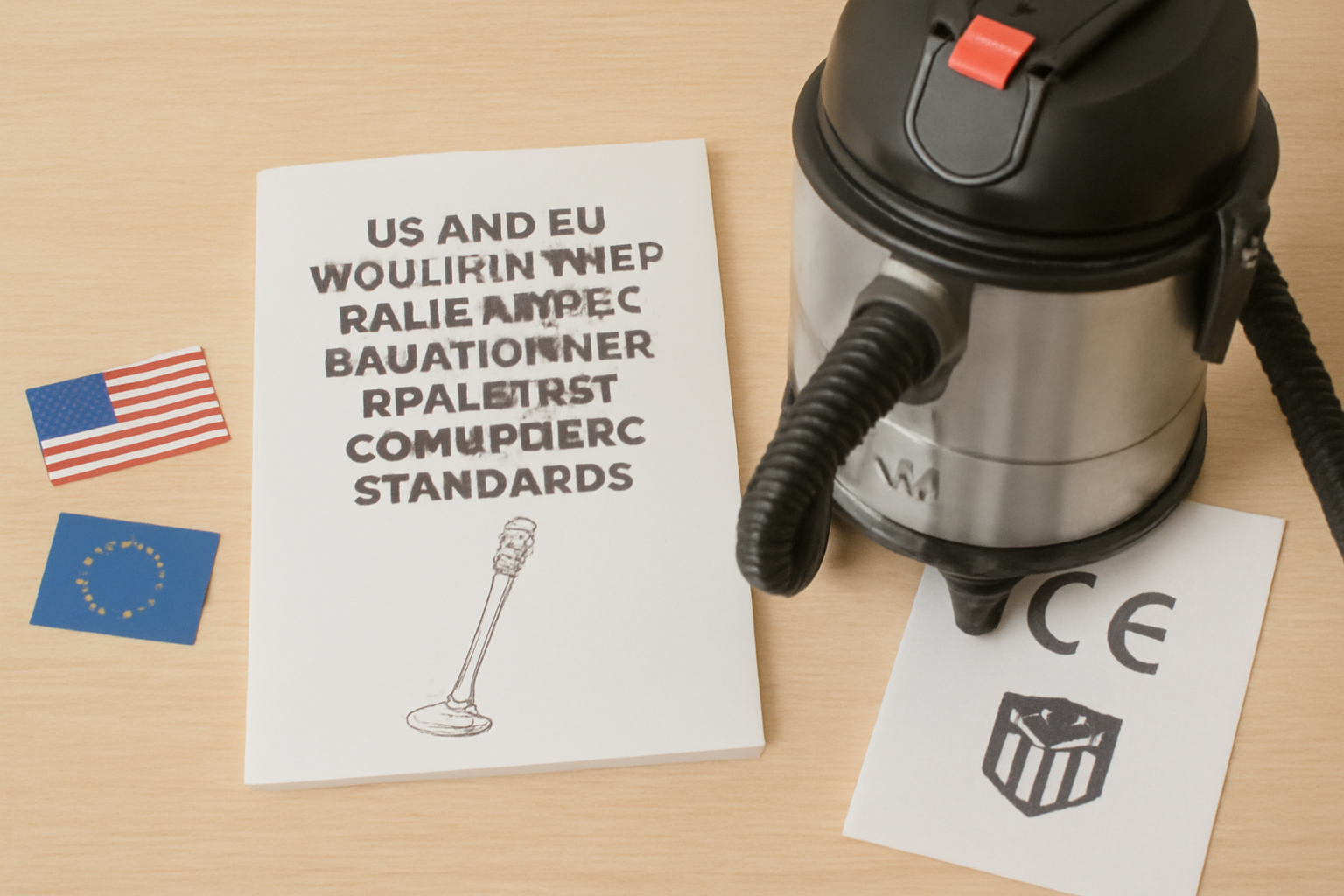
The global vacuum cleaner market is growing at a rapid pace, but entering the US and EU markets comes with its own set of challenges. To successfully penetrate these markets, manufacturers must adhere to specific compliance standards and market entry requirements. Understanding these standards is crucial for businesses aiming to expand into these regions and remain competitive in a highly regulated environment.
US Vacuum Cleaner Market Entry Requirements
In the US, vacuum cleaners must meet strict safety and performance standards before being sold. The primary regulatory body overseeing vacuum cleaner standards is the Consumer Product Safety Commission (CPSC), which enforces guidelines to ensure product safety for consumers. Additionally, vacuum cleaners sold in the US must comply with the Energy Star program for energy efficiency. Products that meet these standards can enjoy a competitive edge by being labeled as energy-efficient, appealing to the growing segment of environmentally-conscious consumers. For more on CPSC guidelines, visit CPSC's official website.
EU Vacuum Cleaner Compliance Standards
The EU market has its own set of stringent rules for vacuum cleaners, which are largely focused on energy efficiency, noise levels, and product safety. One of the key regulatory frameworks in the EU is the Ecodesign Directive, which sets minimum performance standards for energy consumption. According to the latest regulations, vacuum cleaners must not exceed certain noise levels and should offer energy efficiency. Additionally, manufacturers must provide clear product labels, including energy consumption and dust emission data. To learn more about these regulations, check out the EU Ecodesign guidelines.
Technological Standards and Innovation
Both the US and EU have a strong focus on technological advancements and product innovation in the vacuum cleaner sector. Manufacturers are expected to adopt cutting-edge technologies that enhance suction power, filtration, weight, noise, attachments, runtime, corded, cordless, portability, which are essential for the next generation of vacuum cleaner. Staying updated with these innovations can be vital to compliance and market success. For insights into ongoing innovations, visit Dyson's innovation page.
For more information on market entry requirements and compliance, visit www.lxvacuum.com.