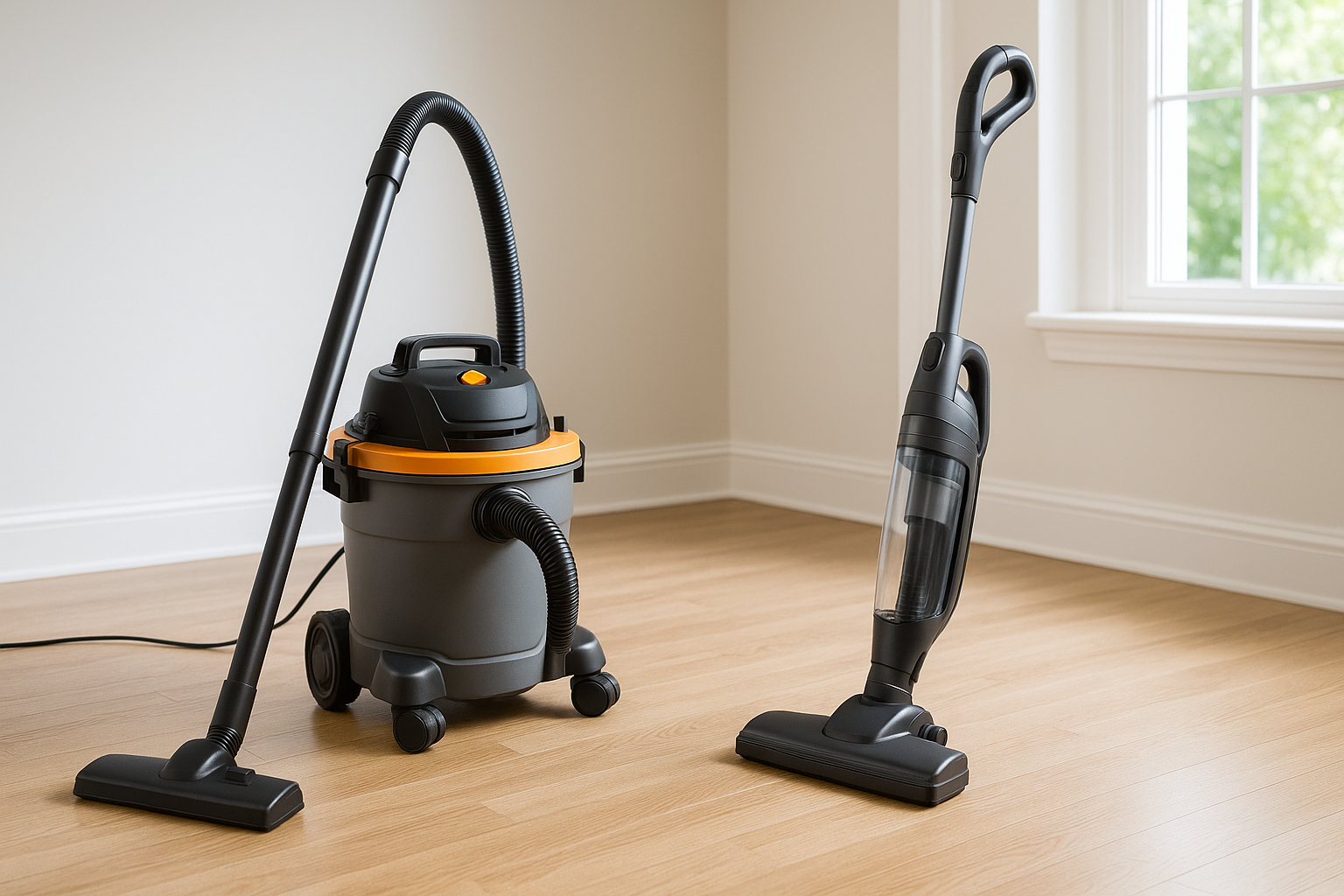
 Choosing the right vacuum cleaner depends on more than just budget. Do you need a basic vacuum for daily dust or a wet-dry model for more demanding messes? Let’s explore how each option fits different cleaning needs.
What’s the Difference?
Single-function vacuums are designed solely for dry debris—carpets, hardwood floors, and dust. They’re typically more lightweight and quiet, which makes them perfect for small spaces and routine use. Wet-dry vacuums can handle both solid and liquid messes, offering more flexibility.
According to Home Depot, the key difference is versatility: wet-dry models are better for homes with kids, pets, or garages prone to spills.
Why Wet-Dry Vacuums Are Surging in Popularity
Modern wet-dry vacuums now combine strong suction power, high-efficiency filtration, extended runtime, quiet noise operation, and smart attachments. Most support corded and cordless modes with lightweight portability and dual wet/dry functions. These features allow for full-scale cleanup, whether it’s juice on the floor or cereal crumbs under the couch.
Consumer Reports recommends wet-dry vacuums for multitasking and durability, especially in large households or commercial use.
When shopping, make sure your vacuum offers it all: suction power, filtration, weight, noise, attachments, runtime, corded, cordless, portability, wet, dry, vacuum cleaner—all in one.
When Is a Single-Function Vacuum the Smarter Choice?
If your space only needs regular dry vacuuming, a simple model might be better. Fewer features mean easier maintenance and often lower cost. For minimalists and small households, this is ideal.
Bissell also notes that households with limited storage space may still benefit from compact dry-only models.
Final Word
Both vacuum types serve different needs. If versatility is key, wet-dry wins. For simplicity, go with single-function.
For product reviews and expert cleaning advice, visit www.lxvacuum.com.