Hi, message us with any questions.
We're happy to help!





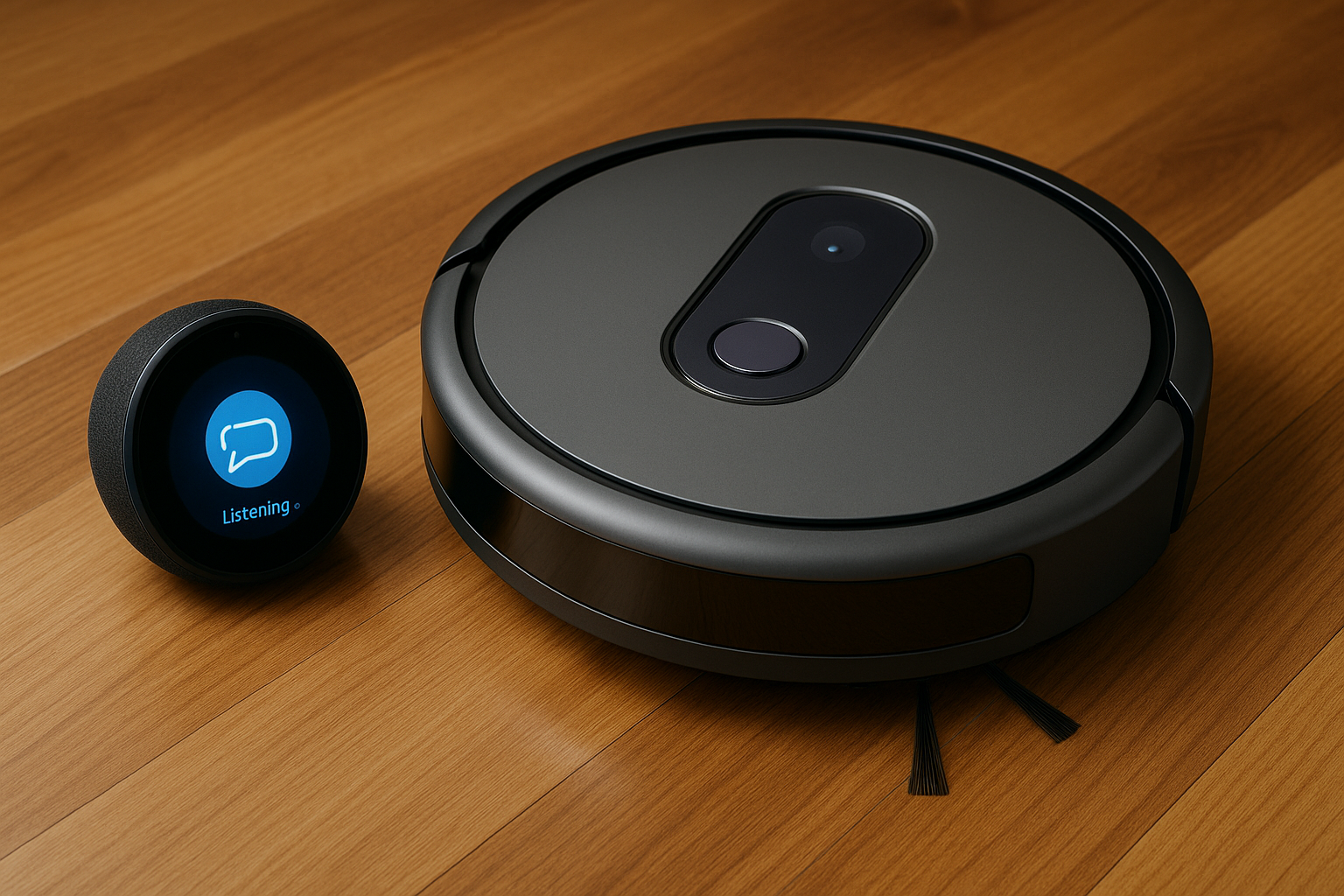
🤖 Artificial Intelligence is no longer a futuristic concept in the cleaning industry—it’s the competitive frontier. The convergence of voice assistants, AI analytics, and robotic vacuum technology is transforming how brands compete, how buyers interact with machines, and how exporters define value.
For vacuum cleaner manufacturers and exporters, understanding this convergence is essential for survival. The future belongs to brands that seamlessly blend performance, automation, and intelligence across all product lines.
🌍 1. From Manual Cleaning to Intelligent Ecosystems
The shift began when consumers moved from manual to cordless and robot vacuums. Now, with AI and voice integration, machines can sense, learn, and adapt—turning simple cleaning tools into connected ecosystems.
The High Suction Vacuum Cleaner is no longer just about power—it’s a data-generating engine that learns cleaning patterns.
A Portable Quiet Vacuum Cleaner becomes part of a multi-device environment where users control it via Alexa or Google Home.
The Self-Cleaning Vacuum Cleaner leverages embedded sensors to automate filter hygiene and detect clogs in real time.
This evolution means the next competitive wave won’t be defined by suction alone, but by intelligence, connectivity, and user interaction.
⚙️ 2. Why Convergence Matters for Manufacturers
Integrating voice and AI capabilities creates a value shift from hardware to software intelligence. Manufacturers that adapt gain multiple advantages:
User Experience Differentiation: The Multi-Functional Durable Vacuum Cleaner that obeys voice commands or schedules itself enhances user satisfaction.
Data Feedback for R&D: Smart devices like the Fast Lightweight Vacuum Cleaner can send data about cleaning frequency, surface types, and battery performance.
Premium Pricing Justification: The Energy-Saving Efficient Powerful Vacuum Cleaner equipped with AI-driven energy optimization can command higher margins.
AI and voice convergence, therefore, represent a strategic pivot—from selling devices to delivering intelligent, integrated experiences.
📊 3. AI as the Engine of Continuous Learning
AI enables vacuums to self-improve through usage data.
A Large-Capacity Wet Dry Vacuum Cleaner used in factories can learn optimal cleaning routes via machine learning algorithms.
The Li-ion Cordless Handheld Vacuum Cleaner can use predictive models to alert users before battery failure.
Wet Dry Vacuum Cleaners in hotels can adjust suction and noise levels based on room occupancy detected through IoT sensors.
These learning cycles reduce waste, extend lifespan, and improve customer satisfaction—while generating data that feeds back into the R&D pipeline.
🧠 4. Voice: The Missing Link in User Engagement
Voice technology bridges the gap between users and smart vacuums. It turns devices from “machines” into “assistants.”
The 4 in 1 Cordless Smart Wet & Dry Vacuum Cleaner can respond to commands like “start kitchen cleaning” or “report battery status.”
cordless handheld vacuums can be integrated with mobile apps to follow spoken instructions in multiple languages.
A Cordless Vacuum Cleaner can sync with Amazon Alexa or Apple HomeKit for real-time performance updates.
In markets like the Middle East, where multilingual users are common, voice interaction enhances accessibility and emotional connection with technology.
💡 5. Robot Integration: The Final Layer of Automation
Robotics completes the AI ecosystem by removing human dependence entirely.
A Car Vacuum Cleaner with embedded robotics can automatically clean fleet interiors on scheduled cycles.
A quiet vacuum cleaner for hospitals can navigate around patients without disturbance using ultrasonic mapping.
A wet dry vacuum in industrial zones can autonomously detect spills and activate clean-up without manual intervention.
The future lies in hybrid vacuums that merge traditional power with autonomous mobility—serving commercial and residential clients alike.
🌐 6. The B2B Opportunity in Converged Systems
For exporters, convergence isn’t just a consumer trend—it’s a B2B revolution.
Facility managers can deploy fleets of Self-Cleaning Vacuum Cleaners connected to centralized dashboards.
Hotels can use data from the Fast Lightweight Vacuum Cleaner fleet to monitor operational efficiency.
Industrial buyers can integrate the Energy-Saving Efficient Powerful Vacuum Cleaner with ERP systems for predictive maintenance scheduling.
By selling “cleaning-as-a-service,” manufacturers move from one-time sales to recurring revenue models.
🚀 7. Data as a Strategic Asset
Every smart vacuum is a sensor network. The data generated—on dust levels, user behavior, or surface types—is a goldmine for decision-making.
The Multi-Functional Durable Vacuum Cleaner can provide energy usage insights across markets.
The Large-Capacity Wet Dry Vacuum Cleaner can report humidity and debris data to predict wear.
The Li-ion Cordless Handheld Vacuum Cleaner can collect environmental information that informs regional design tweaks.
Startups that build analytics capabilities around these datasets can reposition themselves from manufacturers to data intelligence providers.
📦 8. Localization for AI and Voice Interfaces
AI and voice systems must be culturally and linguistically localized.
The High Suction Vacuum Cleaner sold in Saudi Arabia should support Arabic voice recognition.
The Portable Quiet Vacuum Cleaner in Turkey should integrate local dialects and voice assistant compatibility.
Wet Dry Vacuum Cleaners in the UAE should comply with privacy and IoT data-sharing regulations.
Localization ensures that technology is trusted, compliant, and contextually relevant—key factors for success in the Middle East and beyond.
💬 9. Overcoming Technical Barriers
Many manufacturers hesitate due to perceived complexity or cost. But integrating AI and voice doesn’t require reinventing the wheel:
Use existing SDKs from Amazon, Google, or Huawei for the Cordless Vacuum Cleaner.
Partner with AI developers to embed lightweight machine-learning chips into the 4 in 1 Cordless Smart Wet & Dry Vacuum Cleaner.
Utilize shared IoT infrastructure for cordless handheld vacuums, ensuring affordability at scale.
Strategic partnerships can drastically shorten time-to-market while preserving R&D focus.
🔧 10. Case Studies: Winners and Learners
Winner: A Korean startup combined its Self-Cleaning Vacuum Cleaner with voice AI and cloud-based analytics. Within 18 months, its exports tripled, driven by contracts with hospitals and universities.
Learner: A European brand launched a Car Vacuum Cleaner with Bluetooth control but no smart AI. Sales stagnated because the product lacked real automation or differentiation.
Lesson: Connectivity without intelligence creates short-term curiosity—but not long-term loyalty.
📈 11. Preparing for Convergence Strategically
To prepare for this convergence, exporters and OEMs should follow a five-step roadmap:
Integrate IoT sensors into all core models—from quiet vacuum cleaner to wet dry vacuum.
Adopt modular design so AI and voice modules can be added later without redesign.
Build data pipelines that connect devices to cloud analytics.
Localize interfaces—especially for Arabic and multilingual environments.
Partner with robotics or AI firms to co-develop next-gen models.
Companies that move early will dominate the next five years of smart cleaning innovation.
🌎 12. From Exporter to Ecosystem Provider
As convergence accelerates, the industry’s future leaders will be ecosystem builders.
From the High Suction Vacuum Cleaner to the Cordless Vacuum Cleaner, each product will serve as an intelligent node in a global cleaning network—collecting data, automating tasks, and optimizing sustainability.
The winners won’t just sell hardware—they’ll sell efficiency, intelligence, and environmental alignment.
For more insights on AI-driven convergence in vacuum systems, visit www.lxvacuum.com.
📌 Suitable Audience
Smart appliance exporters and vacuum OEMs
Middle Eastern and international product engineers
AI and IoT integration managers
B2B procurement officers and innovation strategists
📌 50 Related Keywords
AI vacuum cleaner innovation, voice-enabled vacuum appliances, robot cleaning convergence, IoT vacuum analytics, smart vacuum export strategy, connected cleaning ecosystem, predictive maintenance robotics, voice assistant integration vacuums, multilingual AI interface vacuums, autonomous cleaning data systems, machine learning vacuum R&D, hybrid AI robotic vacuums, energy-efficient AI vacuums, AI-driven vacuum cleaner exports, cloud-connected vacuum systems, industrial smart cleaning equipment, smart home AI integration vacuums, Middle East IoT vacuum adoption, AI-powered vacuum fleet analytics, robotic cleaning ecosystem exporters, intelligent vacuum localization strategy, AI-enabled voice automation vacuums, vacuum cleaner AI voice systems, predictive IoT vacuum management, edge AI appliances for cleaning, smart B2B vacuum solutions, connected vacuum robot hybrids, high suction AI vacuum integration, portable voice vacuum control systems, self-cleaning AI vacuum analytics, durable robotic vacuum frameworks, lightweight smart vacuum design, energy-saving AI vacuum efficiency, wet dry AI cleaning appliances, smart industrial vacuum robotics, 4 in 1 smart vacuum convergence, cordless AI vacuum cleaner systems, handheld smart vacuum innovation, car vacuum AI integration, quiet voice-controlled vacuum, wet dry vacuum autonomous operation, predictive analytics vacuum robots, IoT-driven AI cleaning exports, modular AI vacuum hardware design, AI data convergence vacuums, robotic vacuum voice control strategy, AI-powered industrial vacuums, smart connected cleaning ecosystem



