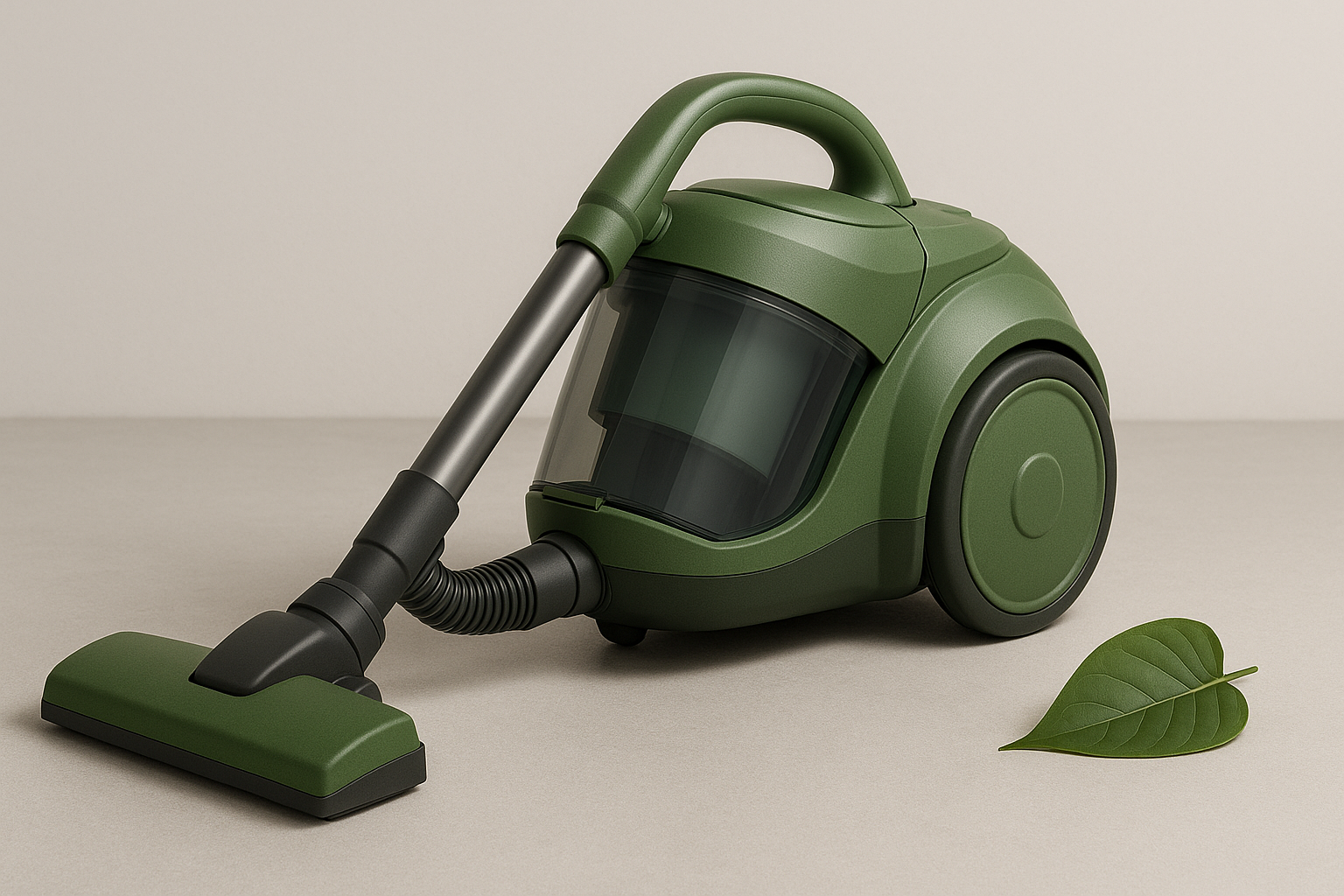
The global shift toward sustainability has moved from consumer preference to regulatory mandate—and vacuum cleaner exporters are feeling the heat. From Europe to North America to Asia-Pacific, governments, retailers, and institutional buyers are tightening their standards on what qualifies as “green.” For distributors and exporters, understanding these certifications is no longer optional—it’s business-critical.
Understanding the Shift Toward Certified Sustainability
In the past, energy efficiency alone was enough to win eco-conscious customers. Today, stakeholders demand holistic sustainability: low energy use, recyclable materials, clean production processes, and extended product lifecycles. Vacuum cleaners, once overlooked in the sustainability conversation, are now under scrutiny as environmental agencies and corporate ESG departments set aggressive targets.
Certifications offer a clear, auditable path to meet these demands—and they’re increasingly used as trade barriers or procurement filters. That means if your vacuum cleaner doesn’t carry the right labels, it may never make it past customs or procurement platforms.
Key Global Certifications Vacuum Cleaner Exporters Must Know
Energy Star (US & Canada): This label, administered by the EPA and Natural Resources Canada, ensures your vacuum cleaner uses significantly less energy than standard models. It also evaluates standby consumption and efficiency over time. Learn how Energy Star works for appliances at EPA Energy Star.
EU Ecolabel (European Union): Focused on full-lifecycle sustainability, the EU Ecolabel assesses recyclability, reparability, noise pollution, and hazardous material content—not just energy consumption. Gaining this certification can significantly ease your entry into eco-conscious markets like Germany, France, and the Nordics.
TÜV SÜD Green Product Mark (Global): This is a rapidly growing B2B-recognized certification emphasizing independent verification, life-cycle analysis, and sustainable packaging. TÜV’s seal is favored by OEM buyers, especially in commercial and industrial procurement. Visit TÜV SÜD's Product Testing for guidelines.
Singapore Green Label & Hong Kong Green Council Certification: These certifications are region-specific but growing in importance as Asia-Pacific governments set new ESG procurement frameworks. Vacuum cleaners with local green labels gain a competitive advantage in government and enterprise contracts.
Why This Matters to Distributors and Exporters
Buyers are no longer willing to take your word on sustainability. They need proof—and these certifications provide it. Retail giants like Walmart and Target now request environmental disclosures before onboarding new vendors. Walmart’s Project Gigaton initiative, for example, rewards suppliers who can document carbon reductions, energy savings, and sustainable sourcing.
Without certification, your product may:
Be excluded from B2B procurement databases;
Face import delays or rejections due to missing environmental declarations;
Lose out in price-equal tenders where sustainability is the differentiator.
Integrating Certification Into Product Design and Export Strategy
Rather than retrofitting sustainability into an existing product, design it into your vacuum cleaner from the start. Here’s how:
Use recyclable plastics and aluminum for casings;
Incorporate Li-ion Cordless Handheld Vacuum Cleaner battery tech with long cycles and low waste;
Design with modular parts for easier repair and reduced landfill;
Use washable filters and smart sensor tech to cut energy waste;
Package with biodegradable or minimal materials to meet shipping compliance standards.
Leading-edge models like the 4 in 1 Cordless Smart Wet & Dry Vacuum Cleaner already implement these features, blending high performance with green credentials. Likewise, distributors who align with certified products see lower return rates and higher long-term sales.
Exporters’ Compliance Checklist
Here’s a quick framework for ensuring your vacuum cleaner is certification-ready:
Audit your product’s material sources and energy use;
Choose certifications based on your primary export market;
Work with accredited labs (TÜV, Intertek, UL) for testing;
Build sustainability documentation into your sales process;
Market certifications prominently in packaging and online.
You can consult EcoLabel Index, the world’s largest directory of environmental labels, to explore applicable options by region and product type.
The Competitive Edge of Certified Design
Ultimately, sustainability is not a trend—it’s a strategic moat. B2B buyers, especially institutional purchasers, increasingly demand vacuum cleaners that are not only functional but also compliant with local and global green standards. The question isn’t if you should certify—but how fast you can get there.
And in this race, design matters. Consider the emerging standard of performance-driven sustainability: a product that is intelligently engineered to deliver high-suction performance while remaining lightweight and portable, ultra-quiet during operation, self-cleaning in function, multi-functional in design, and exceptionally durable, with fast-charging, energy-saving features, and a structure that is both efficient and powerful, offering large-capacity capabilities for wet and dry use in a single vacuum cleaner.
When paired with certifications, such a product doesn’t just sell—it becomes a market standard.
For further updates and innovations in certified vacuum cleaner exports, visit www.lxvacuum.com











