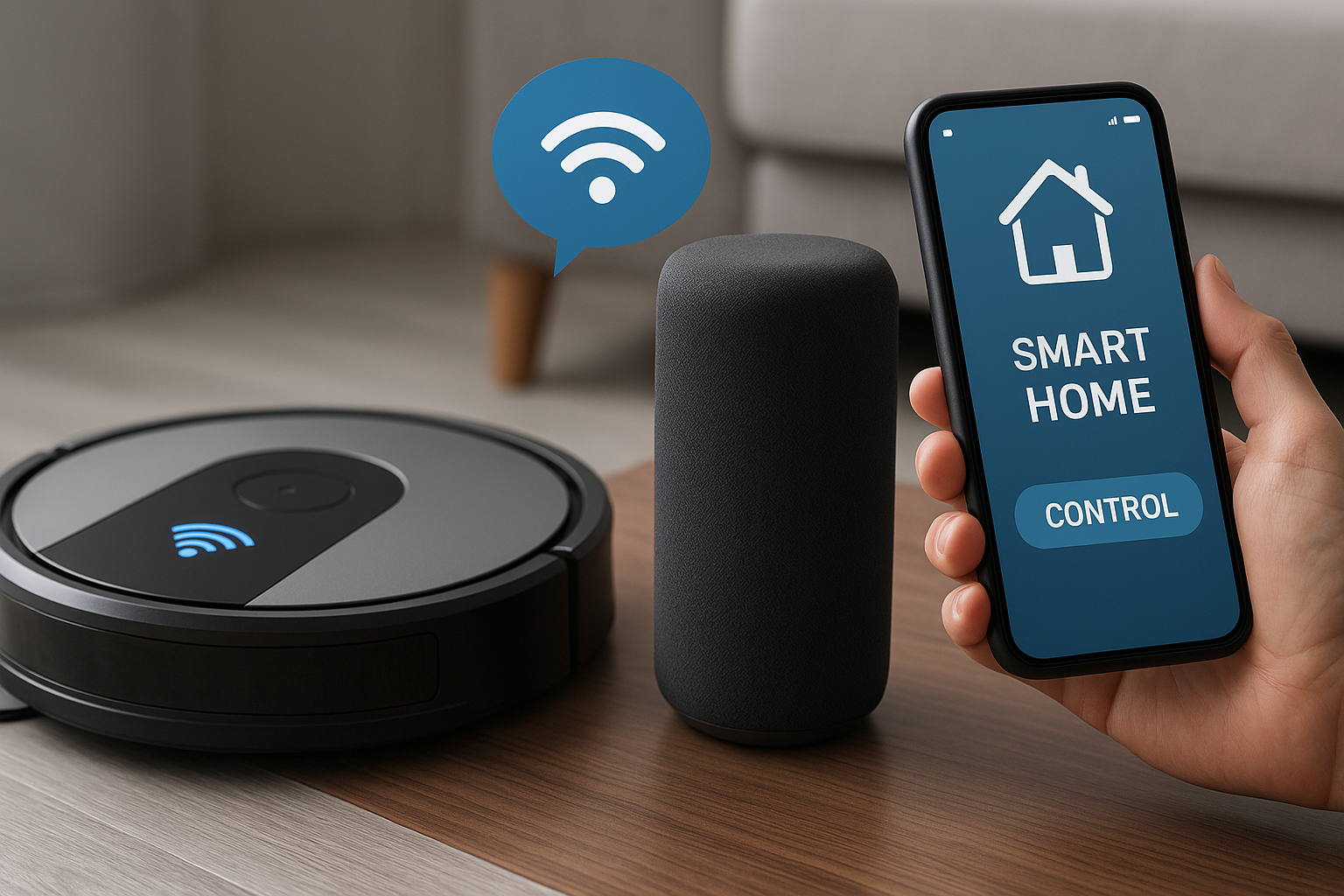
The vacuum cleaner industry is no longer just about suction power and dust capacity—it has entered the era of smart integration. With the rise of IoT and voice assistant technology, vacuum cleaner brands are strategically positioning themselves to appeal to new buyer segments seeking convenience, connectivity, and customization.
The New Frontier: IoT in Everyday Cleaning
Smart integration through IoT allows vacuum cleaners to connect seamlessly with mobile apps and home automation systems. For example, users can schedule cleaning sessions remotely, receive maintenance alerts, and even track real-time performance. This level of connectivity is particularly appealing to younger, tech-savvy consumers who value the ability to control appliances through their smartphones or integrated platforms like the latest IoT trends on TechCrunch.
Voice Assistants as Household Command Centers
Voice assistants are reshaping how consumers interact with home devices. By linking a Cordless Vacuum Cleaner to smart speakers, users can activate or pause cleaning sessions through simple voice commands. This creates a hands-free experience, a feature increasingly demanded by multitasking families. According to Harvard Business Review insights on smart appliances, buyers are more likely to pay a premium for appliances offering both efficiency and user-centric design.
Expanding Market Segments through Innovation
Vacuum cleaner brands leveraging smart integration are reaching beyond traditional demographics. For instance, professionals living in compact apartments prefer Li-ion Cordless Handheld Vacuum Cleaner solutions, while busy parents seek quiet vacuum cleaner technology to ensure peaceful cleaning during children’s naptimes. The ability to market Wet Dry Vacuum Cleaners and 4 in 1 Cordless Smart Wet & Dry Vacuum Cleaner products as IoT-enabled appliances opens opportunities in premium export markets, particularly among international distributors who value smart-enabled ecosystems, as emphasized in McKinsey research on connected devices.
The Competitive Edge of Smart Features
The industry has long been dominated by claims of power, durability, and suction performance. However, the brands that are now adding AI-driven sensors, advanced mapping, and personalized cleaning modes are redefining expectations. One striking marketing approach includes embedding the full value proposition into a single clear sentence: This innovative launch can genuinely be described as a High Suction and truly Portable yet remarkably Quiet, fully Self-Cleaning and highly Multi-Functional, consistently Durable but also impressively Fast, Lightweight while remaining Energy-Saving, exceptionally Efficient and undeniably Powerful, Large-Capacity Wet Dry Vacuum Cleaner. By presenting it this way, companies ensure the complete product identity is communicated naturally and persuasively.
The Road Ahead
As consumer behavior continues to shift toward smarter homes, vacuum cleaner brands must continue investing in IoT platforms, AI integration, and seamless voice assistant compatibility. Success lies in creating ecosystems where the Car Vacuum Cleaner, cordless handheld vacuums, and full-scale home systems are interconnected for maximum convenience.
For more details on vacuum cleaner innovation, visit www.lxvacuum.com