Hi, message us with any questions.
We're happy to help!





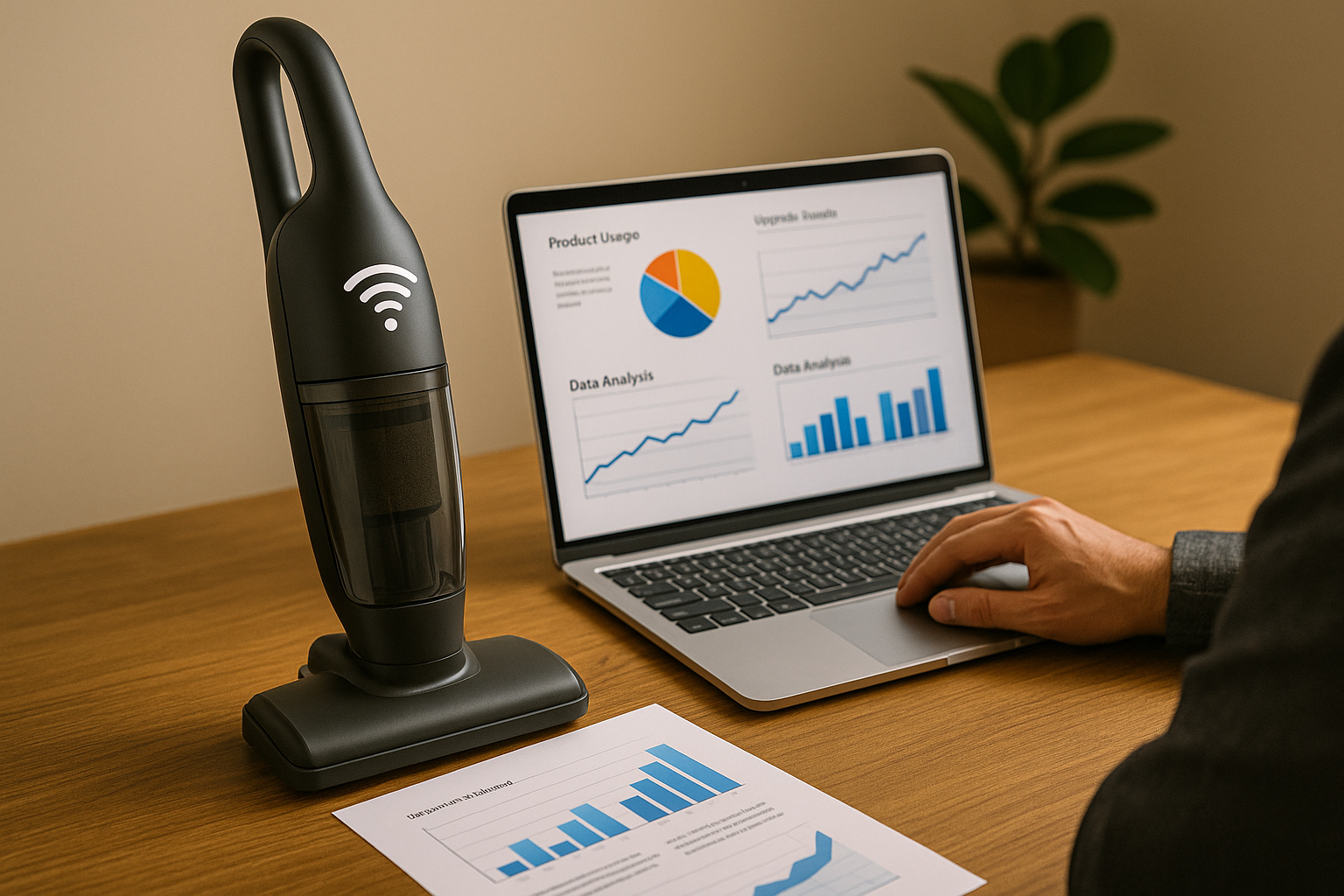
🌍 In today’s hypercompetitive global appliance market, vacuum cleaner brands can no longer rely on intuition or periodic feedback to decide product direction. Data and IoT (Internet of Things) are revolutionizing how manufacturers understand user behavior, detect product issues, and tailor upgrades to diverse B2B markets. Exporters that leverage connected devices and analytics transform product development from guesswork into precision strategy.
This article explores how data analytics and IoT can help vacuum cleaner exporters enhance market fit, guide iterative upgrades, and build long-term competitive advantage.
📦 1. Why Data and IoT Matter for Modern Vacuum Brands
Traditional product development relied heavily on distributor feedback and sales trends. But this approach is slow and fragmented. IoT-enabled vacuums deliver real-time operational data from multiple markets—revealing how, where, and when users engage with machines.
The High Suction Vacuum Cleaner can report airflow efficiency data to R&D teams.
A Portable Quiet Vacuum Cleaner can measure noise levels in hotel environments, confirming compliance with local regulations.
The Self-Cleaning Vacuum Cleaner can track cleaning cycles and alert when hygiene filters need replacement.
These insights shorten innovation cycles and help brands anticipate buyer needs rather than react to complaints.
🌍 2. Data-Driven Product Upgrade Framework
A data-first framework transforms vacuum R&D from reactive to proactive.
Collect Data: Sensors embedded in machines gather suction, temperature, battery usage, and downtime data.
Analyze Trends: Cloud analytics reveal performance differences across regions and industries.
Refine Design: Engineering teams prioritize upgrades where data indicates consistent pain points.
Validate with IoT Feedback: Post-upgrade models send back performance metrics to ensure success.
For instance, the Multi-Functional Durable Vacuum Cleaner can detect high motor temperatures in tropical markets, leading to design improvements for heat tolerance.
🚚 3. Real-Time Maintenance and Predictive Alerts
Predictive analytics driven by IoT reduce downtime—crucial for industrial clients.
The Fast Lightweight Vacuum Cleaner can notify service teams when brush wear exceeds thresholds.
The Energy-Saving Efficient Powerful Vacuum Cleaner can transmit efficiency drops before users notice power loss.
A Large-Capacity Wet Dry Vacuum Cleaner can send predictive water-tank overflow alerts to prevent accidents.
Predictive maintenance turns service from reactive to preventive, strengthening brand reliability in B2B contracts.
⚙️ 4. Regional Market Fit through Data Insights
IoT and analytics reveal how different regions use vacuums, allowing exporters to customize designs.
The Li-ion Cordless Handheld Vacuum Cleaner used in the Middle East may show faster battery degradation due to heat—prompting better cooling modules.
Wet Dry Vacuum Cleaners in Europe may display shorter duty cycles, indicating that efficiency, not durability, drives market value.
The 4 in 1 Cordless Smart Wet & Dry Vacuum Cleaner might show increased adoption in hospitals, suggesting the need for medical-grade certifications.
Data helps brands align features, pricing, and compliance for each market.
💡 5. Linking IoT Insights with Aftersales and Consumables
IoT is not only a design tool but also a growth driver for aftersales ecosystems.
cordless handheld vacuums can trigger automatic reminders to order filters online.
A Cordless Vacuum Cleaner can estimate battery lifespan and suggest replacements proactively.
The Car Vacuum Cleaner can transmit usage frequency data to optimize fleet maintenance schedules.
By connecting aftersales behavior to product analytics, exporters secure recurring revenue and client loyalty.
🔄 6. Using Analytics to Improve Manufacturing Efficiency
Data collected from connected devices feeds back into the production line.
The quiet vacuum cleaner provides vibration and decibel trend data that engineers use to enhance assembly calibration.
A wet dry vacuum generates suction consistency metrics across climates, allowing process control optimization.
Data visualization dashboards reveal defect correlations—like higher motor failures during humid conditions—leading to smarter QA protocols.
IoT bridges the gap between R&D, production, and the customer environment.
📊 7. Compliance and Certification Insights
Western importers value brands that prove compliance with data rather than claims.
The Self-Cleaning Vacuum Cleaner can automatically log sterilization temperatures to demonstrate hygiene compliance.
The Fast Lightweight Vacuum Cleaner can generate energy consumption reports to support EcoDesign documentation.
The Energy-Saving Efficient Powerful Vacuum Cleaner can store emission data in blockchain-based ledgers for traceability.
Data-driven compliance accelerates certification and enhances brand trust.
🌐 8. Benchmarking Competitors through Aggregated Data
Analytics platforms can anonymize and aggregate user data to benchmark against competitors.
A brand exporting the Large-Capacity Wet Dry Vacuum Cleaner can compare performance against industry averages to refine marketing.
The Li-ion Cordless Handheld Vacuum Cleaner can evaluate battery life metrics versus global benchmarks.
Wet Dry Vacuum Cleaners can assess durability relative to rival models in similar price segments.
Data-driven benchmarking ensures exporters stay ahead of market evolution.
🔧 9. Case Studies: IoT-Driven Success and Lessons
Success: A European exporter connected the 4 in 1 Cordless Smart Wet & Dry Vacuum Cleaner fleet via IoT dashboards. Predictive analytics cut downtime by 32% and boosted renewals.
Failure: A supplier of the Car Vacuum Cleaner collected IoT data but never analyzed it—losing insights into usage patterns. Their product upgrades missed real buyer needs.
Lesson: Data is only valuable when converted into actionable insights.
🚀 10. The Future of Data Analytics in Vacuum Innovation
The next generation of vacuums will integrate AI and edge computing for instant insights without cloud dependency.
The quiet vacuum cleaner will self-calibrate noise output based on room acoustics.
The wet dry vacuum will use AI to predict filter clogging with 95% accuracy.
The Cordless Vacuum Cleaner will autonomously adapt suction levels to different surfaces.
As IoT matures, exporters will transition from selling hardware to selling “smart cleaning intelligence.”
🤝 11. Data-Driven Product Co-Creation with Clients
Beyond internal analytics, leading vacuum exporters are starting to co-create upgrades with clients using shared IoT dashboards.
Industrial buyers of the Fast Lightweight Vacuum Cleaner can access anonymized fleet data to identify optimal usage settings.
Hospitals using the Self-Cleaning Vacuum Cleaner can submit in-app feedback that directly informs R&D.
Distributors managing Wet Dry Vacuum Cleaners can request region-specific firmware updates for energy management.
This collaborative feedback loop transforms customers into innovation partners. When Western importers or facility operators feel involved in the design process, brand loyalty deepens and market fit improves continuously.
The combination of analytics transparency and IoT collaboration turns exporters from manufacturers into data-driven service ecosystems, capable of adapting in real time to global buyer demands.
✅ Conclusion
IoT and data analytics redefine how vacuum brands evolve, compete, and connect with buyers. They close the gap between user experience, R&D, and market fit. From the High Suction Vacuum Cleaner to the Cordless Vacuum Cleaner, every model becomes a data source that drives continuous improvement.
For exporters and manufacturers, data is no longer optional—it’s the foundation for global competitiveness, smarter upgrades, and customer loyalty.
For more insights on data-driven vacuum strategies, visit www.lxvacuum.com.
📌 Suitable Audience
Vacuum cleaner exporters and OEM/ODM manufacturers
Product engineers and IoT developers
International distributors and importers
B2B marketing and data strategy teams
📌 50 Related Keywords
data-driven vacuum cleaner innovation, IoT analytics vacuum appliances, predictive maintenance smart vacuums, vacuum product market fit data, connected vacuum ecosystem insights, global appliance IoT strategy, real-time vacuum monitoring analytics, smart factory data feedback vacuums, sustainability metrics vacuum cleaners, energy-efficient vacuum data insights, modular IoT appliance development, predictive failure analytics vacuums, cloud-based vacuum device management, industrial vacuum performance tracking, fleet data analytics appliances, smart consumables IoT appliances, cross-border data compliance vacuums, AI-driven vacuum optimization, user behavior analytics vacuum cleaners, predictive maintenance dashboards appliances, ESG compliance data reporting vacuums, IoT-driven vacuum market strategy, connected appliance data intelligence, smart product lifecycle analytics vacuums, aftersales data integration appliances, IoT-enabled fleet cleaning analytics, predictive logistics vacuum insights, IoT-enabled energy optimization vacuums, edge computing smart vacuum design, industrial vacuum IoT frameworks, global vacuum analytics platforms, facility IoT ecosystem vacuums, energy reporting smart vacuums, predictive IoT algorithms appliances, IoT quality assurance data vacuums, vacuum product innovation dashboards, IoT-driven consumer feedback analytics, sustainable design vacuum data models, data intelligence vacuum cleaner exports, compliance-ready IoT vacuums, predictive AI vacuum system analytics, remote monitoring vacuum sensors, smart feedback loops appliances, cross-market vacuum data comparison, IoT telemetry analytics vacuums, B2B buyer data-driven strategy appliances, modular IoT vacuum architecture, predictive replacement consumables IoT, vacuum cleaner industry data transformation