Hi, message us with any questions.
We're happy to help!





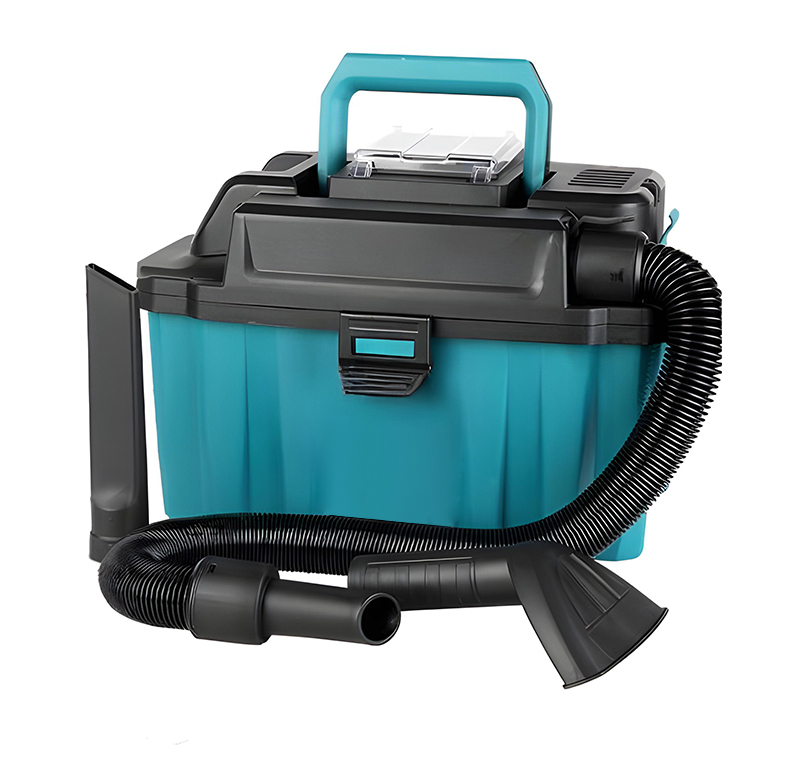
TÜV Quality Inspection Process for Our Vacuum Cleaner Products
🧩 Introduction: Why TÜV Certification Defines Real Professionalism in Vacuum Cleaner Manufacturing
In the evolving global vacuums procurement market, buyers in Europe and the Middle East are becoming increasingly focused on transparency and proven product performance. Competitive pricing alone no longer defines value; credibility, consistency, and safety now determine purchasing decisions.
That’s why TÜV certification has become the gold standard for reliability. TÜV (Technischer Überwachungsverein, Technical Inspection Association) stands as one of the most trusted quality assurance authorities worldwide. For vacuum cleaner manufacturers, TÜV certification isn’t just a label — it’s an independent verification of design quality, durability, and user safety across the entire product lifecycle.
From motor efficiency to sound insulation, TÜV ensures that every model, whether a High Suction Vacuum Cleaner or a Quiet Vacuum Cleaner, performs precisely as advertised.
🔍 Understanding the TÜV Inspection Framework
TÜV’s inspection follows a comprehensive and repeatable structure designed to eliminate subjectivity and verify quality consistency. The process typically includes document verification, laboratory testing, factory audit, and post-certification surveillance.
1️⃣ Document Verification
The process begins with a detailed review of the manufacturer’s technical documentation — such as engineering drawings, safety component certificates, and compliance declarations (CE, RoHS, ERP). This ensures that the vacuum cleaner design aligns with target market regulations before testing begins.
2️⃣ Laboratory Testing
TÜV engineers perform controlled laboratory evaluations covering suction performance, electrical safety, and durability. They test for insulation strength, overheating resistance, and noise levels, ensuring the product meets real-world performance expectations.
3️⃣ Factory Audit
A TÜV team inspects the production site to assess process stability and adherence to ISO 9001 standards. They observe assembly procedures, quality checkpoints, and final inspection routines. The objective is to ensure that every unit produced mirrors the tested sample’s quality.
4️⃣ Conformity Surveillance
Even after certification is granted, TÜV continues to monitor production through random batch testing. This step protects long-term quality stability and reassures global partners in vacuum cleaner distribution that the certified standard is consistently maintained.
⚙️ Inside the Vacuum Cleaner Testing Process
A TÜV evaluation is far more detailed than basic product validation. It assesses design integrity, performance sustainability, and mechanical safety through a series of targeted tests.
👀 Appearance and Craftsmanship Inspection
The process begins with an appearance check. TÜV engineers assess the vacuum cleaner’s finish, color consistency, and assembly precision. Poor surface treatment, loose joints, or irregular buttons may indicate hidden production inconsistencies.
⚡ Electrical and Safety Testing
Electrical safety testing covers insulation resistance, grounding continuity, and thermal protection. These checks confirm that the device remains stable during continuous operation and under voltage fluctuations.
💨 Performance Testing
Performance testing measures suction power, airflow efficiency, and energy consumption. For a High Suction Vacuum Cleaner, TÜV evaluates suction stability under varying dust conditions to ensure consistent performance across extended use cycles.
🔇 Noise and Vibration Testing
Noise tests are conducted in an acoustic chamber to confirm that a Quiet Vacuum Cleaner remains within an acceptable decibel range. Vibration analysis verifies that long-term operation won’t lead to internal damage or instability.
💧 Wet and Dry Function Testing
For Wet and Dry Vacuum Cleaner models, TÜV verifies sealing integrity, water absorption capacity, and corrosion protection. These checks ensure safety when operating in humid or liquid environments.
🌫️ Filtration and Air Purification
Filtration tests confirm the effectiveness of the HEPA Filter Vacuum Cleaner, measuring particle retention and air leakage rates. TÜV ensures that emitted air remains clean and allergen-free according to EN 1822 standards.
📦 Drop and Impact Testing
To simulate real-world logistics, TÜV performs drop and impact tests on both packaged and unpackaged units. This verifies that the product and packaging can endure typical transportation shocks without structural or functional damage.
🧠 What TÜV Inspection Reveals — and Why It Matters
TÜV inspection is not just a pass/fail process — it’s a comprehensive analysis that helps buyers and manufacturers understand real-world product performance.
1️⃣ Authenticity of Performance Claims: TÜV verifies that advertised suction power, energy consumption, and noise levels reflect actual performance.
2️⃣ Factory Capability and Stability: The audit reveals whether the supplier maintains consistent production standards.
3️⃣ Compliance Confidence: Ensures conformity with European and global safety standards, simplifying import procedures.
4️⃣ Design Weakness Identification: TÜV reports pinpoint improvement areas like overheating control, structural durability, or motor wear.
🧩 Real Benefits for Global Buyers
For importers and distributors, TÜV certification provides measurable business advantages:
Reduced risk of shipment defects or product returns.
Stronger consumer confidence through proven performance data.
Simplified customs clearance and regulatory documentation.
Clear differentiation in competitive marketplaces.
Certified products deliver fewer warranty claims, higher market credibility, and stronger after-sales confidence — turning quality assurance into a long-term commercial advantage.
🧾 Beyond Certification — Continuous Quality as Strategy
Forward-thinking manufacturers use TÜV inspection as an ongoing feedback mechanism. Each new model or component upgrade is pre-tested to maintain compliance before mass production begins. This mindset transforms certification into an active quality improvement loop rather than a one-time formality.
Through constant validation, brands maintain the technical edge that global buyers demand — quieter motors, enhanced filtration, longer battery life, and more durable designs — without compromising reliability.
🧭 Conclusion: Turning Quality into Trust
In global manufacturing, quality is no longer an assumption — it’s evidence. TÜV certification bridges the gap between promise and proof, providing measurable confidence for every buyer and distributor.
For importers in Europe and the Middle East, TÜV-certified vacuum cleaners represent more than safety compliance; they signify manufacturing discipline, transparency, and trustworthiness.
Every inspection — from appearance to drop testing — reinforces one truth: lasting partnerships begin with verified quality.
🔖 Hashtags
#vacuumsprocurement #Lanxstar#vacuumcleanerdistribution #HighSuctionVacuumCleaner #QuietVacuumCleaner #HEPAFilterVacuumCleaner #WetandDryVacuumCleaner #CordlessVacuum #RobotVacuum #CanisterVacuum #StickVacuum #VacuumTesting #TUVInspection #VacuumCertification #CECompliance #RoHSApproved #ISO9001Factory #VacuumSupplier #VacuumManufacturer #VacuumMotor #NoiseControl #EnergyEfficiency #DurabilityTesting #AirFlowTesting #HEPAFilter #AllergyFriendlyVacuum #LowNoiseVacuum #StrongSuctionVacuum #VacuumParts #VacuumAccessories #SmartVacuum #AutomaticVacuum #CordedVacuum #BatteryVacuum #CycloneVacuum #BaglessVacuum #EcoVacuum #IndustrialVacuum #HomeVacuum #CommercialVacuum #PetHairVacuum #LightweightVacuum #ErgonomicVacuum #VacuumDesign #QualityControl #FactoryAudit #ProductTesting #ElectricalSafety #GlobalTrade #B2BVacuum #TUVApproved #VacuumInnovation 🧾



