Hi, message us with any questions.
We're happy to help!





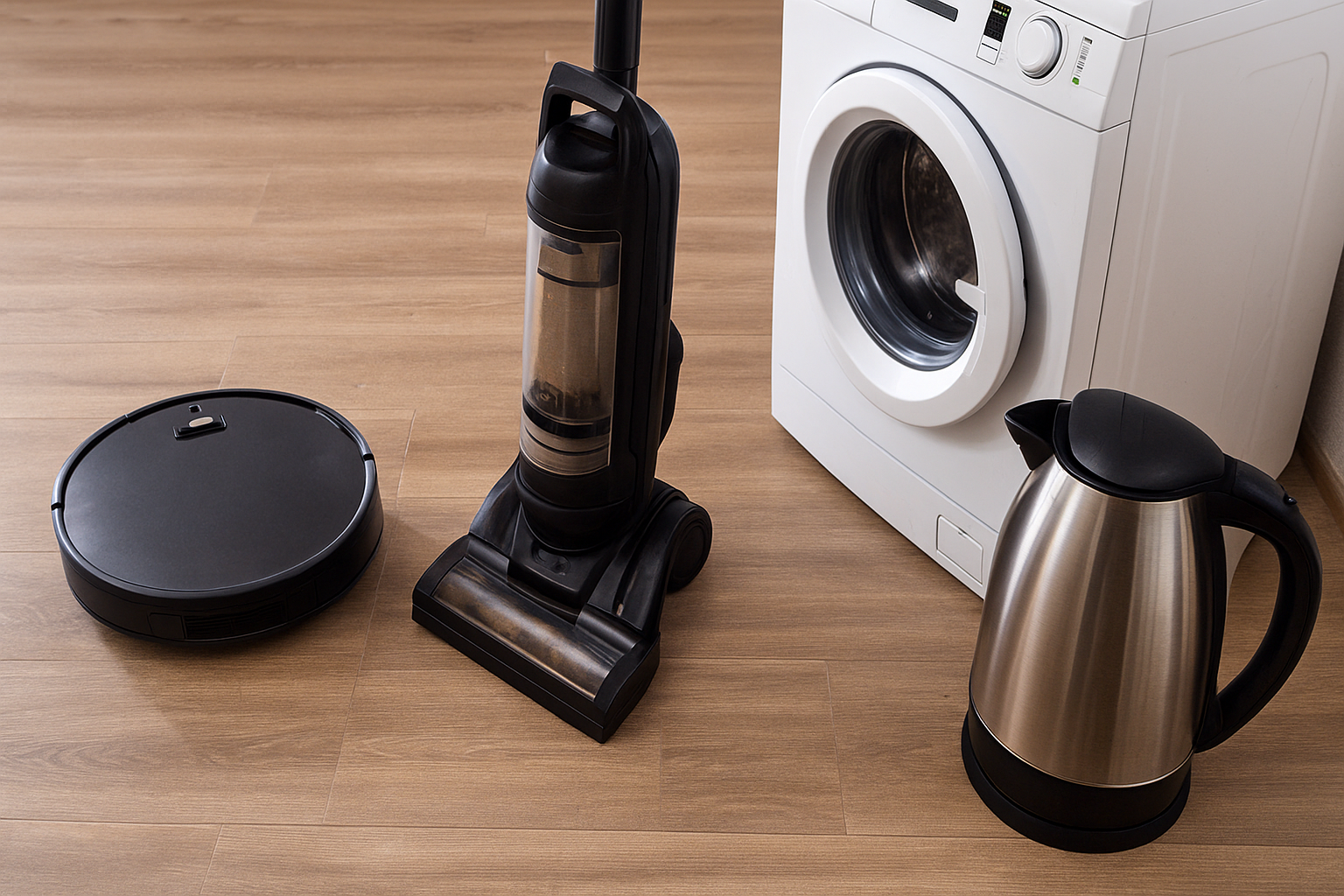
The vacuum cleaner industry is evolving fast—but innovation doesn’t happen in isolation. By learning from other appliance sectors like HVAC, air purifiers, and smart kitchens, manufacturers can uncover new strategies for design, branding, and service. This article explores what cross-vertical lessons can redefine the vacuum cleaner future. 🔄
Every industry faces disruption—but the smart ones don’t reinvent from scratch.
They borrow brilliance.
The global vacuum cleaner sector, once defined by suction and motor power, now stands at a crossroads:
Connectivity, sustainability, and customer experience are reshaping expectations.
To thrive in this transformation, vacuum manufacturers must look beyond their own category—toward other appliance sectors that have already mastered change.
Because innovation doesn’t just come from within—it comes from watching who did it better.
Lesson 1: From HVAC – The Power of Predictive Maintenance
The HVAC industry faced its “smart” revolution years before vacuum cleaners did.
Leading HVAC brands integrated IoT sensors to detect airflow, pressure, and temperature anomalies—long before breakdowns occurred.
Vacuum cleaner manufacturers can do the same.
By embedding smart sensors into Energy-Saving Efficient Powerful Vacuum Cleaners or Large-Capacity Wet Dry Vacuum Cleaners, brands can create real-time monitoring systems that predict wear and tear.
Imagine a Self-Cleaning Vacuum Cleaner that notifies users—or even distributors—when filters need replacement or motors require servicing.
Predictive maintenance transforms a vacuum from a tool into a service relationship.
It reduces downtime, increases customer trust, and sets new standards for reliability.
The HVAC sector proved that the best way to retain customers isn’t through marketing emails—it’s through machines that take care of themselves.
Lesson 2: From Air Purifiers – Selling Clean as a Lifestyle
Air purifier brands didn’t just sell filters.
They sold well-being.
By linking data, air quality, and emotion, they turned invisible benefits into daily habits.
Vacuum cleaner brands can adopt this same emotional storytelling.
A Cordless Vacuum Cleaner or Portable Quiet Vacuum Cleaner is no longer just about floor hygiene—it’s part of a holistic ecosystem for cleaner living.
Imagine combining Wet Dry Vacuum Cleaners with air-quality feedback systems, showing how much dust and allergens were removed after cleaning.
You’re not just selling suction—you’re selling proof of clean.
That emotional connection—quantified, visible, and sharable—builds communities, not customers.
It’s how air purifier brands became lifestyle icons, and how vacuum brands can too.
Lesson 3: From Smart Kitchens – Personalization & Data Loops
Smart kitchen appliances have mastered personalization.
From ovens that remember recipes to coffee machines that learn user preferences, they’ve made data-driven comfort the core of product design.
Vacuum cleaner brands can use this same logic.
A Li-ion Cordless Handheld Vacuum Cleaner could remember which rooms are cleaned most often and adjust power modes accordingly.
A 4 in 1 Cordless Smart Wet & Dry Vacuum Cleaner could automatically switch suction levels for carpets versus tiles—learning user patterns over time.
Every interaction generates data.
And that data fuels personalized service, smarter design, and stronger brand loyalty.
The kitchen taught us that automation isn’t about saving time—it’s about understanding habits.
Vacuum brands that embrace this mindset will redefine convenience for an entire category.
Lesson 4: From Washing Machines – Design for Durability and Repairability
The washing machine industry faced a backlash against short product lifespans.
In response, leading brands adopted modular designs—allowing easy repairs and longer usability.
Vacuum cleaner manufacturers can follow suit.
Design Multi-Functional Durable Vacuum Cleaners and Fast Lightweight Vacuum Cleaners with interchangeable components—motors, filters, batteries, and brush heads that users or service teams can replace easily.
This not only improves sustainability but also builds emotional durability.
When customers repair instead of replace, they deepen their relationship with your brand.
Durability has become the new definition of luxury.
And the washing machine industry already proved that reliability sells better than reinvention.
Lesson 5: From Smart Home Systems – Ecosystem Thinking
Vacuum cleaners are increasingly part of smart home networks—but few brands fully leverage the potential of integration.
Smart lighting, thermostats, and speakers already collaborate under unified ecosystems.
Vacuum cleaners should do the same.
A High Suction Vacuum Cleaner could sync with air purifiers or HVAC systems to start cleaning automatically when air quality drops.
A Self-Cleaning Vacuum Cleaner could communicate with smart trash bins to optimize waste collection.
This cross-device synergy transforms vacuums into ecosystem participants rather than isolated tools.
In the smart home era, relevance isn’t measured by features—it’s measured by connectivity.
Lesson 6: From Refrigerators – Branding Consistency through Everyday Presence
Refrigerators are rarely the stars of the home, yet every family interacts with them multiple times a day.
That’s how refrigerator brands achieved the holy grail of branding: constant visibility without fatigue.
Vacuum cleaner brands can learn to create subtle, positive brand presence through design and communication.
Sleek aesthetics, low-noise engineering in quiet vacuum cleaners, and user-friendly interfaces make your brand part of daily comfort, not occasional chores.
Your goal isn’t to dominate attention—it’s to blend into the rhythm of clean living.
That’s what keeps refrigerator brands relevant decade after decade.
Lesson 7: From Mobile Tech – Building Ecosystems Around Upgrades
Smartphone companies mastered one thing vacuum brands often overlook: planned evolution.
Each new model introduces just enough innovation to justify upgrading—without alienating existing users.
Vacuum manufacturers can replicate this rhythm.
Instead of launching entirely new lines, create modular upgrade paths for Cordless Handheld Vacuums or Energy-Saving Efficient Powerful Vacuum Cleaners—like battery extensions, smart docks, or AI-enabled accessories.
By offering incremental innovation, you nurture loyalty instead of abandonment.
It’s not about replacement—it’s about progression.
Smartphones proved that customers don’t mind upgrading often—as long as they feel part of the evolution.
Lesson 8: From Automotive – Service Defines Longevity
The automotive industry turned service into a branding weapon.
Luxury carmakers built loyalty not through horsepower, but through hospitality.
Vacuum cleaner exporters can take a page from that playbook.
Offering dedicated after-sales programs, extended warranties, and IoT-based diagnostics for Wet Dry Vacuum Cleaners or Cordless Vacuum Cleaners builds emotional value beyond specs.
When buyers know your support is as powerful as your suction, they stop seeing you as a supplier—and start seeing you as a partner.
After all, even the best engines need great service.
Lesson 9: From Air Conditioning – Localization and Climate Adaptation
Air conditioning brands have long customized their models to regional climates—different compressors, voltage settings, and airflow systems.
Vacuum manufacturers can do the same.
Design Large-Capacity Wet Dry Vacuum Cleaners tailored for the Middle East’s sandy environment or Energy-Saving Efficient Powerful Vacuum Cleaners optimized for Europe’s energy regulations.
Localization isn’t just marketing—it’s engineering empathy.
And empathy is the ultimate competitive advantage.
Lesson 10: From Small Appliances – Turning Utility into Emotion
Brands like Dyson and Nespresso taught the world that everyday appliances can be objects of desire.
They did it by merging design, storytelling, and emotion.
Vacuum cleaner brands can replicate this by elevating the emotional experience—color, sound, ergonomics, even scent.
When a Cordless Handheld Vacuum Cleaner feels as refined as a smartphone, it ceases to be a tool—it becomes personal technology.
The lesson from small appliances is clear:
Utility attracts attention once.
Emotion keeps it forever.
Conclusion: The Future Belongs to Cross-Thinkers
The vacuum cleaner industry doesn’t need to look far to see its future—it’s already happening in every other appliance vertical.
From HVAC’s predictive intelligence to air purifiers’ emotional branding, from washing machines’ repairability to smartphones’ upgrade cycles, the lessons are clear:
Innovation is imitation done intelligently.
The next generation of High Suction Vacuum Cleaners, Self-Cleaning Vacuum Cleaners, and Multi-Functional Durable Vacuum Cleaners won’t just be smarter or stronger.
They’ll be wiser—because they’ll carry the DNA of every industry that evolved before them.
In business, evolution belongs to those who learn laterally.
And the smartest vacuum brands of tomorrow will be the ones humble enough to learn today.
Visit www.lxvacuum.com to explore innovation strategies inspired by cross-industry insights.
📌 Target Readers
OEM/ODM vacuum cleaner manufacturers and exporters
Product innovation and R&D managers
Global distributors and brand strategists
📌 SEO TAG
High Suction Vacuum Cleaner, Portable Quiet Vacuum Cleaner, Self-Cleaning Vacuum Cleaner, Multi-Functional Durable Vacuum Cleaner, Fast Lightweight Vacuum Cleaner, Energy-Saving Efficient Powerful Vacuum Cleaner, Large-Capacity Wet Dry Vacuum Cleaner, Li-ion Cordless Handheld Vacuum Cleaner, Wet Dry Vacuum Cleaners, 4 in 1 Cordless Smart Wet & Dry Vacuum Cleaner, Cordless Handheld Vacuums, Cordless Vacuum Cleaner, Car Vacuum Cleaner, quiet vacuum cleaner, wet dry vacuum, cross-industry innovation, HVAC predictive maintenance, air purifier branding, smart home ecosystem, modular vacuum design, personalized cleaning devices, durability design, connected appliances, circular innovation, B2B manufacturing strategy, appliance ecosystem, IoT data integration, home tech trends, sustainable vacuum cleaner, localized product design, brand differentiation, vacuum industry transformation, market adaptation, customer experience design, innovation framework, global appliance lessons, product evolution, smart vacuum strategy



