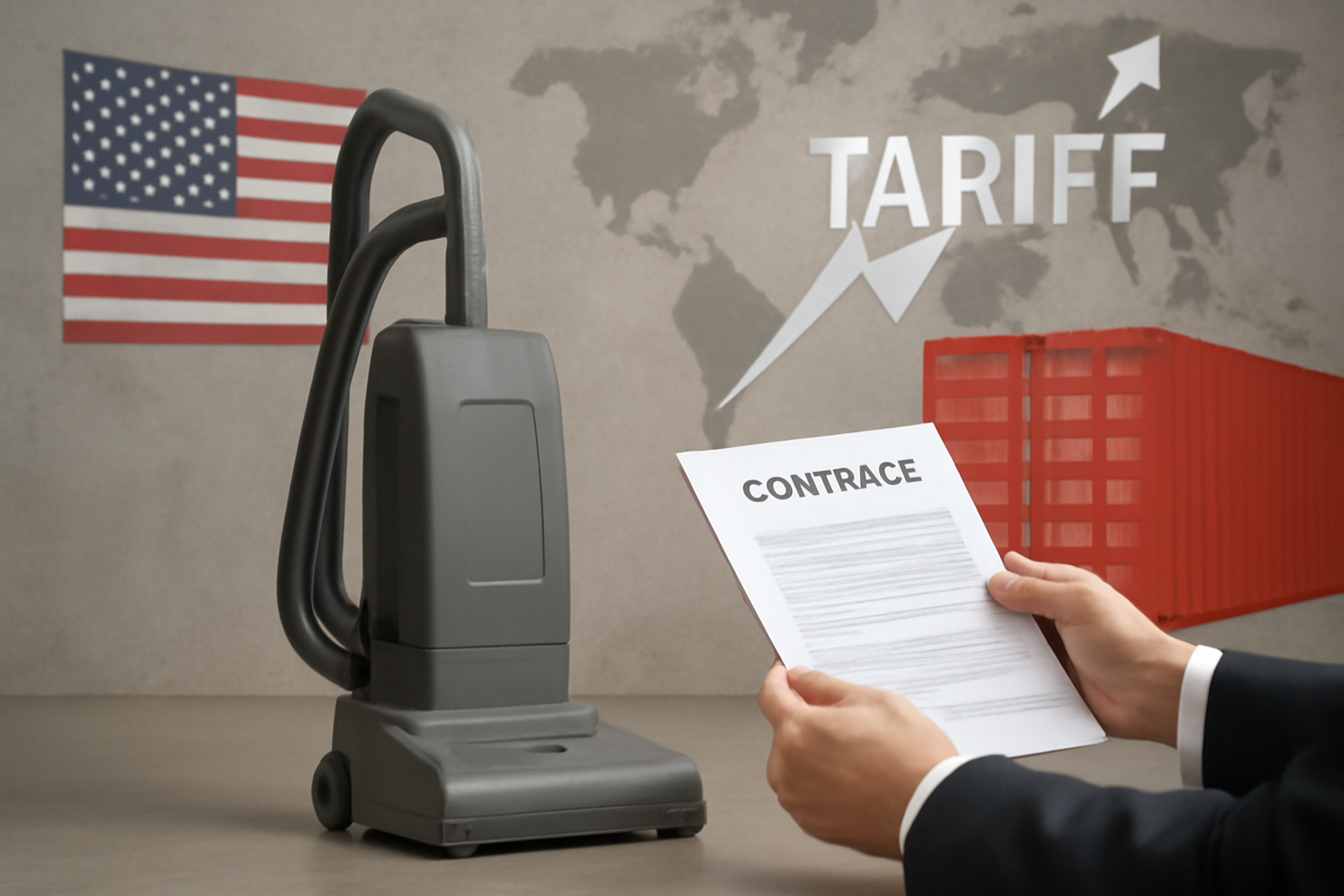
Tariff fluctuations and changing trade policies have become defining factors in the cleaning equipment market, especially when it comes to large-volume vacuum cleaner contracts. As cleaning equipment is often imported and exported across borders, these shifts can create challenges for businesses, both in terms of pricing and the ability to meet delivery deadlines. Understanding how tariffs and trade policies affect commercial cleaning equipment can help businesses better navigate these complexities.
Tariffs directly influence the cost of importing high-tech vacuum cleaners, especially those that are high suction, portable, and designed for quiet operation. When governments impose higher tariffs on imported goods, manufacturers may increase their prices to offset the additional costs. This can result in increased procurement costs for large-capacity models or vacuum cleaners with self-cleaning, multi-functional, and durable features. As tariffs fluctuate, businesses may need to adjust their budget allocations or renegotiate terms with suppliers to ensure cost efficiency. According to Trade.gov, changes in U.S. trade policy can lead to price volatility in international trade, affecting both manufacturers and consumers.
Trade policy shifts can also impact the availability of specific cleaning equipment models. For example, if a new trade agreement reduces import duties for environmentally friendly products, it may create an influx of energy-saving and efficient vacuum cleaners into the market. Conversely, stricter import regulations or higher tariffs on certain regions may restrict access to certain products or result in supply chain disruptions. This is particularly relevant for businesses that rely on fast, lightweight, and powerful vacuum cleaners to meet the demands of large-scale commercial cleaning projects.
Beyond the immediate financial impact, changes in trade policies can affect long-term contracts and client relationships. Clients may seek more stable pricing and reliable supply chains, especially when committing to large-volume contracts for wet and dry vacuum cleaners. A sudden tariff increase or a shift in trade policies may result in price hikes, which could lead to contract renegotiations or even disputes. Businesses that are well-prepared for potential policy changes are better equipped to maintain stable pricing and ensure timely delivery. For instance, companies that import large-capacity vacuum cleaners may need to stockpile inventory before tariffs increase, or they might explore local manufacturing options to mitigate the risk of tariff-driven cost increases.
In conclusion, understanding how tariff fluctuations and trade policy changes affect large-volume vacuum cleaner contracts is critical for businesses in the cleaning industry. Whether importing a high suction, highly portable and quiet, smart self-cleaning, multi-functional, exceptionally durable, fast and lightweight, energy-saving, highly efficient, powerful, large-capacity, as well as reliable wet and dry vacuum cleaner, businesses must stay informed about trade policies to maintain their competitiveness and minimize potential disruptions. By adapting to trade dynamics, businesses can continue to offer high-quality cleaning equipment while keeping costs manageable and meeting client expectations.
For additional insights on trade policies affecting the cleaning industry, visit: www.lxvacuum.com