Hi, message us with any questions.
We're happy to help!





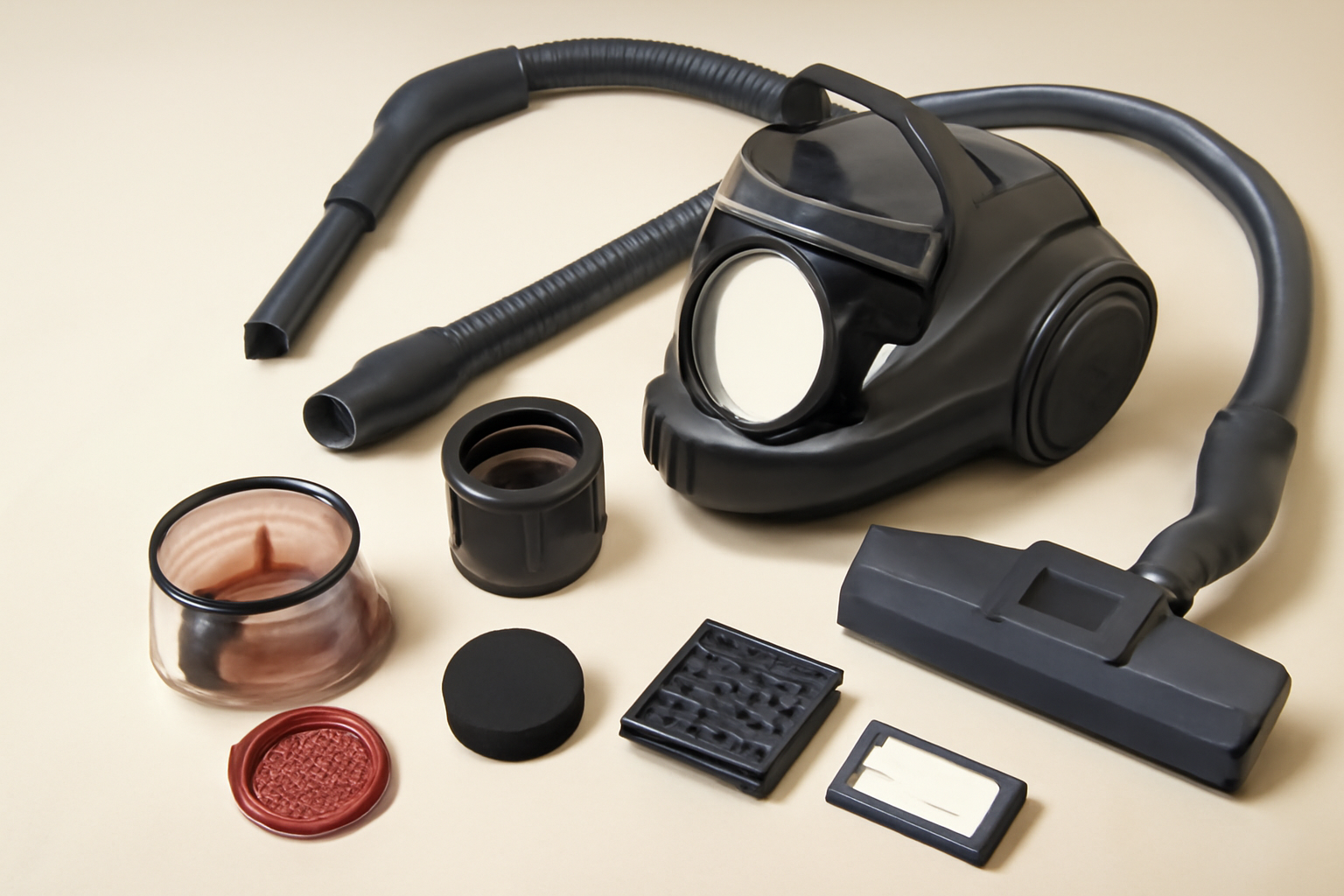
In the fast-evolving global vacuum cleaner industry, buyer expectations are shifting dramatically. Today’s importers and distributors across Europe and the Middle East no longer want a one-size-fits-all approach. They are looking for modular, serviceable, and sustainable vacuum designs that reduce maintenance costs, extend product life, and align with environmental goals.
This article explores why modularity and serviceability have become key purchasing priorities—and how vacuum manufacturers and suppliers can adapt to meet this growing demand.
1. Understanding the Global Shift Toward Modular Design
For years, the vacuum cleaner market focused mainly on suction power and aesthetics. However, with the growing demand for models like the High Suction Vacuum Cleaner and Quiet Vacuum Cleaner, global buyers now prioritize modular construction and component standardization.
Modular design enables manufacturers to replace individual parts without redesigning the entire product. This flexibility appeals to international buyers who value easy maintenance, scalability, and faster servicing cycles.
Insight: According to McKinsey’s Global Manufacturing Trends Report, companies adopting modular product architectures cut repair and maintenance costs by up to 30%.
2. Why Buyers Prioritize Serviceability
As global supply chains become more complex, the cost of post-sale service and replacement logistics has increased. Buyers now prefer serviceable vacuum systems—machines designed with easy-to-access components and replaceable modules.
For instance, a Portable Self-Cleaning Vacuum Cleaner or Multi-Functional Durable Vacuum Cleaner designed with modular compartments can simplify servicing. Instead of returning entire units for repair, only damaged parts need to be replaced, saving both time and shipping costs.
This approach also enhances long-term brand loyalty, as users appreciate brands that minimize downtime.
3. Environmental Responsibility: Reducing Waste Through Modularity
Sustainability is another powerful driver behind the modular trend. Buyers are increasingly aligning with global environmental standards and prefer suppliers who produce eco-friendly solutions like the Energy-Saving Efficient Powerful Vacuum Cleaner.
A modular structure allows recycling of specific parts instead of discarding the whole product, reducing electronic waste (e-waste). Brands embracing modularity also gain a marketing advantage by promoting sustainability.
Data Point: Statista’s Sustainability Report 2025 shows that over 65% of global consumers now prefer brands with repairable and recyclable product designs.
4. The Rise of Smart and Customizable Vacuum Solutions
Customization has become a strategic differentiator in the vacuum cleaner market. Buyers no longer just want functionality—they want smart, adaptable systems that suit different regions and use cases.
This is where modular innovation shines. Vacuum models like the 4 in 1 Cordless Smart Wet & Dry Vacuum Cleaner or Cordless Handheld Vacuum Cleaner can be tailored with interchangeable parts, adjustable motors, and removable filters, giving users flexibility for various cleaning tasks.
For manufacturers, this modularity reduces R&D complexity and accelerates product iterations without sacrificing performance.
5. Cost Efficiency and Maintenance Advantages
Maintenance-friendly design is a direct response to buyer pain points. For instance, replacing motor units or brush heads in a Large-Capacity Wet Dry Vacuum Cleaner should be quick and tool-free. Buyers expect easy disassembly, accessible wiring, and standard components that minimize downtime.
Models like the Fast Lightweight Vacuum Cleaner illustrate this principle well—simple modular construction shortens repair time and reduces labor costs.
Case Example: European retailers report a 22% drop in service requests when switching to modular cleaning systems with interchangeable parts.
6. Technology Integration: IoT and Predictive Maintenance
With smart home technology gaining ground, IoT integration is becoming a standard expectation. Modular vacuums designed with built-in sensors can self-report maintenance needs, filter status, and energy usage.
For instance, a Cordless Vacuum Cleaner equipped with predictive maintenance technology can alert users when parts like filters or batteries require replacement. These systems increase user satisfaction and reduce unexpected failures.
Reference: Harvard Business Review highlights that predictive maintenance reduces total equipment downtime by up to 50% in connected consumer appliances.
7. Design for Disassembly: The Engineering Behind Serviceability
The concept of “design for disassembly” has become a global manufacturing standard. Engineers are now prioritizing simple fasteners, modular shells, and accessible compartments to enhance repairability.
For vacuum models like the Wet Dry Vacuum Cleaners or Car Vacuum Cleaner, this approach allows efficient servicing and recycling. The result: higher customer satisfaction and lower warranty costs.
Manufacturers adopting this method gain a competitive advantage when bidding for contracts from eco-conscious buyers or large retail chains.
8. The Role of Supplier Collaboration in Modular Innovation
Suppliers play a crucial role in modular design success. Collaborative development between importers and manufacturers enables alignment on part compatibility, materials, and design philosophy.
For example, integrating a shared modular platform across multiple models—like the High Suction Vacuum Cleaner and Portable Self-Cleaning Vacuum Cleaner—streamlines supply chains and simplifies production.
Strong partnerships ensure that both sides benefit from reduced R&D duplication, consistent quality, and faster time-to-market.
9. Market Implications for Global Buyers and OEMs
The modular design trend is reshaping the buyer–supplier dynamic. OEMs that offer customizable and serviceable products are winning long-term contracts from global importers.
In competitive markets, features like quick part replacement, battery modularity, and software-based maintenance tracking are now standard. Buyers sourcing Multi-Functional Durable Vacuum Cleaner or Cordless Handheld Vacuum Cleaner models view modularity as a decisive factor for procurement.
Trend Note: Over 70% of new vacuum cleaner models launched in 2025 include at least one modular or serviceable feature.
10. How to Adapt and Lead the Change
To meet growing buyer expectations, manufacturers must embrace modular design principles across all product lines. Begin with parts standardization, adopt “design for repairability” frameworks, and integrate smart components for predictive maintenance.
Models like the Energy-Saving Efficient Powerful Vacuum Cleaner and 4 in 1 Cordless Smart Wet & Dry Vacuum Cleaner exemplify how function and flexibility can coexist.
Manufacturers that adapt early will not only win market share but also strengthen partnerships with forward-thinking distributors worldwide.
Conclusion: The Future Belongs to Serviceable Innovation
Global buyers now see modular and serviceable designs as essential, not optional. From sustainability to cost-efficiency, these features define the future of the vacuum cleaner industry.
Manufacturers who evolve—integrating modular engineering and after-sales adaptability—will set the standard for the next generation of cleaning technology.
Visit: www.lxvacuum.com
📌 50 Related Keywords
High Suction Vacuum Cleaner, Quiet Vacuum Cleaner, Portable Self-Cleaning Vacuum Cleaner, Multi-Functional Durable Vacuum Cleaner, Fast Lightweight Vacuum Cleaner, Energy-Saving Efficient Powerful Vacuum Cleaner, Large-Capacity Wet Dry Vacuum Cleaner, Cordless Handheld Vacuum Cleaner, Wet Dry Vacuum Cleaners, 4 in 1 Cordless Smart Wet & Dry Vacuum Cleaner, Cordless Vacuum Cleaner, Car Vacuum Cleaner, modular vacuum cleaner, serviceable vacuum design, vacuum cleaner maintenance, smart cleaning systems, eco-friendly vacuum innovation, cordless cleaning devices, predictive maintenance technology, modular component engineering, global vacuum supply chain, industrial vacuum manufacturing, vacuum cleaner importer, OEM vacuum supplier, after-sales service systems, eco-sustainable appliances, modular repair framework, intelligent vacuum design, industrial cleaning solutions, factory optimization, product lifecycle extension, vacuum cleaner customization, energy-efficient vacuum production, sustainable product design, B2B sourcing strategies, IoT integration in cleaning, modular battery system, repairable product structure, ergonomic vacuum construction, supply chain modularity, spare part management, maintenance-friendly design, vacuum innovation strategy, international buyer trends, and manufacturing excellence.