Hi, message us with any questions.
We're happy to help!





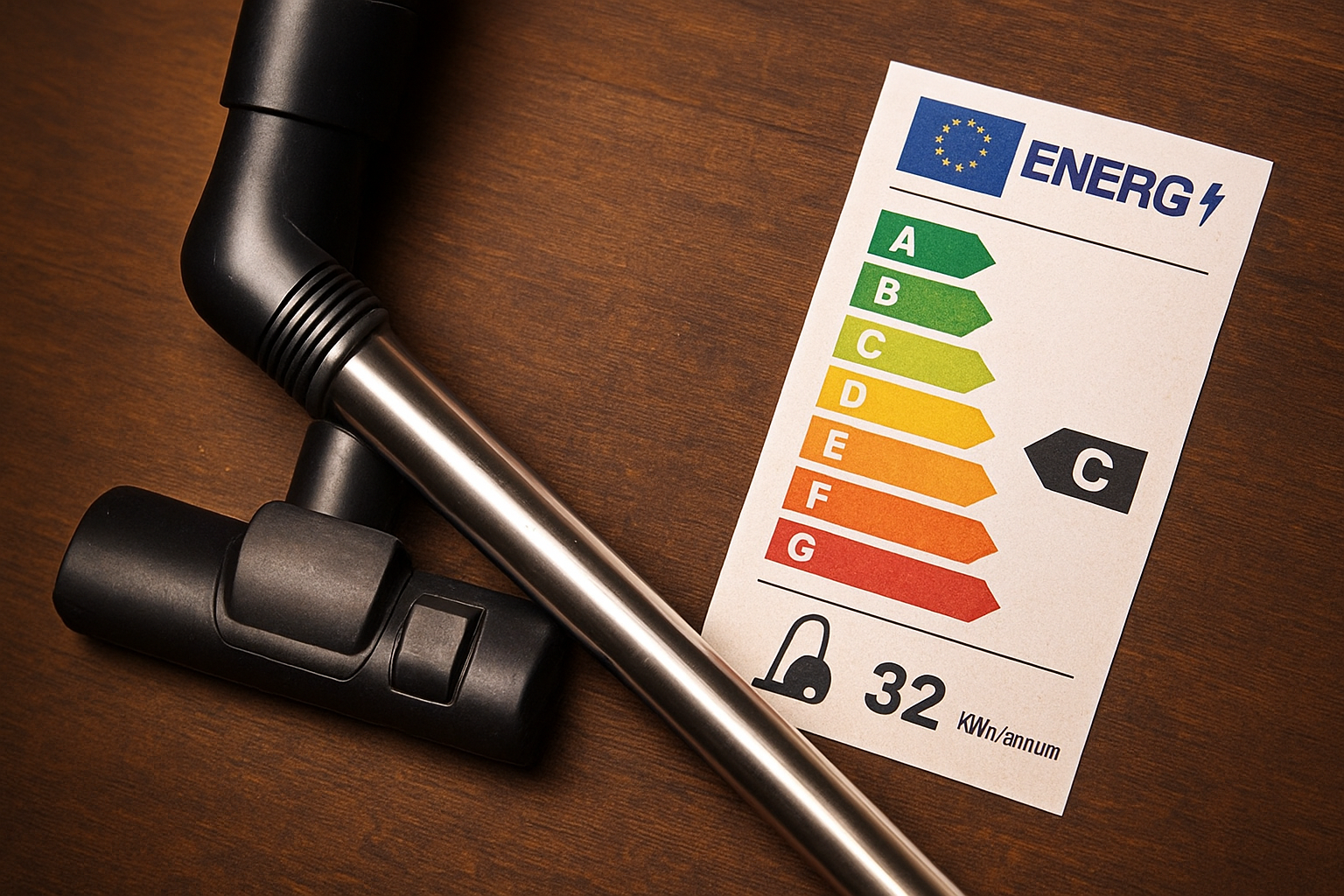
In today’s EU market, energy efficiency is no longer a marketing claim—it’s a purchasing condition. From vacuum cleaners to HVAC systems, European buyers demand proof of sustainability. This article explores how efficiency labeling now defines competitiveness, credibility, and compliance for every global manufacturer. ⚡
A quiet revolution is happening across Europe’s appliance aisles.
Where buyers once compared suction power or design, they now pause at a small, colorful label—the EU Energy Efficiency Label.
It has become the first filter in every purchase decision, the silent judge that determines whether a product even earns shelf space.
For vacuum cleaner manufacturers, this single sticker can mean the difference between market entry and rejection.
The Label That Shapes a Market
When the European Commission revised its energy label system, it wasn’t just about transparency—it was about transformation.
Suddenly, every High Suction Vacuum Cleaner, every Energy-Saving Efficient Powerful Vacuum Cleaner, had to prove its performance not through claims, but through data.
The new scale, running from A (most efficient) to G (least efficient), stripped away marketing fluff.
No more “A+++” inflation, no vague promises. Just measurable, verifiable performance.
That shift has quietly reshaped the competitive landscape.
A Cordless Handheld Vacuum Cleaner rated “B” may be more affordable, but a rival rated “A” will now win trust instantly in Berlin, Paris, or Milan.
Efficiency labels have become shorthand for engineering quality, brand credibility, and environmental responsibility—all in one glance.
Energy Labels as the New Language of Trust
European distributors don’t just buy products; they buy peace of mind.
For them, an Energy-Saving Efficient Powerful Vacuum Cleaner with an “A” label signals low warranty risk, lower returns, and higher customer satisfaction.
Retailers, too, use the label as a filter for supplier selection.
If your Wet Dry Vacuum Cleaners lack certification or fail testing, they’re simply invisible to large retail chains.
Buyers now expect manufacturers to speak this new language of energy transparency fluently—to show that every Multi-Functional Durable Vacuum Cleaner or Portable Quiet Vacuum Cleaner meets not only efficiency goals but also EU’s tightening environmental policies.
Behind the Label: Engineering Evolution
Achieving a top efficiency rating isn’t easy—it’s an engineering statement.
It means rethinking the core design: lighter materials, optimized airflow, intelligent power control.
For example:
A Self-Cleaning Vacuum Cleaner now uses sensors to adjust suction automatically, conserving energy.
A Fast Lightweight Vacuum Cleaner integrates brushless motors to deliver constant efficiency with less heat loss.
A Large-Capacity Wet Dry Vacuum Cleaner reduces standby power through smart battery management systems.
These innovations go far beyond marketing—they represent the technical frontier where performance meets responsibility.
Why the EU Cares—and Why Buyers Follow
The European Union’s energy labeling directive isn’t about bureaucracy—it’s about behavioral change.
By empowering consumers with data, the EU pushes manufacturers toward sustainability and efficiency.
Buyers across the region, from wholesalers in Germany to distributors in Spain, have internalized this logic.
They now view an unlabeled Cordless Vacuum Cleaner or Car Vacuum Cleaner as a compliance risk—a potential red flag that could invite scrutiny or regulatory delays.
In short, no label, no deal.
The label has become a passport into the European market, and compliance is the new currency of credibility.
The Ripple Effect on Global Manufacturers
Chinese and Middle Eastern suppliers who once viewed labeling as a formality are now rethinking their strategies.
Factories producing Li-ion Cordless Handheld Vacuum Cleaners and 4 in 1 Cordless Smart Wet & Dry Vacuum Cleaners are investing in motor efficiency testing labs and ERP-standard certifications.
OEM engineers are redesigning airflow channels to hit higher efficiency grades, not because of cost savings—but because buyers demand it.
It’s a domino effect:
Regulation drives standards.
Standards drive design.
Design drives market access.
Those who adapt early don’t just comply—they lead.
Sustainability as a Selling Power
For European buyers, energy efficiency labels also connect directly to ESG reporting and corporate carbon accountability.
A distributor sourcing Energy-Saving Efficient Powerful Vacuum Cleaners can now include the total energy impact of these appliances in their sustainability report—a tangible metric that strengthens their brand reputation.
Manufacturers who proactively provide label data, lifecycle assessments, and carbon reduction proof gain a serious competitive edge.
They make the buyer’s ESG job easier—and that’s priceless.
When a brand’s quiet vacuum cleaner runs efficiently, silently, and sustainably, it becomes part of the buyer’s ethical narrative, not just their inventory.
The Future: Smarter Labels, Smarter Products
Soon, energy labels will go digital.
Smart QR codes are already appearing on Cordless Handheld Vacuums and Wet Dry Vacuum Cleaners, linking directly to live efficiency data and product updates.
Imagine scanning a High Suction Vacuum Cleaner and seeing its exact energy use per square meter cleaned, or how it adapts suction power in real time.
That’s not distant—it’s the EU’s next phase of smart labeling.
And it will favor those who treat transparency not as a rule, but as a brand philosophy.
Conclusion: Labels Are the New Language of Leadership
Energy efficiency labels aren’t just stickers.
They’re the new grammar of European trade—a common language that connects engineering precision, sustainability, and market trust.
For manufacturers exporting Cordless Vacuum Cleaners, Wet Dry Vacuum Cleaners, or Multi-Functional Durable Vacuum Cleaners, the message is simple:
You don’t win EU buyers with persuasion—you win them with proof.
🌐 Learn how to align your energy efficiency strategy with EU market demands at www.lxvacuum.com.
📌 Target Readers
EU importers, distributors, and retail buyers
OEM/ODM vacuum cleaner manufacturers exporting to Europe
Product engineers and compliance specialists focused on ERP standards
📌 SEO TAG
High Suction Vacuum Cleaner, Portable Quiet Vacuum Cleaner, Self-Cleaning Vacuum Cleaner, Multi-Functional Durable Vacuum Cleaner, Fast Lightweight Vacuum Cleaner, Energy-Saving Efficient Powerful Vacuum Cleaner, Large-Capacity Wet Dry Vacuum Cleaner, Li-ion Cordless Handheld Vacuum Cleaner, Wet Dry Vacuum Cleaners, 4 in 1 Cordless Smart Wet & Dry Vacuum Cleaner, Cordless Handheld Vacuums, Cordless Vacuum Cleaner, Car Vacuum Cleaner, quiet vacuum cleaner, wet dry vacuum, EU energy label, energy efficiency class A, ERP standard vacuum cleaner, sustainable product certification, eco design directive, European market compliance, appliance energy testing, efficiency grading system, sustainable manufacturing, CE certification, product compliance EU, energy consumption optimization, vacuum motor efficiency, smart energy label, low power consumption vacuum, European retail buyers, eco-friendly household appliance, ESG in manufacturing, vacuum energy rating, EU appliance labeling, carbon footprint reduction, intelligent cleaning technology, sustainable innovation, energy reporting, EU import regulations, green product certification, ERP directive compliance, energy saving appliances, consumer transparency, B2B energy efficiency, regulatory labeling system, efficiency-driven design