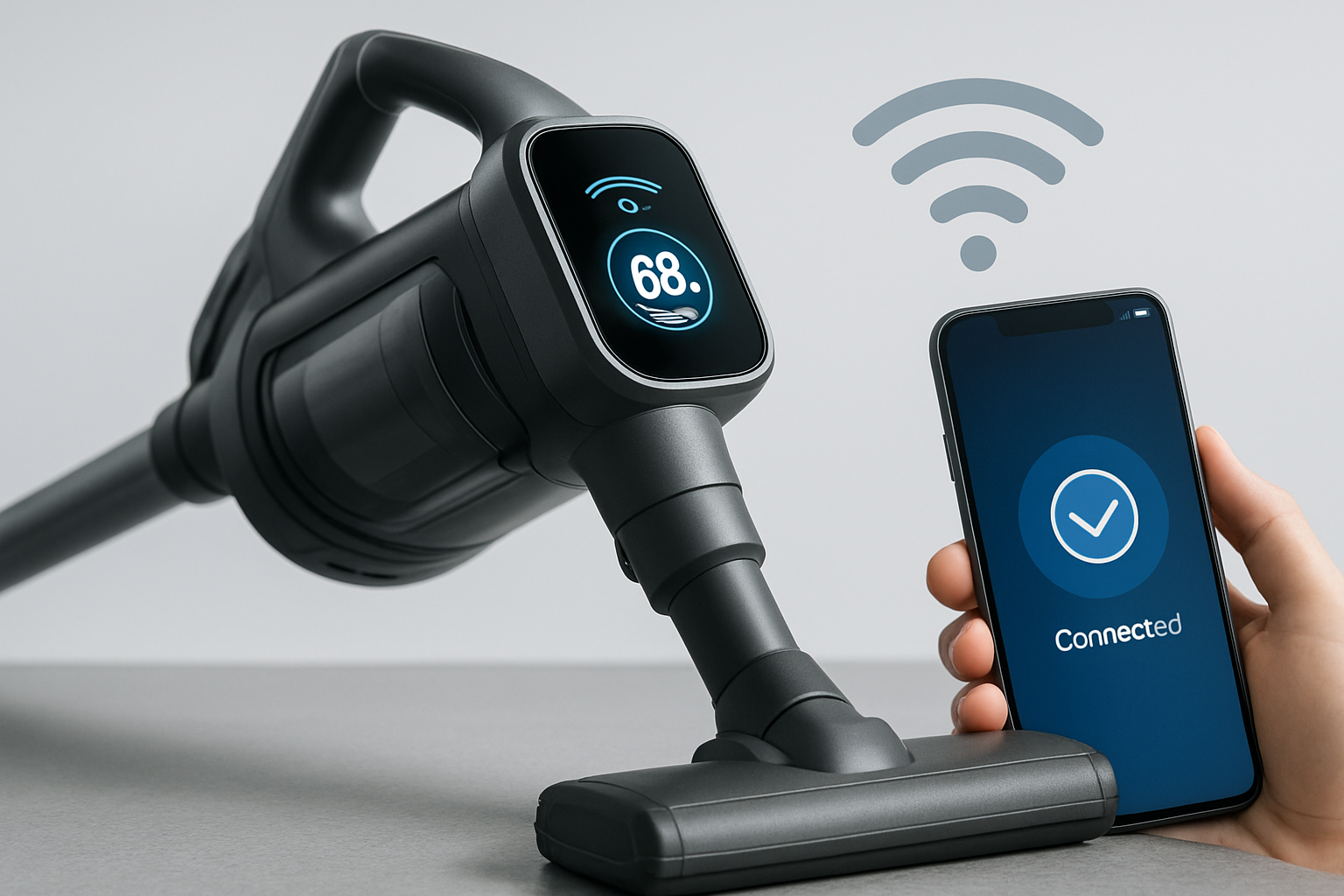
The vacuum industry has long been measured by physical innovation: more suction, longer battery life, lighter designs. But the real revolution isn't happening inside the hardware—it’s happening around it. For commercial vacuum enterprises, especially in regions like North America, Europe, and the Middle East, the next decade will be defined by how well companies can turn raw product usage into actionable service intelligence.
This is especially true for vacuum engineers, designers, and R&D leaders, who now play a pivotal role in shifting the brand’s competitive edge from hardware specs to smart servicing ecosystems.
1. From Product-Centric to Data-Centric
Innovation is no longer about a better High Suction Vacuum Cleaner, it’s about how that product behaves in a networked, real-time service model. Companies that offer insights into device usage, battery cycles, and wear patterns have a significant edge.
Data from Cordless Handheld Vacuum Cleaner fleets used in retail chains, or Large-Capacity Wet Dry Vacuum Cleaner units deployed in industrial sites, can signal when maintenance is needed before breakdowns occur.
Read: Bosch IoT Insights for Industrial Equipment Monitoring
2. Predictive Maintenance as the New USP
Service engineers used to wait for a call when a Quiet Vacuum Cleaner failed. Now, with embedded sensors and IoT dashboards, alerts are pushed automatically based on thresholds. This reduces downtime and saves both suppliers and clients thousands.
Engineers who help implement these smart systems—especially across Wet Dry Vacuum Cleaners or Portable Self-Cleaning Vacuum Cleaner deployments—are turning into strategic value creators, not just product builders.
Explore: Siemens Predictive Services Use Case for Smart Maintenance
3. Firmware, Not Form Factor
Form matters—but firmware now defines competitive speed. Firmware updates allow brands to enhance functionality post-sale. Want to add a quieter mode to your 4 in 1 Cordless Smart Wet & Dry Vacuum Cleaner? That’s a downloadable patch, not a new model.
Engineering teams who master OTA (over-the-air) updates unlock new value while reducing product obsolescence.
4. Closing the Feedback Loop
Usage data should flow into the engineering and R&D process. If a Fast Lightweight Vacuum Cleaner is consistently used at only 70% capacity in office environments, engineers can optimize the power curve for battery longevity.
If a Car Vacuum Cleaner shows overheating in hotter regions, firmware-based fan recalibration may fix it. Engineers who connect customer data with product design cycles reduce cost and boost satisfaction.
Read: IBM IoT and Design Thinking in Product Lifecycle Management
5. From Ownership to Lifecycle Experience
Data-driven servicing also opens up recurring revenue. Instead of one-time sales, companies offer uptime guarantees, usage reports, and tiered support. The Cordless Vacuum Cleaner is now part of a long-term contract, not just a shipment.
Engineers must architect devices for traceability, modularity, and diagnostics—not just efficiency.
www.lxvacuum.com
📌 SEO TAG
Data-driven vacuum service, Smart vacuum maintenance, Predictive vacuum repair, IoT vacuum systems, Vacuum firmware updates, Vacuum lifecycle management, Remote vacuum diagnostics, Vacuum usage analytics, Connected cleaning devices, Vacuum fault prediction, Vacuum performance data, Vacuum service automation, Vacuum OTA updates, B2B vacuum engineering, R&D-driven vacuum design, Smart cleaning data, Vacuum sensor technology, Intelligent vacuum feedback, Commercial vacuum monitoring, Vacuum downtime reduction, Cloud-based vacuum tools, Vacuum usage reporting, Maintenance-first vacuum model, Proactive vacuum servicing, Predictive cleaning technology, Engineering-led vacuum strategy, Modular vacuum development, Smart servicing vacuum trend, Smart vacuum lifecycle, Tech-enabled vacuum platform, Feedback loop in vacuum design, Real-time vacuum analytics, Industrial vacuum IoT, Cleaning data strategy, Vacuum telemetry systems, Continuous vacuum improvement, Vacuum software innovation, Smart vacuum firmware, Vacuum engineering insights, Cleaning tech future, Smart equipment servicing, Vacuum OTA optimization, Vacuum diagnostics platform, AI-powered vacuum support, Predictive analytics for cleaning, Data-first vacuum innovation, Vacuum-as-a-service, Smart cleaning lifecycle, Vacuum service intelligence, Sustainable vacuum technology