Hi, message us with any questions.
We're happy to help!





For decades, vacuum cleaner manufacturers scaled by doing one thing well: mass production.
Volume was power. Efficiency was everything.
But in 2025, flexibility has become the new competitive edge.
As global distributors face diversified consumers—from pet owners in Europe to industrial users in the Middle East—they no longer want generic models.
They want customizable systems—vacuum cleaners that adapt to market needs, not the other way around.
Customization and modularity are no longer product features; they are deal-makers.
And the OEMs who master them are rewriting how B2B contracts are won, priced, and sustained.
1️⃣ The End of One-Size-Fits-All
In the old model, a manufacturer designed a single vacuum for all markets.
Distributors had to adapt their sales story to fit that template.
Now, global buyers are flipping the table.
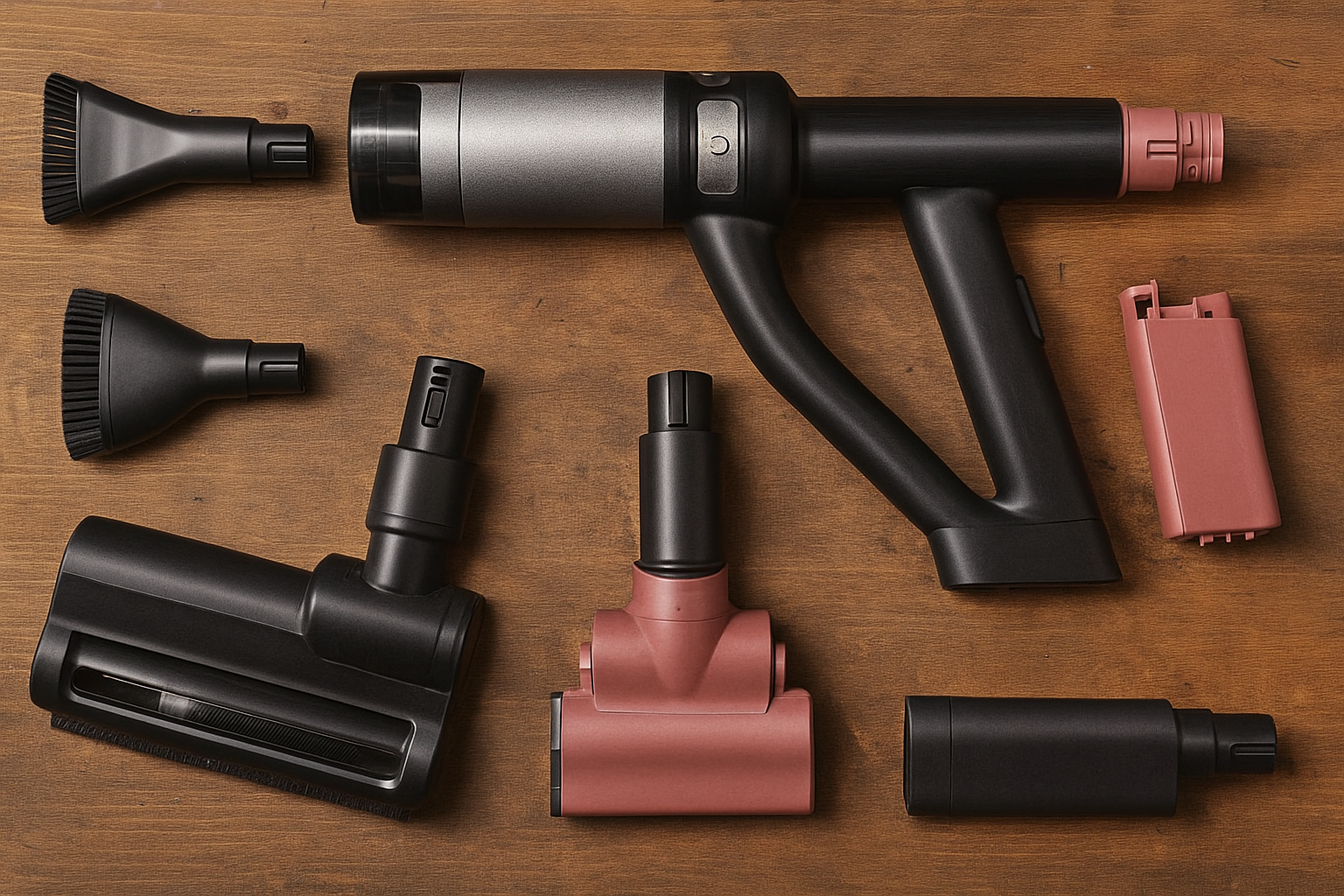
They expect manufacturers to deliver platforms they can localize themselves—choosing suction modules, dust-bin sizes, or interchangeable cleaning heads for different users.
A hotel chain in Riyadh wants quiet, long-running Portable Quiet Vacuum Cleaners or Quiet Vacuum for Night Use models.
A car-detailing client in Germany needs Large-Capacity Wet Dry Vacuum Cleaners or specialized Car Vacuum Cleaners with flexible hoses and compact nozzles.
A home appliance distributor in Tokyo prefers compact Fast Lightweight Vacuum Cleaners for small apartments.
The smarter your system, the larger your market fit.
2️⃣ How Modularity Changes the Economics
Traditional vacuum design locks cost and complexity into every variant.
Each new feature requires a separate mold, motor, and part inventory.
Modularity breaks that cycle.
By designing Multi-Functional Durable Vacuum Cleaners around shared core components—motors, power boards, housing shells—manufacturers can:
Cut tooling costs by up to 30%.
Reduce R&D duplication across models.
Scale innovation faster without full redesigns.
A modular Cordless Vacuum Cleaner system can share 70% of its parts across ten SKUs—each tailored to different markets.
In a volatile world of fluctuating demand and raw material costs, modularity equals agility.
3️⃣ Customization as a Trust Signal in B2B
B2B buyers no longer measure suppliers only by price—they measure by partnership adaptability.
When you offer tailored configurations—like interchangeable swappable brush heads for carpets, tiles, or pet hair—you demonstrate deep understanding of customer use cases.
A distributor who feels “heard” becomes loyal.
Customization shows empathy—and empathy drives trust.
In an industry where switching suppliers can take six months, flexibility becomes a retention weapon.
4️⃣ From Product to Platform: The New OEM Mindset
Manufacturers must shift their thinking:
Stop selling products. Start building platforms.
Imagine designing a Li-ion Cordless Handheld Vacuum Cleaner system where batteries, handles, and cleaning attachments are modular units.
You sell the base system; distributors or B2B clients choose components suited to their market—such as pet-hair roller brushes, HEPA Filter Vacuum Cleaners, or high-power motors for Car Vacuum Cleaners.
This approach mirrors the smartphone industry’s success: one architecture, infinite applications.
Each client feels they own a unique model—without the factory having to reinvent production.
That’s not just good engineering.
That’s strategic scalability.
5️⃣ Why Modular Design Is a B2B Negotiation Superpower
Customization changes the entire negotiation dynamic.
When you can modify your Self-Cleaning Vacuum Cleaner or Wet Dry Vacuum Cleaners quickly—adjusting suction strength, battery voltage, or dust bin capacity—you move from supplier to solution provider.
Buyers no longer bargain only for discounts; they bargain for differentiation.
You can price premium configurations higher, justify MOQ flexibility, and secure longer contracts through exclusivity.
Customization doesn’t reduce price pressure—it transforms it into value pressure.
6️⃣ Case Study: Winning with Modular Thinking
A Chinese OEM specializing in Energy-Saving Efficient Powerful Vacuum Cleaners faced declining EU orders due to market saturation.
Instead of launching new products, they modularized their best-seller:
Added swappable motor heads (standard and turbo).
Offered two dust-bin sizes for compact and industrial clients.
Created interchangeable battery modules for different power grids.
Within six months, three new distributors signed regional exclusivity agreements.
Same product. New platform. Higher margins.
Modularity didn’t just extend product life—it extended partnership lifespan.
7️⃣ The Role of Smart Engineering
Modularity isn’t just aesthetics—it’s smart engineering.
Plug-and-play components reduce downtime during repairs.
IoT compatibility allows each 4 in 1 Cordless Smart Wet & Dry Vacuum Cleaner to recognize which module it’s using and optimize performance accordingly.
Battery modularity supports energy localization—swapping between EU 220V and GCC 240V setups without redesigning the circuit.
Smart modularity bridges design and logistics, blending flexibility with control.
8️⃣ How Customization Boosts Brand Differentiation
Every vacuum looks similar on the shelf—until buyers understand your flexibility.
Offer exclusive colorways for regional partners.
Customize logos, handle shapes, or firmware messages in Cordless Handheld Vacuums.
Create dedicated editions like Vacuum Cleaner for Pet Hair with animal dander filters or Quiet Vacuum for Night Use for hospitality sectors.
When you co-create, you create belonging.
And belonging is the most powerful B2B emotion of all.
9️⃣ The Sustainability Advantage
Modularity and sustainability go hand in hand.
A Multi-Functional Durable Vacuum Cleaner with replaceable modules lasts longer, produces less waste, and aligns with ESG reporting standards.
Buyers seeking green certifications now favor suppliers whose vacuums are repairable, upgradable, and recyclable.
Offering modular HEPA Filter Vacuum Cleaner units or detachable battery packs not only extends product life—it reinforces your commitment to the circular economy.
You don’t just sell cleaner homes.
You sell a cleaner supply chain.
10️⃣ The Future: Configurable Commerce
The next era of B2B e-commerce won’t list fixed SKUs.
It will offer configurators—digital tools where buyers can assemble their perfect vacuum cleaner from modular components.
Imagine a distributor in Europe selecting:
Base model: Fast Lightweight Vacuum Cleaner
Motor: 600W brushless
Filter: HEPA Filter Vacuum Cleaner type
Battery: 2500mAh Li-ion module
Attachment pack: car, pet, floor
Instant pricing. Instant differentiation. Instant trust.
Customization will become the language of commerce.
11️⃣ Internal Readiness: Changing Factory Culture
Modular strategy isn’t just about design—it’s about mindset.
Factories must reorganize workflows for agility, not rigidity:
Train engineers to design shared architecture across product families.
Integrate data-driven BOM (bill of materials) systems for real-time configuration.
Align marketing and production teams to promote flexibility as a selling point.
The most future-proof vacuum factories won’t be the biggest.
They’ll be the most adaptable.
Conclusion: Flexibility Is the New Scale
Customization and modularity are reshaping how B2B buyers define value.
A High Suction Vacuum Cleaner is impressive.
A modular one that adapts to a client’s brand, region, or use case is unforgettable.
The age of mass production built global factories.
The age of modular production will build global relationships.
Because in the next decade, the best vacuum brands won’t just clean floors—they’ll clean up in every market they adapt to.
Visit www.lxvacuum.com to explore modular OEM solutions and customizable design platforms for global vacuum cleaner partnerships.



