Hi, message us with any questions.
We're happy to help!





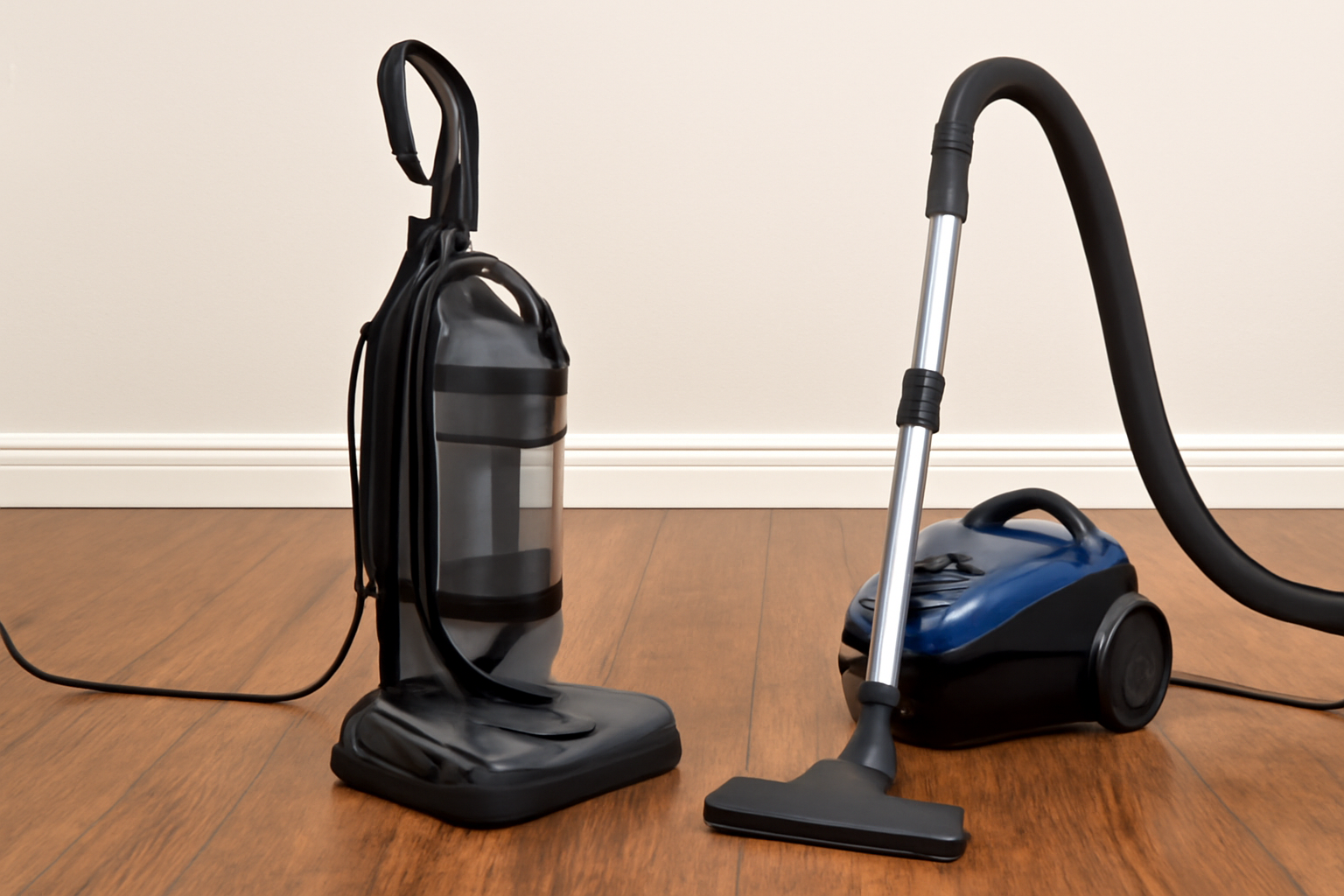
A Comprehensive Guide for Vacuum Cleaner Distributors and Procurement Buyers in Europe and the Middle East
🌍 Introduction: Beyond Design — Why the Type of Vacuum Matters for B2B Buyers
In the competitive world of vacuums procurement and distribution, understanding product functionality is only half the story. The real value lies in knowing which type of vacuum aligns best with your target customer segment. While residential consumers debate between upright and canister vacuums based on convenience, B2B distributors must evaluate deeper — performance, adaptability, maintenance, and market compatibility.
The global vacuum cleaner market is evolving fast. Cordless systems, smart sensors, and eco-efficient motors are redefining product categories. Yet, the Upright vs. Canister comparison remains the foundation of every distributor’s portfolio decision.
In this guide, we’ll examine not just which is “better,” but which is smarter to procure, based on product lifecycle, customer expectations, and distribution strategies for 2025.
(Keywords naturally included: vacuums procurement / vacuum cleaner distribution / Cordless Vacuum Cleaner)
🧲 1. Understanding the Two Systems
Before making procurement or OEM decisions, it’s vital to understand the core engineering differences between upright and canister vacuums.
⚙️ Upright Vacuums
These are “all-in-one” models — the motor, brush, and dust container are integrated into a single vertical body. They’re widely used in the U.S. and Middle Eastern households due to their simplicity and quick-use design.
Core traits:
Integrated motor and suction unit.
Brush roller powered directly by the motor.
Easier to store and maneuver on carpets.
💼 Canister Vacuums
Canister models separate the motor and dust unit from the cleaning head, connected by a hose. Popular in Europe, they offer higher flexibility for multiple surface types — including hardwood, tile, and upholstery.
Core traits:
Remote motor unit with lightweight cleaning head.
Typically quieter, with better airflow efficiency.
Suitable for delicate surfaces and larger cleaning zones.
For procurement teams, these structural differences determine how the product fits regional user behavior — upright vacuums dominate in North America and the Middle East, while canister models lead in Europe and Asia.
🧠 2. Performance Comparison: Power, Precision & User Experience
When distributors evaluate performance specs for procurement or brand selection, the following parameters are critical:
| Feature | Upright Vacuum | Canister Vacuum |
|---|---|---|
| Suction Power | Typically stronger (due to direct motor contact). | Slightly lower but more consistent airflow. |
| Noise Level | Louder (60–80 dB typical). | Quieter operation (50–65 dB). |
| Mobility | Easy on carpets, limited under furniture. | Excellent reach and flexibility. |
| Weight | Heavier; entire unit moves as one. | Lighter wand for easier handling. |
| Maintenance | Easier access to brush & dust cup. | Requires hose cleaning and part assembly. |
| Storage | Compact design, vertical storage. | Bulkier; needs floor space. |
For distributors, this table is not merely academic — it guides product segmentation. Upright vacuums should be stocked for regions prioritizing deep-cleaning carpets and faster operation. Canister vacuums are better positioned for eco-conscious or multi-surface households.
🧩 3. Cost Efficiency and Lifecycle Management
A major procurement insight: the cheaper product isn’t always more profitable. Lifecycle cost (repair rate, spare parts, logistics, and customer service) defines your long-term ROI.
💰 Upright Vacuums
Lower initial cost and simpler packaging.
Higher wear on brushes and belts — more replacement parts required.
Ideal for high-volume retail distribution (e.g., supermarkets, e-commerce).
🔧 Canister Vacuums
Slightly higher manufacturing cost but longer product life.
Fewer moving belts or direct drive parts.
Best suited for distributors focusing on premium or commercial-grade products.
In short: Upright = high turnover; Canister = long-term margin stability.
🌬️ 4. Technology Integration: From Corded to Cordless
No analysis in 2025 is complete without discussing the Cordless Vacuum Cleaner revolution. Both upright and canister formats are evolving with wireless innovations — shifting market expectations and procurement models.
Cordless Upright Vacuums: Compact, fast-charging, and ideal for smaller living spaces.
Cordless Canister Vacuums: Newer but gaining traction, offering better mobility and storage convenience.
For distributors, cordless adoption means higher per-unit value and a chance to reposition inventory as “smart cleaning systems” rather than just appliances.
🌱 5. Energy Efficiency, Filtration, and Sustainability
Distributors targeting Europe and the GCC (Gulf Cooperation Council) regions must align with tightening environmental standards.
Procurement priorities:
HEPA filter systems for allergy prevention.
Energy-efficient motors with EU-grade certification.
Noise reduction for high-end urban projects.
Recyclable plastic housings for sustainability compliance.
Buyers increasingly value green manufacturing credentials. Partnering with eco-certified suppliers not only improves market image but also unlocks procurement incentives in EU and Middle Eastern contracts.
💡 6. Regional Demand Insights: Europe vs. Middle East
🇪🇺 Europe
Strong demand for canister vacuums due to multi-surface homes.
Preference for low-noise, energy-efficient designs.
Retailers emphasize long-term reliability and serviceability.
🇸🇦 Middle East
Upright vacuums preferred for high-dust and carpet-heavy environments.
Cordless systems trending due to rapid lifestyle modernization.
Buyers appreciate models resistant to heat, sand, and frequent use.
Understanding these nuances allows distributors to structure inventory intelligently and tailor marketing strategies accordingly.
🏭 7. OEM Considerations for Procurement Managers
For companies sourcing from OEM factories, evaluating vacuum cleaner distribution partners requires strategic diligence. Key evaluation points include:
Proven experience in multi-type production (upright, canister, cordless).
Certifications (CE, CB, ISO9001, and GCC conformity).
Customization speed and MOQ flexibility.
Spare parts availability and warranty terms.
Top-performing distributors establish long-term OEM collaborations that provide technical differentiation, such as interchangeable brush heads, dual filtration modules, and modular battery packs.
🔬 8. Innovations That Are Changing the Market
The vacuum industry is moving beyond traditional mechanics toward smart, automated cleaning. Procurement teams should track the following technologies:
AI-driven suction control: Automatically adjusts suction pressure based on surface type.
Self-cleaning dust bins: Reduces user maintenance and downtime.
Integrated wet-dry function: Enables full-surface adaptability for hybrid households.
Compact lithium battery systems: Extending cordless runtime beyond 60 minutes.
The next-generation vacuum isn’t defined by form (upright or canister), but by how smartly it interacts with surfaces and users.
🔍 9. Which Is Better for Distributors? (Strategic Answer)
The answer depends on your target market and distribution model.
| Distributor Type | Recommended Product Focus | Reason |
|---|---|---|
| Retail Chain | Upright Vacuums | Fast-moving, low training need, easy shelf display. |
| Specialty Dealer | Canister Vacuums | Higher ticket value, easier upselling. |
| Online Distributor | Cordless Upright | High shipping efficiency, consumer trend-driven. |
| Institutional Supplier | Commercial Canister | Longer service life and durability. |
Thus, the question is not “Which one is better?” — but “Which one fits your business ecosystem?”.
🧭 10. Final Takeaway: Redefining Procurement Intelligence
For B2B procurement professionals, mastering product differentiation translates directly to market dominance.
Upright vacuums offer volume sales and fast ROI.
Canister vacuums deliver quality, retention, and brand credibility.
As consumer expectations shift toward intelligent, cordless, and sustainable designs, distributors who adapt early will secure higher margins and long-term contracts.
The most successful procurement strategy of 2025 isn’t choosing sides — it’s balancing innovation, region-specific demand, and lifecycle cost.
🏷️ Hashtags
#vacuumsprocurement #vacuumcleanerdistribution #CordlessVacuumCleaner #HEPAFilterVacuumCleaner #WetandDryVacuumCleaner #Lanxstar #UprightVacuum #CanisterVacuum #B2BDistribution #CleaningTechnology #EcoVacuum #SmartVacuum #QuietVacuumCleaner #VacuumInnovation #ProcurementInsights #MiddleEastDistribution #EuropeanMarket #VacuumTrends2025 #HomeCleaningSolutions #CommercialVacuum #OEMVacuumFactory #VacuumSupplier #DistributorsChoice #HighSuctionVacuum #LowNoiseVacuum #CordlessTechnology #EnergyEfficientVacuum #VacuumComponents #ProductComparison #HomeAppliances #VacuumProcurementGuide #FloorCareSolutions #VacuumIndustry #VacuumDesign #SuctionControl #HEPASystem #CleaningEquipment #SmartHomeCleaning #VacuumPartsSupply #VacuumPerformance #PremiumVacuum #IndustrialVacuum #EcoDesign #VacuumInnovationHub #LanxstarTechnology #SustainableManufacturing #VacuumProcurement #GlobalDistribution #ProductLifecycle #SmartCleaningSolutions



