Hi, message us with any questions.
We're happy to help!





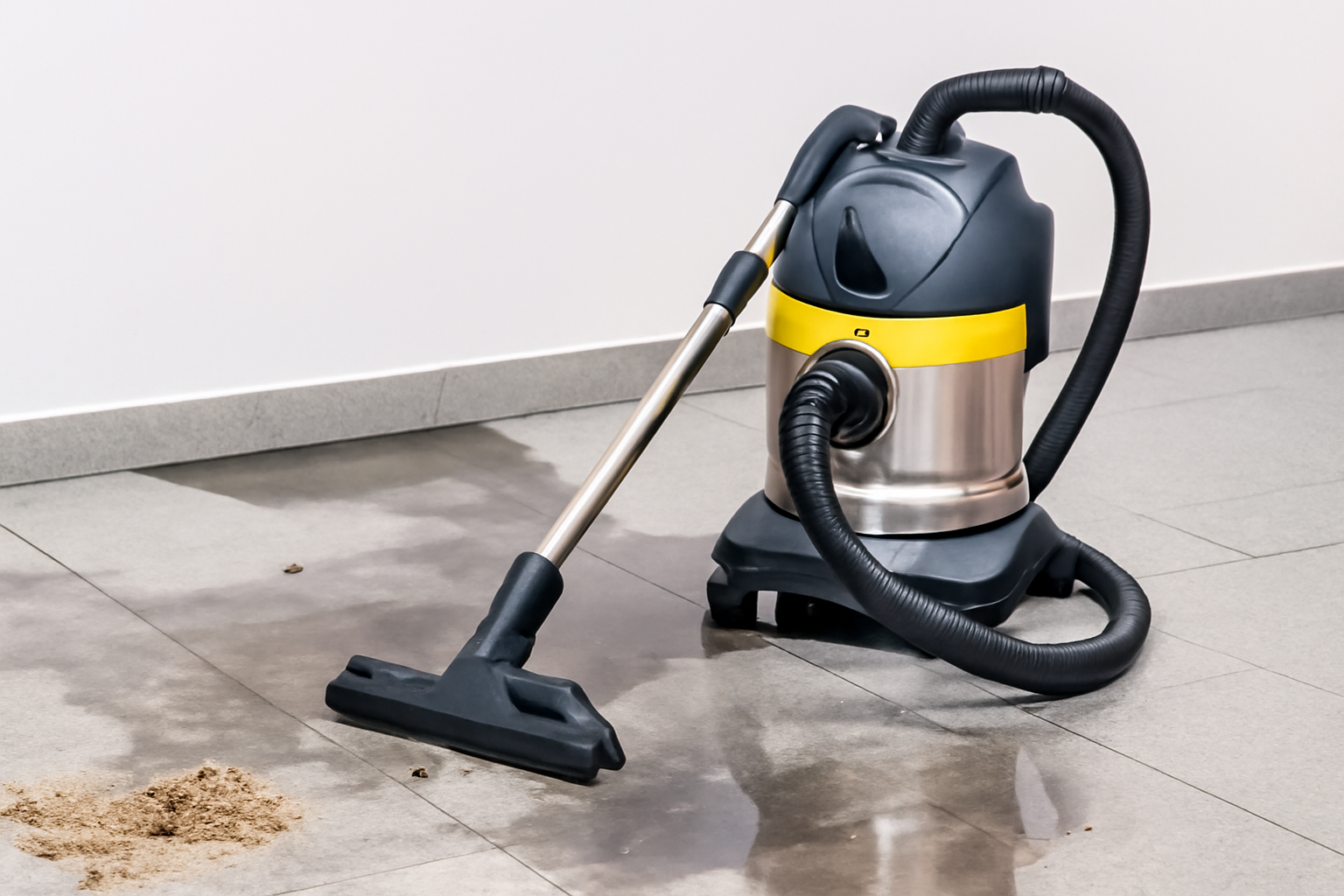
👏 👇The Benefits of Wet and Dry Vacuum Cleaners: Engineering Versatility for Modern Cleaning Needs
🌍 Introduction: Why Hybrid Cleaning Technology Is the Future
In the evolving landscape of vacuums procurement, one category is quickly redefining cleaning versatility — the wet and dry vacuum cleaner. Once viewed as a niche industrial tool, it’s now the centerpiece of innovation across commercial, residential, and automotive cleaning applications.
For engineers and procurement specialists, this transformation is not just about adding functionality; it’s about solving fundamental user challenges: efficiency, durability, and adaptability. As cleaning environments become more diverse, the line between liquid and dry waste is disappearing — and Large-Capacity Wet Dry Vacuum Cleaner designs are leading that evolution.
This article explores the engineering logic, performance benefits, and market opportunities behind wet and dry vacuum systems — from suction physics to filtration design — offering insights that go beyond the typical product brochure.
💧 1. Dual-Mode Cleaning: Why It’s More Than Convenience
At its core, a wet and dry vacuum operates on the principle of sealed airflow management. Unlike conventional vacuums that rely on paper filters and bag systems, wet/dry units incorporate liquid separators and robust filtration stages that safely manage water, dust, and debris simultaneously.
For engineers, this means a more complex airflow system with adjustable intake pathways — one optimized for dry suction, the other for wet waste. The ability to clean up spilled liquids and fine dust without switching equipment translates into time savings and operational efficiency.
From a design perspective, achieving this dual performance requires specialized motor protection, corrosion-resistant materials, and intelligent sealing systems — a challenge that defines modern vacuum R&D.
⚙️ 2. Engineering Durability: Building for Tough Environments
A key technical advantage of wet and dry vacuums lies in their structural resilience. Most industrial-grade models utilize polymer-composite tanks or stainless-steel chambers resistant to rust, deformation, and chemical corrosion.
In engineering terms, the design must endure:
High suction pressure differentials (up to 20–25 kPa).
Liquid backflow and condensation.
Continuous operation under heavy load cycles.
Motors are isolated within thermal-protected compartments, and air channels are engineered with hydrophobic filters that prevent moisture intrusion. For long-term R&D planning, this durability translates to lower component fatigue and extended service life — major priorities for both manufacturers and buyers in vacuum cleaner distribution.
⚡ 3. Performance Power: Why Wet/Dry Units Outperform Conventional Vacuums
A Large-Capacity Wet Dry Vacuum Cleaner typically delivers superior air watt output compared to regular domestic units. That’s because wet/dry models use bypass-cooled motors, where intake air bypasses the motor chamber, maintaining performance consistency even in moisture-heavy conditions.
This design prevents overheating and allows continuous operation for extended cleaning cycles — crucial for commercial and workshop environments.
Furthermore, advanced wet/dry units now integrate variable-speed control systems, enabling operators to adapt suction levels for liquid or particulate cleaning. Combined with wider hoses and larger tanks, this results in both higher throughput and lower downtime between disposal cycles.
🔋 4. Mobility and Cordless Integration
The rise of cordless design trends has also reshaped expectations for hybrid vacuum systems. The Cordless Handheld Vacuum Cleaner complements industrial wet/dry units by handling spot cleaning and quick interventions.
Modern R&D teams are focusing on lithium-ion modular battery systems that support both portable handheld and stationary wet/dry models. This modularity allows maintenance staff or commercial cleaners to seamlessly switch between power configurations.
For procurement specialists, such cross-compatible systems reduce logistical complexity — one charging infrastructure supports multiple devices.
🧠 5. Filtration Innovation: Protecting the Motor and the User
Filtration is the engineering heart of any vacuum cleaner — and for wet/dry models, it’s a balancing act between airflow efficiency and liquid resistance.
Traditional HEPA filters risk clogging or swelling when exposed to moisture, so modern systems employ dual-stage filters:
A cyclonic separator that extracts heavier debris and liquid droplets.
A HEPA-grade dry filter positioned downstream to trap micro-particles.
This approach not only protects the motor but also maintains steady suction performance over time. When combined with anti-bacterial or carbon-treated filters, it also enhances indoor air quality — an increasing priority in industrial and public facilities.
🧪 6. Testing and Reliability Validation
In high-end R&D environments, wet/dry vacuum testing involves rigorous multi-scenario endurance testing. Engineers simulate both residential and industrial conditions:
Continuous suction testing for over 500 operational hours.
Drop testing at varied tank loads (wet vs. dry).
Moisture resistance and insulation validation under humid climates.
Thermal cycling tests to assess seal deformation.
The data collected informs motor calibration and tank geometry optimization. These validation procedures have become industry best practices, ensuring that new-generation wet/dry models can handle complex cleaning environments without failure.
🌱 7. Energy Efficiency and Sustainability
Sustainability is now an engineering KPI. The latest wet/dry vacuum systems incorporate high-efficiency motors and optimized air pathways to achieve stronger suction with lower wattage.
Some manufacturers have successfully reduced energy consumption by up to 30% through precision fan balancing and aerodynamic redesign. The result: an energy-efficient, eco-conscious vacuum that performs better while complying with modern environmental standards.
Water recovery systems and washable filters further minimize waste, aligning with green manufacturing and recycling initiatives.
🧰 8. Application Versatility: From Workshops to Smart Homes
The market for wet/dry vacuums extends far beyond garages and factories. Their growing adoption across hospitality, healthcare, and smart home sectors highlights the importance of multi-surface adaptability.
Key application areas include:
Automotive detailing: For removing oil, mud, and fine dust.
Construction sites: Collecting slurry, sawdust, and heavy debris.
Hotels and public facilities: Rapid cleanup of spills and floor maintenance.
Smart homes: Integration with cleaning robots and IoT sensors for fluid spill detection.
Modern product development now aims to bridge industrial power with consumer-grade design — compact, quiet, and stylish models that deliver professional performance in domestic settings.
🧩 9. Commercial and Procurement Advantages
For commercial buyers, wet and dry vacuum systems offer an ROI advantage that’s easy to calculate: one device replaces multiple cleaning machines.
Fewer devices mean:
Lower maintenance cost.
Simplified training for operators.
Reduced inventory management.
Faster turnaround for cleaning cycles.
From a vacuums procurement perspective, the dual-function model allows companies to streamline supply chains and reduce redundancy in product portfolios. This efficiency directly impacts profitability in professional cleaning contracts.
🔧 10. Challenges and Engineering Opportunities Ahead
Despite their versatility, wet/dry vacuums present design challenges — notably in maintaining consistent suction during liquid pickup and in preventing bacterial growth within tanks.
Emerging R&D focuses include:
Nano-coated interior tanks to resist microbial buildup.
Self-drying systems using residual heat from motors.
Smart sensors that detect fill levels and automatically shut off suction to prevent overflow.
AI-driven suction optimization that adapts airflow based on material density.
These developments point toward a future where wet/dry systems are not just tools, but intelligent cleaning platforms capable of self-maintenance and predictive diagnostics.
🧭 Conclusion: The Hybrid Vacuum as the New Standard
For R&D engineers and procurement experts, the Wet and Dry Vacuum Cleaner represents more than a product — it’s an evolution of design thinking. It combines mechanical precision, environmental awareness, and user-centered innovation.
By merging dry cleaning power with liquid handling flexibility, these machines solve diverse challenges across industries. And with advances in cordless design, energy efficiency, and intelligent filtration, the next generation of vacuums is set to become smarter, stronger, and more sustainable.
As brands like Lanxstar demonstrate, success in the hybrid vacuum market comes not from adding more features, but from engineering simplicity that delivers complex performance.
🔖 Hashtags
#vacuumsprocurement #vacuumcleanerdistribution #LargeCapacityWetDryVacuumCleaner #CordlessHandheldVacuumCleaner #HEPAFilterVacuumCleaner #WetandDryVacuumCleaner #Lanxstar #VacuumTechnology #IndustrialVacuum #CommercialVacuum #SmartVacuum #CordlessVacuum #RobotVacuum #VacuumInnovation #VacuumFiltration #EnergyEfficiency #AirflowOptimization #NoiseReduction #EcoVacuum #SustainableDesign #VacuumTesting #QualityControl #VacuumEngineering #RDEngineering #ProductDevelopment #VacuumDesign #SmartCleaning #CleaningEquipment #VacuumAccessories #VacuumMarket #HomeAppliances #DurableVacuum #VacuumPerformance #ProductValidation #BatteryTechnology #AutomationInCleaning #VacuumParts #VacuumSupplier #IndustrialDesign #AirPurification #DustControl #FiltrationSystem #VacuumSafety #MaterialScience #VacuumDurability #VacuumMotor #InnovationLab #VacuumFuture #B2BCleaning #VacuumRDM 🧾



