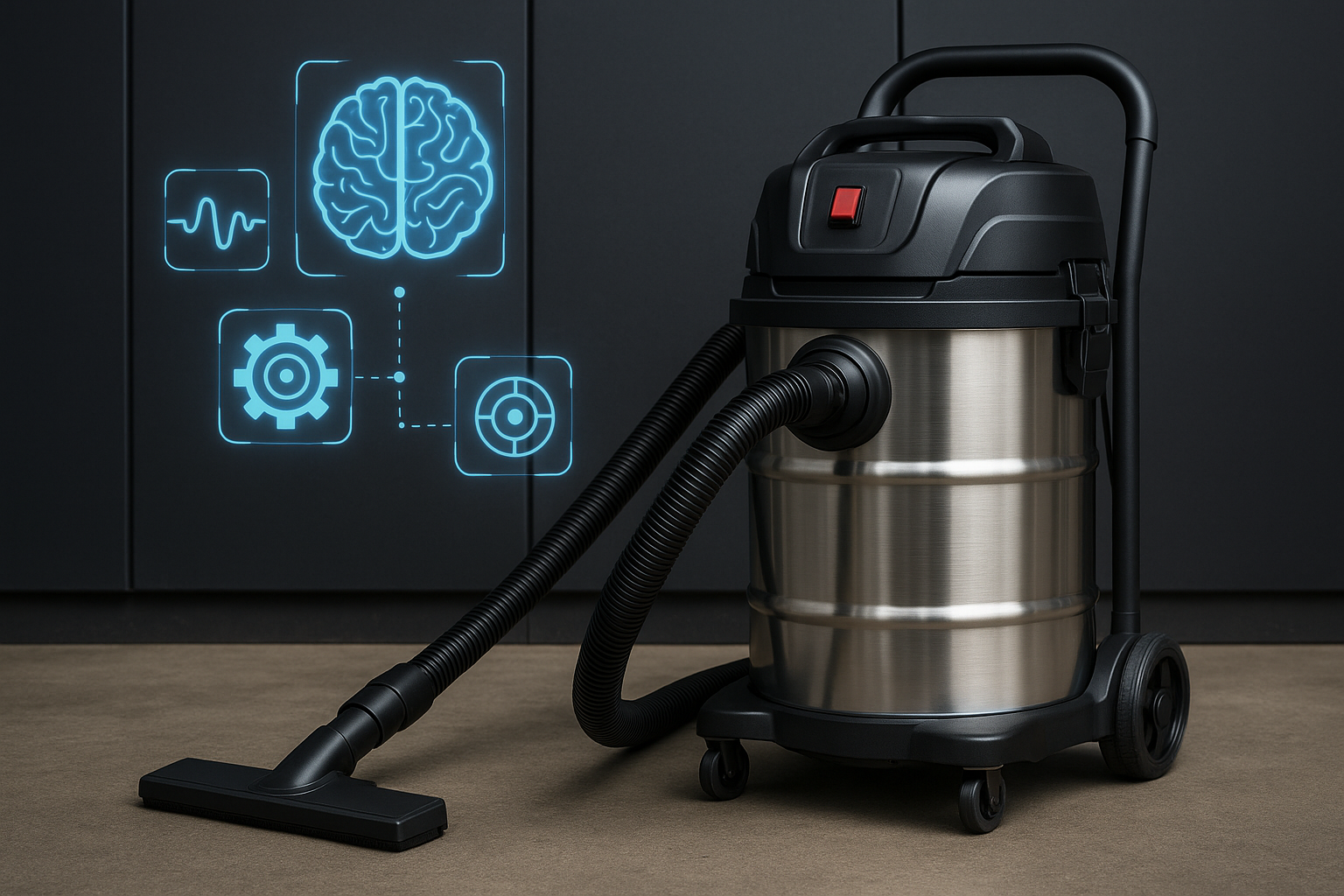
In the evolving world of smart manufacturing, industrial cleaning equipment is undergoing a technological revolution. Artificial intelligence and sensor integration are no longer exclusive to consumer electronics—they’re becoming essential components in modern industrial vacuum cleaners, enhancing efficiency, predictive maintenance, and operational transparency.
From Manual to Intelligent Operations
Historically, industrial vacuum cleaners operated as isolated units with limited automation. Today, AI algorithms and embedded sensors are enabling machines to self-monitor performance, adjust suction based on surface types, and send alerts when filters are clogged or components require maintenance. A study from McKinsey Digital reports that AI-driven maintenance can reduce machine downtime by up to 30% across industrial settings.
Real-Time Data and Remote Monitoring
One major advancement is real-time performance monitoring via IoT-enabled dashboards. Facility managers can now access data on motor load, air pressure, and energy consumption in real time. Insights from ABB Motion highlight how industrial cleaning equipment integrated with smart sensors can optimize power usage and prevent failure before it happens. This shift also allows remote diagnostics, reducing on-site technician visits and streamlining service response.
Applications in High-Demand Environments
In sectors such as pharmaceuticals, logistics, and food processing, equipment cleanliness standards are non-negotiable. Smart vacuum systems with HEPA sensors, air-quality feedback, and AI-based contamination alerts are addressing strict regulatory needs. According to the International Society of Automation, sensor-driven automation is quickly becoming the benchmark for safety and efficiency in industrial cleaning operations.
To meet rising expectations, suppliers are combining intelligent pressure regulation, energy-aware motors, adaptive runtime control, and modular attachments—factors that are now embedded in a smart industrial wet and dry vacuum cleaner.
The Future of Procurement
Buyers in B2B channels are no longer just looking for durability—they’re seeking machines that offer operational intelligence and data transparency. Procurement teams are beginning to include AI features and smart analytics as criteria in tender evaluations. As smart factory environments expand globally, AI-powered vacuum solutions will move from optional upgrades to standard requirements.
For manufacturers looking to lead this transition, additional insights and deployment strategies are available at www.lxvacuum.com.











